 Save to Pinterest
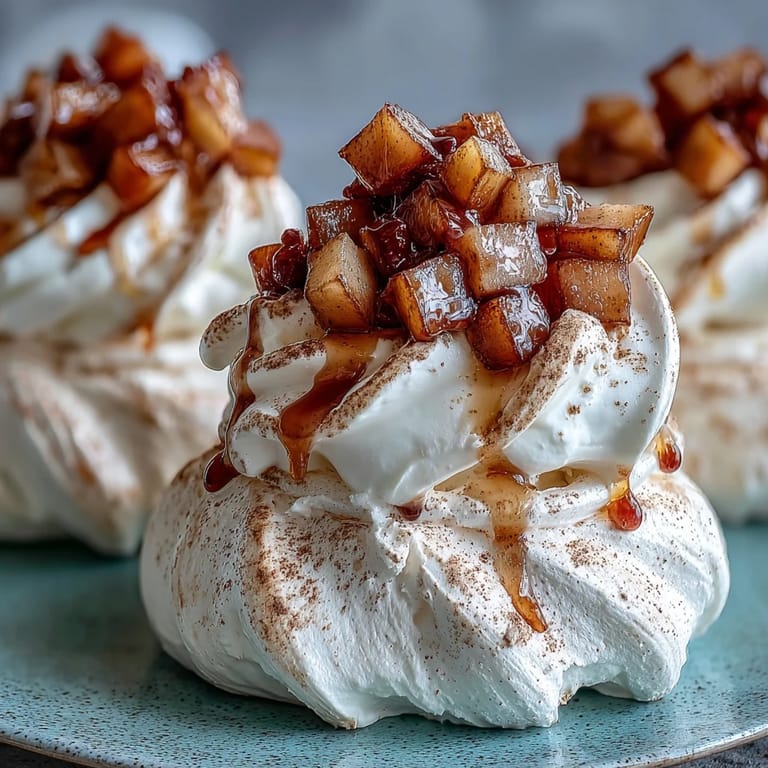
 There was a winter evening when I wanted something sweet but didn't want to turn on the oven for long. I'd been sipping a hot toddy by the fire, and the idea struck: what if those flavors—whisky, spice, pear—could become a dessert? I started playing with meringue, folding in cinnamon and nutmeg, and the kitchen smelled like a cozy pub meets a pastry shop. The pavlovas turned out crisp on the outside, marshmallow-soft inside, and when I topped them with boozy poached pears and whipped cream, they tasted like comfort in cloud form. My friends couldn't believe something this elegant came from a spontaneous experiment.
I first served these at a New Year's dinner, and they disappeared before the clock struck midnight. Everyone kept asking if I'd trained in a patisserie, but the truth is meringues are one of the most forgiving desserts once you understand the rhythm. The key is patience: slow whisking, gradual sugar, and a cool oven. Watching my guests crack into the shells and discover the creamy, spiced filling felt like sharing a secret I'd stumbled upon by accident.
Ingredients
- Egg whites: Room temperature whites whip faster and higher, creating that signature glossy meringue; cold eggs separate more cleanly, so plan ahead.
- Caster sugar: Its fine crystals dissolve quickly into the whites, giving you a stable, shiny meringue without graininess.
- Cornstarch: This little addition keeps the centers soft and marshmallowy while the outside crisps up beautifully.
- Cream of tartar: It stabilizes the egg whites and helps them hold air, making your meringues less likely to weep or collapse.
- Cinnamon and nutmeg: These warm spices echo the hot toddy's cozy vibe and add a subtle fragrance that fills the kitchen.
- Whisky: Use a Scotch or bourbon you'd actually drink; the flavor concentrates as it poaches the pears, so quality matters.
- Pears: Choose ripe but firm fruit so they soften without turning mushy; Bosc or Anjou work wonderfully.
- Brown sugar: Its molasses notes complement the whisky and spices, creating a rich, caramel-like syrup.
- Cinnamon stick and cloves: Whole spices infuse gently and can be easily removed, leaving behind warmth without bitterness.
- Lemon zest: A strip of zest brightens the poaching liquid and balances the sweetness with a hint of citrus.
- Heavy cream: Chilled cream whips up thick and luxurious, providing a cool, creamy contrast to the spiced pears.
- Icing sugar: It sweetens the cream without adding graininess and helps it hold its shape longer.
Tired of Takeout? 🥡
Get 10 meals you can make faster than delivery arrives. Seriously.
One email. No spam. Unsubscribe anytime.
Instructions
- Prepare Your Oven and Pan:
- Preheat your oven to 120°C (250°F) and line a baking sheet with parchment paper. This low, slow heat is what transforms egg whites into crisp, cloud-like nests.
- Whip the Egg Whites:
- In a spotlessly clean, dry bowl, whisk the egg whites until soft peaks form, then add cream of tartar and continue whisking. Any trace of grease or yolk will prevent them from reaching full volume.
- Add the Sugar Gradually:
- Add caster sugar one tablespoon at a time, whisking constantly until the mixture is thick, glossy, and holds stiff peaks. Rushing this step can result in a runny, unstable meringue.
- Fold in the Flavors:
- Gently fold in cornstarch, vanilla extract, cinnamon, and nutmeg using a spatula, being careful not to deflate the airy whites. The spices will speckle the meringue and release their aroma as they bake.
- Shape the Pavlovas:
- Spoon or pipe 8 small mounds onto your prepared sheet, creating shallow wells in the center of each to hold the toppings later. They'll expand slightly and develop those beautiful cracks as they bake.
- Bake Low and Slow:
- Bake for 1 hour 15 minutes until the meringues are crisp and dry to the touch. Turn off the oven, crack the door open, and let them cool completely inside to prevent cracking from sudden temperature changes.
- Poach the Pears:
- While the meringues bake, combine whisky, water, brown sugar, cinnamon stick, cloves, and lemon zest in a saucepan and bring to a gentle simmer. Add the diced pears and cook for 10 to 12 minutes until tender but still holding their shape, then remove with a slotted spoon and let cool.
- Whip the Cream:
- Beat chilled heavy cream with icing sugar and vanilla extract until soft peaks form, then refrigerate until you're ready to assemble. Cold cream whips faster and holds its texture longer.
- Assemble and Garnish:
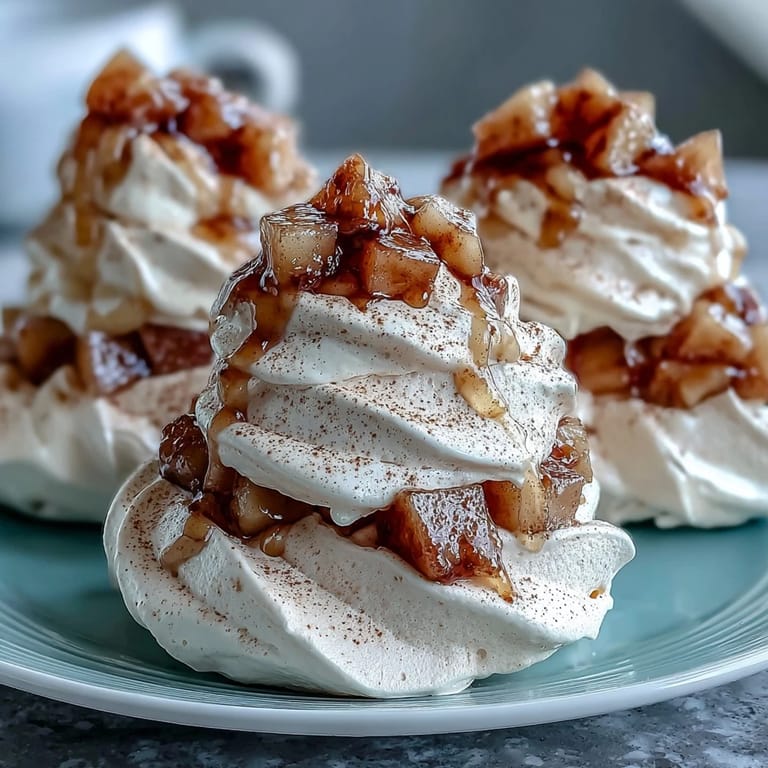
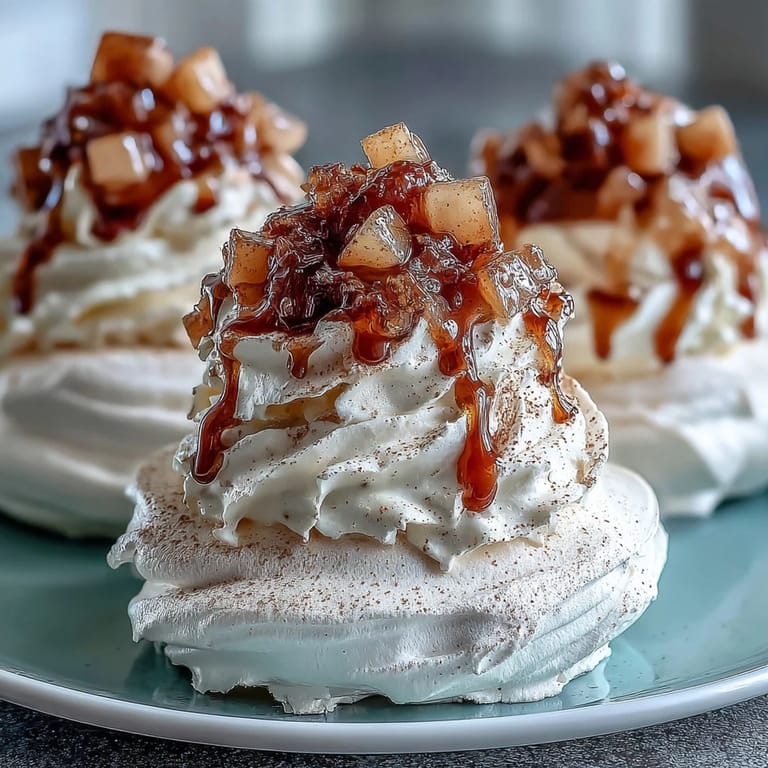
- Top each cooled pavlova with a generous dollop of whipped cream and spoon over the spiced pears, drizzling with a little poaching syrup if you like. Finish with a dusting of cinnamon or a curl of lemon zest for a final flourish.
 Save to Pinterest
 The first time I served these, a friend who claimed not to like meringue asked for the recipe before she'd even finished her plate. It wasn't just the flavors, she said, it was the way each element played off the others: the shatter of the shell, the pillowy interior, the warmth of the whisky-soaked pears, and the coolness of the cream. That's when I realized this dessert wasn't just a novelty; it was a conversation starter, a memory maker, and proof that the best recipes often come from asking 'what if' on a quiet winter night.
Make Ahead Magic
One of the best things about pavlovas is that you can bake the meringue shells up to three days ahead and store them in an airtight container at room temperature. They stay crisp and ready to go, which means you can poach the pears and whip the cream the day of your gathering without any stress. I've even frozen baked meringues for up to a month, thawing them at room temperature before assembling. Just keep them away from humidity, and they'll be as perfect as the day you baked them.
Flavor Swaps and Twists
If whisky isn't your thing, try rum for a darker, molasses note, or even a splash of amaretto for an almond accent. For a non-alcoholic version, pear nectar or apple juice with a squeeze of lemon works beautifully and still gives you that spiced fruit flavor. I've also swapped pears for diced apples or even roasted plums when they're in season, and each variation brought its own personality to the plate. The spices are flexible too: try cardamom, ginger, or a pinch of star anise for a different kind of warmth.
Serving and Pairing Ideas
These mini pavlovas are stunning on a dessert platter, each one a little individual treat that guests can pick up and enjoy without needing a fork. Serve them alongside a small glass of the same whisky you used in the poaching liquid, or pair them with spiced tea or mulled cider for a cozy, alcohol-free option. They're perfect for dinner parties, holiday gatherings, or even a quiet night in when you want something special without too much fuss.
- Drizzle leftover poaching syrup over vanilla ice cream for an instant boozy sauce.
- Garnish with candied ginger or a few toasted pecans for extra crunch and visual appeal.
- If you have extra meringue shells, crumble them over yogurt and fruit for a quick breakfast treat.
 Save to Pinterest
 These Mini Hot Toddy Pavlovas have become my go-to when I want to impress without spending hours in the kitchen. They look elegant, taste extraordinary, and carry the warmth of a fireside drink in every bite.
Recipe FAQs
- → Can I make the meringues ahead of time?
Yes, meringues can be made up to 3 days in advance. Store them in an airtight container at room temperature to maintain their crispness. Assemble with cream and pears just before serving.
- → What type of whisky works best for this dessert?
A smooth Scotch whisky or bourbon works wonderfully. Choose a whisky you enjoy drinking, as its flavor will shine through in the poached pears. Avoid heavily peated varieties unless you prefer that smoky taste.
- → How do I prevent my meringues from cracking?
Add the sugar gradually while whisking, ensure the oven temperature is low at 120°C, and let the meringues cool completely inside the oven with the door ajar. This slow cooling prevents sudden temperature changes that cause cracking.
- → Can I use a different fruit instead of pears?
Absolutely! Apples, quinces, or even stone fruits like peaches work beautifully. Adjust cooking time based on the fruit's firmness—softer fruits will need less poaching time.
- → How do I know when the meringues are fully baked?
The meringues should be completely dry and crisp to the touch. They should lift easily from the parchment paper. If they're still soft or sticky underneath, bake for an additional 10-15 minutes.
- → What can I do with leftover egg yolks?
Use them for custards, crème brûlée, homemade mayonnaise, or pasta dough. Egg yolks can also be frozen for up to 3 months—add a pinch of salt or sugar before freezing to prevent them from becoming gelatinous.