 Save to Pinterest
 My neighbor knocked on my door one Sunday holding a basket of lemons from her tree, and I panicked because I had no idea what to do with twelve lemons. I flipped through my grandmother's recipe box and found a smudged card for lemon meringue pie. The handwriting was faded, the measurements vague, but I decided to wing it. That pie turned out better than I expected, and now every time I see a lemon, I think about that unexpected afternoon.
I made this for my daughter's birthday once, and she asked if we could skip the cake tradition entirely. She stood at the counter watching me torch the meringue, her eyes wide, convinced I was going to set off the smoke alarm. When I sliced into it later, the filling held its shape perfectly, and she declared it her new favorite dessert. Now every year, it's lemon meringue pie instead of cake, and I wouldn't have it any other way.
Ingredients
- All-purpose flour: The foundation of a flaky crust, and using cold butter is the secret to achieving those delicate layers that shatter when you bite in.
- Cold unsalted butter: Keep it cold, cube it small, and work quickly so it doesn't melt before baking, which is what creates steam and flakiness.
- Ice water: Add just enough to bring the dough together without overworking it, or you'll end up with a tough crust instead of a tender one.
- Granulated sugar (for filling): Balances the tartness of the lemon juice without making the filling cloying or candy-sweet.
- Cornstarch: Thickens the filling so it slices cleanly and doesn't run all over the plate like lemon soup.
- Egg yolks: Add richness and a silky texture to the filling, and tempering them properly prevents scrambled eggs in your custard.
- Lemon zest: Adds a punch of citrus oil and fragrance that brightens the whole filling, so don't skip zesting before juicing.
- Freshly squeezed lemon juice: Bottled juice doesn't compare, fresh lemons give you that bright, vibrant flavor that makes this pie sing.
- Unsalted butter (for filling): Stirred in at the end, it adds gloss and a luxurious mouthfeel to the lemon custard.
- Egg whites: Whip them at room temperature for the best volume, and make sure your bowl is spotless or they won't stiffen properly.
- Cream of tartar: Stabilizes the meringue and helps it hold those glossy peaks without weeping or collapsing in the oven.
- Vanilla extract: A tiny bit in the meringue adds warmth and rounds out the sweetness without overpowering the lemon.
Tired of Takeout? 🥡
Get 10 meals you can make faster than delivery arrives. Seriously.
One email. No spam. Unsubscribe anytime.
Instructions
- Mix the Crust:
- Whisk the flour, salt, and sugar together, then cut in the cold butter until it looks like coarse crumbs with pea-sized chunks still visible. Add ice water one tablespoon at a time, mixing gently until the dough just holds together without being sticky.
- Chill the Dough:
- Shape it into a flat disk, wrap it tightly in plastic, and let it rest in the fridge for at least an hour so the gluten relaxes and the butter firms up. This step makes rolling easier and prevents shrinking in the oven.
- Roll and Bake the Crust:
- Roll the dough on a floured surface into a circle slightly larger than your pie dish, then gently press it in and trim the edges. Prick the bottom with a fork, line with parchment, fill with pie weights, and bake at 400°F for 15 minutes, then remove weights and bake another 8 to 10 minutes until golden.
- Cook the Lemon Filling:
- Whisk sugar, cornstarch, and salt in a saucepan, then gradually add water and cook over medium heat, stirring constantly until thick and bubbly. Temper the egg yolks by whisking in a bit of the hot mixture first, then stir everything back into the pan and cook for 2 more minutes before stirring in lemon zest, juice, and butter.
- Whip the Meringue:
- Beat the egg whites and cream of tartar on high speed until soft peaks form, then gradually add sugar and beat until stiff, glossy peaks stand upright. Fold in the vanilla gently at the end.
- Assemble and Bake:
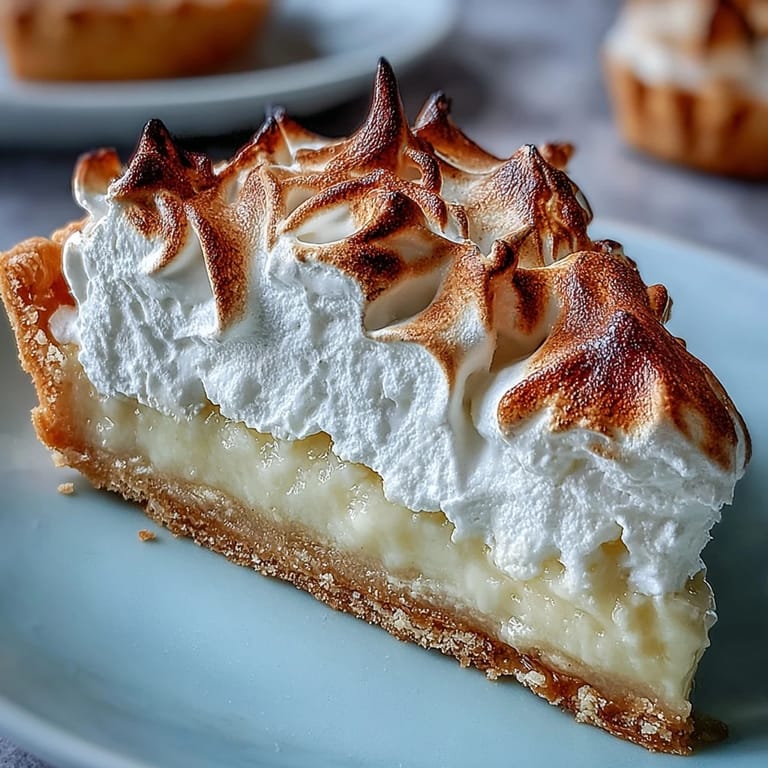
- Pour the warm lemon filling into the cooled crust, then spread the meringue over the top, making sure to seal it all the way to the edges to prevent shrinking. Bake at 350°F for 15 to 18 minutes until the meringue is golden brown and lightly toasted.
- Chill Before Serving:
- Let the pie cool to room temperature on the counter, then refrigerate for at least 2 hours so the filling sets completely. This makes slicing clean and easy instead of messy.
 Save to Pinterest
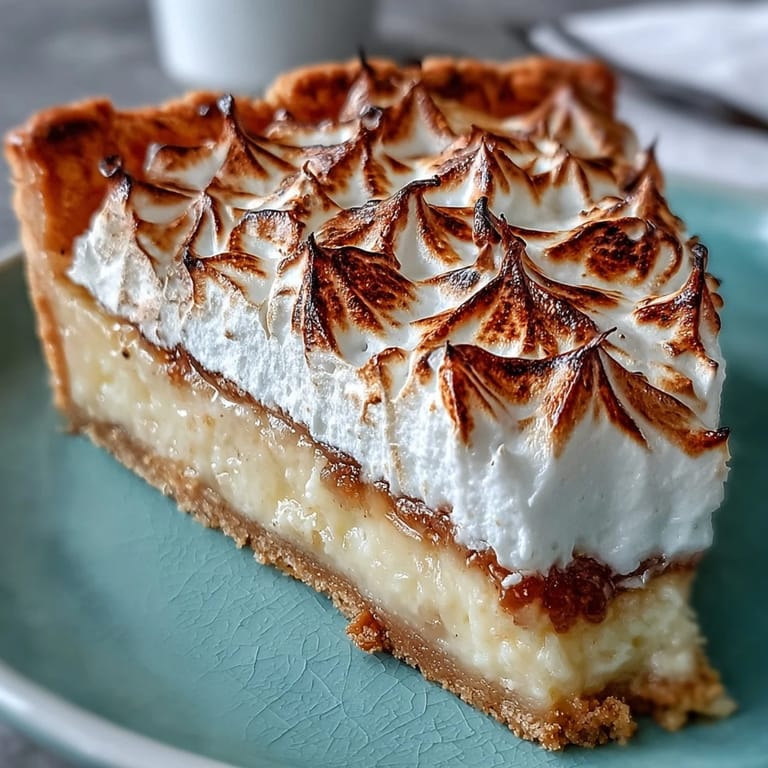
 The first time I brought this pie to a potluck, someone asked if I bought it from a bakery, and I felt ridiculously proud. A friend later confessed she ate two slices standing at the kitchen counter after everyone left. That pie became my signature dish without me even trying, and now people request it by name.
Getting the Meringue Just Right
Meringue can be finicky, but once you understand it, it's not scary at all. The key is a spotless bowl because even a tiny bit of grease will stop the egg whites from whipping up. I learned this the hard way when I tried to make meringue in a bowl I'd just used for butter, and nothing happened no matter how long I beat it. Cream of tartar stabilizes the foam and keeps it from deflating, so don't skip it even if it seems like an extra step.
Why Fresh Lemon Juice Matters
Bottled lemon juice tastes flat and bitter compared to fresh, and it doesn't have the same bright, floral aroma that makes this pie special. I once ran out of lemons and tried using bottled juice, and the filling tasted dull and one-dimensional. Fresh juice has natural oils and acidity that wake up your taste buds, and it's worth the extra five minutes of squeezing. If you can find Meyer lemons, they're sweeter and less harsh, which makes the filling taste almost perfumed.
Serving and Storing
This pie is best served cold, sliced with a sharp knife dipped in hot water and wiped clean between cuts. The meringue will stay crisp for about a day, but after that it starts to weep a little, which is normal and doesn't affect the taste. Leftovers keep in the fridge for up to three days, covered loosely so the meringue doesn't get soggy.
- Serve with a dollop of whipped cream if you want to gild the lily, though it's perfect on its own.
- Pair it with a chilled glass of Moscato or Riesling to echo the citrus notes.
- If you're making this ahead, bake the crust and filling the day before, then add the meringue and bake just before serving.
 Save to Pinterest
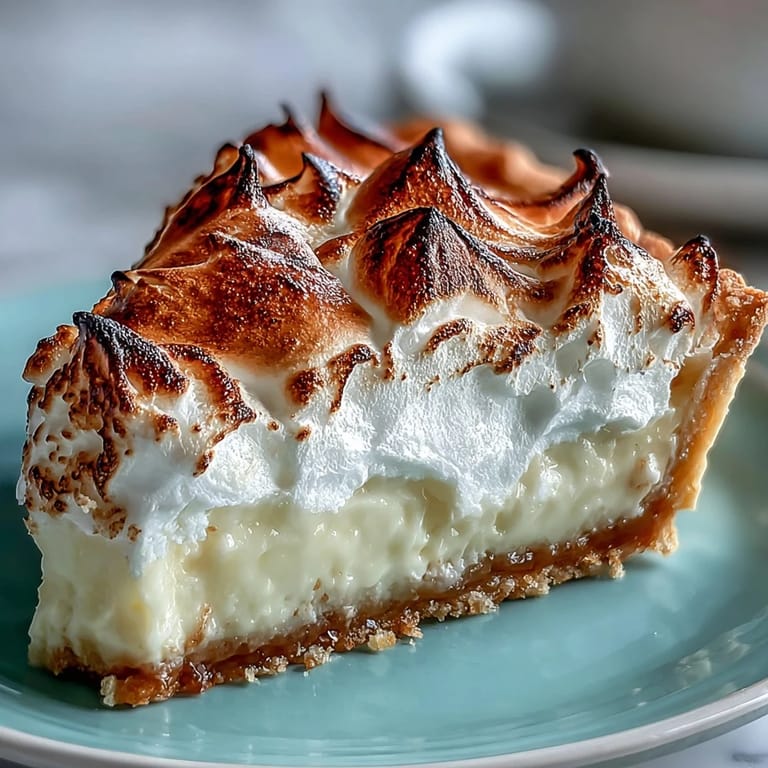
 This pie has a way of turning an ordinary evening into something special, and I never get tired of watching people take that first bite. Make it once, and it'll become your go-to dessert for every occasion that calls for something a little bit fancy.
Recipe FAQs
- → How do I prevent my meringue from weeping?
Spread the meringue over warm filling and seal it completely to the crust edges. This prevents moisture from seeping underneath. Also, avoid overbaking and let the pie cool gradually.
- → Can I make the crust ahead of time?
Yes, you can prepare and bake the crust up to 2 days in advance. Store it covered at room temperature, then fill and top with meringue when ready to serve.
- → Why is my lemon filling runny?
The filling needs to cook long enough for the cornstarch to fully activate and thicken. Stir constantly and ensure it bubbles for the full cooking time. Chilling also helps it set properly.
- → What's the best way to slice this pie cleanly?
Chill the pie completely for at least 2 hours. Use a sharp knife dipped in hot water and wiped clean between each cut for neat, professional-looking slices.
- → Can I use bottled lemon juice instead of fresh?
Fresh lemon juice is strongly recommended for the best flavor and brightness. Bottled juice often contains preservatives that can affect the taste and color of your filling.
- → How long will this pie keep in the refrigerator?
The pie is best enjoyed within 2-3 days. Store it loosely covered in the refrigerator. The meringue may begin to weep or soften after the first day, though it will still taste delicious.