 Save to Pinterest
 There's a specific memory I have of watching my aunt pull a biryani pot from her oven on a Friday afternoon, the steam rising like a small celebration just for our family. The kitchen had already been perfumed for hours by then, those cardamom and saffron notes hanging in the air so thickly you could almost taste them before the pot even opened. I was struck by how something so layered and complex came together with such quiet confidence, as if the rice and meat and spices already knew exactly where they belonged. Now, whenever I make this Kuwaiti biryani, I understand what she was creating wasn't just lunch, but a kind of edible proof that you cared enough to spend time getting every detail right.
I made this for the first time for a dinner party where I was genuinely nervous, convinced that layering rice would somehow go wrong in some way I hadn't anticipated. But the moment I lifted that foil and the aroma hit everyone in the dining room, I watched shoulders relax and faces soften in a way that told me the biryani had already done half the work. There's something about serving a dish this fragrant and burnished that shifts the entire mood of a meal.
Ingredients
- Bone-in chicken or lamb (900g): The bone adds a subtle richness that boneless meat simply cannot match, and the pieces hold their shape beautifully through marinating and baking.
- Plain yogurt (1 cup): This is your tenderizer and flavor anchor, so don't skip it or substitute it with something thinner.
- Lemon juice (2 tbsp): Brightens the spice blend and helps break down the meat's fibers without making it taste acidic.
- Ginger-garlic paste (1 tbsp): This is easier than mincing fresh, and it distributes more evenly through the yogurt.
- Ground spices (cumin, coriander, turmeric, chili powder, garam masala): Toast these in a dry pan for 30 seconds before mixing into the yogurt if you have time, though it's not essential.
- Basmati rice (3 cups): Use aged basmati if you can, as the grains separate more cleanly and the flavor is subtly nuttier.
- Ghee (5 tbsp total): It's worth buying real ghee rather than clarified butter, as the flavor carries through the whole dish.
- Whole spices for rice (cloves, cardamom, cinnamon, bay leaf): These infuse the rice layer by layer without overwhelming it.
- Sliced onions (2 large): The caramelization is not optional, this is where the depth of flavor comes from.
- Fresh herbs (coriander and mint): Chop these just before you need them so they stay bright green and fragrant.
- Saffron (a pinch): Soak it in warm milk for at least 10 minutes before using so the color and flavor fully release.
- Toasted nuts and raisins: These add texture contrasts and a subtle sweetness that balances the savory spices.
- Fried onions (for garnish): Buy them or make them fresh, they're the final textural element that keeps each bite interesting.
Tired of Takeout? 🥡
Get 10 meals you can make faster than delivery arrives. Seriously.
One email. No spam. Unsubscribe anytime.
Instructions
- Marinate the meat:
- Whisk together the yogurt, lemon juice, ginger-garlic paste, and all the ground spices in a bowl, then coat the meat thoroughly and refrigerate. Even an hour makes a difference, but overnight is when the meat becomes truly tender and the flavors settle in.
- Prepare the rice:
- Rinse your basmati under cold water until the water runs completely clear, then soak for 30 minutes. This removes excess starch and helps the grains stay separate after cooking.
- Par-cook the rice:
- Boil salted water with the whole spices, add the drained rice, and cook just until it's about 70 percent tender, still with a slight firmness in the center. This is crucial because the rice will finish cooking in the oven and shouldn't become mushy.
- Caramelize the onions:
- Heat ghee in your pot over medium heat and cook the sliced onions slowly, stirring occasionally, until they're deep golden brown and smell sweet and toasted. This takes time, but don't rush it—these onions are flavor builders.
- Cook the meat:
- Add the marinated meat to the pot with the onions still in it, sear it for a few minutes to develop color, then lower the heat and braise it gently until it's just tender. You're not looking for fully cooked meat here, just enough that it can finish in the oven.
- Layer the biryani:
- Spread the par-cooked rice over the meat, scattering herbs, nuts, and raisins between the layers. This is where the magic happens, where all the flavors will marry together in the oven.
- Add the saffron and seal:
- Drizzle the saffron milk evenly across the top layer of rice and dot it with ghee, then cover tightly with foil and place the lid on top. The seal keeps all the steam trapped so the rice finishes perfectly.
- Bake and rest:
- Bake at 180°C (350°F) for 30 to 35 minutes until the rice is tender and has absorbed all the flavors. Let it rest for 10 minutes before fluffing so the layers stay intact.
 Save to Pinterest
 I remember my cousin telling me that biryani is about patience, that rushing any step shows up in the final dish, and I didn't really understand that until I made it once on a weeknight when I was tired. The difference between that hurried version and one made slowly was stark—one was just rice and meat, the other was singing. Now I treat the caramelizing of onions and the marinating of meat as non-negotiable rituals.
The Art of Layering
Layering isn't just about aesthetics, it's how every grain of rice ends up tasting like every herb and spice in the pot. When you alternate rice with herbs, nuts, and meat, you're ensuring that someone eating a spoonful from the edge of the pot gets the same experience as someone eating from the center. I've learned to visualize the layers as I'm building them, thinking about how the steam will move through each one and what it will carry with it.
Variations That Work
I've made this with lamb when I wanted something richer, and with chicken when I needed something lighter, and both are equally valid. Some cooks add a few drops of rose water to the saffron milk, and I've done that when I wanted a more floral, delicate finish. The bones matter more than whether you use chicken or lamb, so choose whichever you prefer and commit fully to that choice.
Serving and Storage
Biryani is best served hot, right from the oven, with a cooling raita or fresh cucumber-yogurt salad alongside to balance the richness. It keeps beautifully in the refrigerator for three days and reheats gently in a low oven, though it never quite has the same impact as fresh.
- A squeeze of fresh lemon juice over the top just before eating brightens everything.
- If you have guests who are vegetarian, marinated paneer or roasted vegetables can replace the meat.
- Leftover biryani makes an excellent fried rice the next day if you're brave enough to play with it that way.
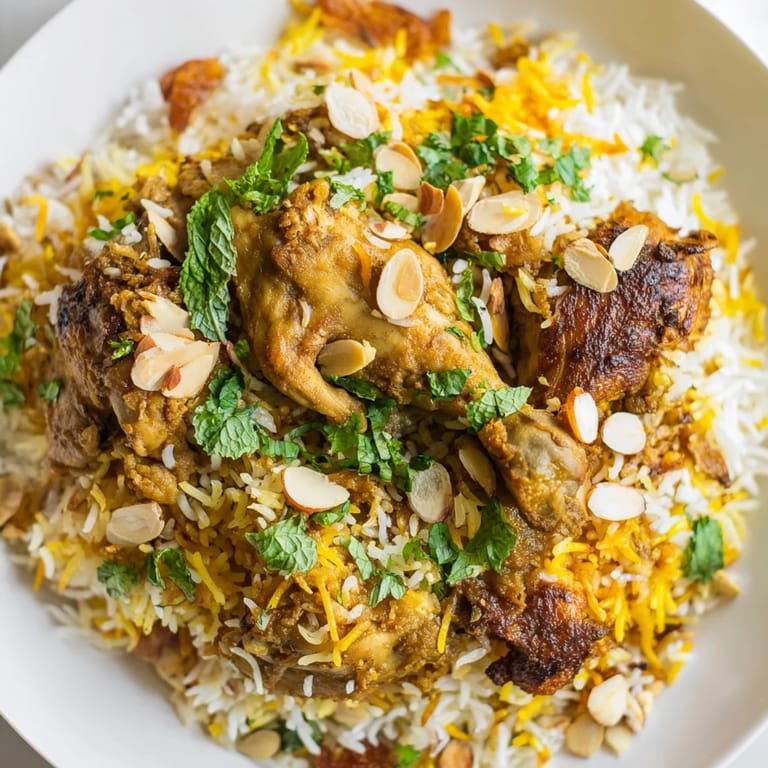 Save to Pinterest
 This biryani is the kind of meal that justifies the time and care you put into it, where every step builds toward something genuinely special. Make it for people you want to impress, or make it for yourself on a day when you deserve to feel like you're sitting in someone else's kitchen.
Recipe FAQs
- → What spices are used in the marinade?
The marinade combines turmeric, cumin, coriander, chili powder, garam masala, ginger-garlic paste, lemon juice, and salt mixed with yogurt for tenderizing.
- → How is the rice prepared before baking?
Basmati rice is rinsed, soaked, then partially boiled with cloves, cardamom, cinnamon, and bay leaf before draining and layering.
- → Can I substitute chicken with other meats?
Yes, bone-in lamb pieces can be used and require a slightly longer cooking time for tenderness.
- → What gives the dish its signature aroma?
A combination of whole spices in the rice, the saffron-infused milk drizzled on top, and caramelized onions provide a rich and fragrant aroma.
- → How do I achieve the layered effect in the dish?
The partially cooked rice is layered alternately with the seared meat mixture, fresh herbs, nuts, and raisins before baking tightly covered.
- → What is the best way to serve this dish?
It pairs well with cooling yogurt-based salads like raita or a simple cucumber salad to balance the rich flavors.