 Save to Pinterest
 The first time I tasted muhammara, I was sitting on a crowded Damascus terrace at sunset, watching vendors arrange pomegranates in neat pyramids. Someone placed a small ceramic bowl in front of me—vibrant red, almost glowing—and I remember thinking how something so beautiful could come from just a handful of pantry staples. Now whenever I make it, that moment comes rushing back: the smell of charred peppers filling my kitchen, the way the walnuts catch and deepen in color, how a simple dip somehow becomes an edible memory.
I made this for a potluck once and nearly forgot it on the counter—grabbed it at the last second, still warm. By the time I arrived, someone had already spotted it and broken off a piece of pita to taste it before I'd even set the dish down. That's when I realized muhammara isn't just an appetizer; it's a conversation starter that somehow makes you look like you know what you're doing in the kitchen, even when you're mostly just burning peppers until they're perfect.
Ingredients
- Red bell peppers (3 large): These are the soul of the dip—when they char and blister, their natural sugars concentrate and deepen. Don't rush this step; you want the skins almost blackened.
- Walnuts (1 cup, lightly toasted): Toasting them brings out a subtle bitterness that balances the sweet pomegranate molasses beautifully. Skip this and the dip tastes flat.
- Pomegranate molasses (2 tbsp): This tangy syrup is the secret ingredient that makes people ask what you did differently. It's worth seeking out in Middle Eastern markets or online.
- Garlic cloves (2): Use fresh, good quality garlic—this is a raw ingredient that will shine through without other strong flavors to hide it.
- Breadcrumbs (2 tbsp): These add texture and help bind everything together. They seem like filler until you taste a batch without them.
- Smoked paprika (1/2 tsp): This gives you a whisper of smokiness without overpowering. It's the ingredient that makes people say, "What is that flavor?"
- Ground cumin (1 tsp): Warm and earthy, cumin rounds out all the bright, tangy notes and makes the whole thing feel complete.
- Aleppo pepper (1/2 tsp): Use this instead of regular chili flakes if you can find it—it has more finesse. Adjust based on how much heat you enjoy.
- Extra virgin olive oil (2 tbsp, plus more for drizzling): Quality matters here since you taste it raw. A peppery, fruity oil makes a real difference.
- Lemon juice (1–2 tbsp): This brightens everything and should be fresh—bottled lemon juice tastes like it's trying too hard.
- Salt and black pepper: Season gradually; you can always add more but you can't take it back.
- Toasted sesame seeds (1 tbsp, optional): These add a final crunch and nutty depth if you want to make it feel extra special.
Tired of Takeout? 🥡
Get 10 meals you can make faster than delivery arrives. Seriously.
One email. No spam. Unsubscribe anytime.
Instructions
- Char those peppers until they surrender:
- Preheat your oven to 220°C (425°F) and spread the whole red bell peppers on a baking tray. Roast them for 20–25 minutes, turning them halfway through, until the skins are blackened and blistered all over—this is when the magic happens. You want them to look almost burnt because that's where the deep, smoky flavor comes from.
- Let them breathe and soften:
- Transfer the hot peppers to a bowl and cover it tightly with plastic wrap or a plate. Let them steam for 10 minutes; the residual heat will soften them further and make the skins slip off almost effortlessly. Once they're cool enough to handle, peel away the charred skin, remove the seeds and stems, and discard them.
- Build the base:
- Add the peeled peppers, toasted walnuts, garlic cloves, breadcrumbs, cumin, smoked paprika, Aleppo pepper, salt, and black pepper to your food processor. Pulse the whole thing until it's coarse and chunky—you're looking for texture here, not a fine paste.
- Marry the flavors:
- Pour in the pomegranate molasses, olive oil, and lemon juice, then process until the mixture is smooth but still has some character. Taste it as you go, adjusting the molasses for tang, the lemon for brightness, or the salt to bring everything into focus.
- Present it with intention:
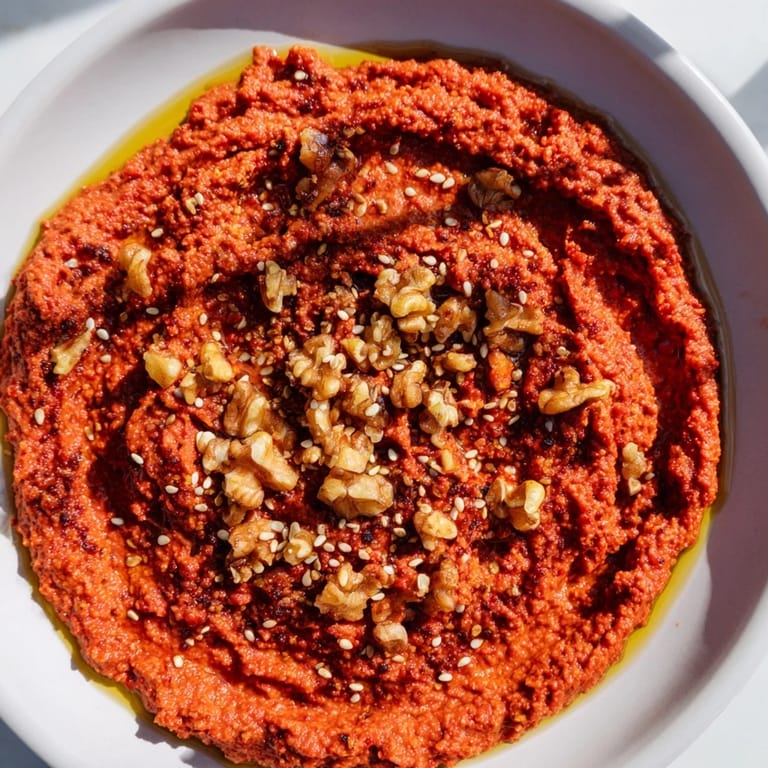
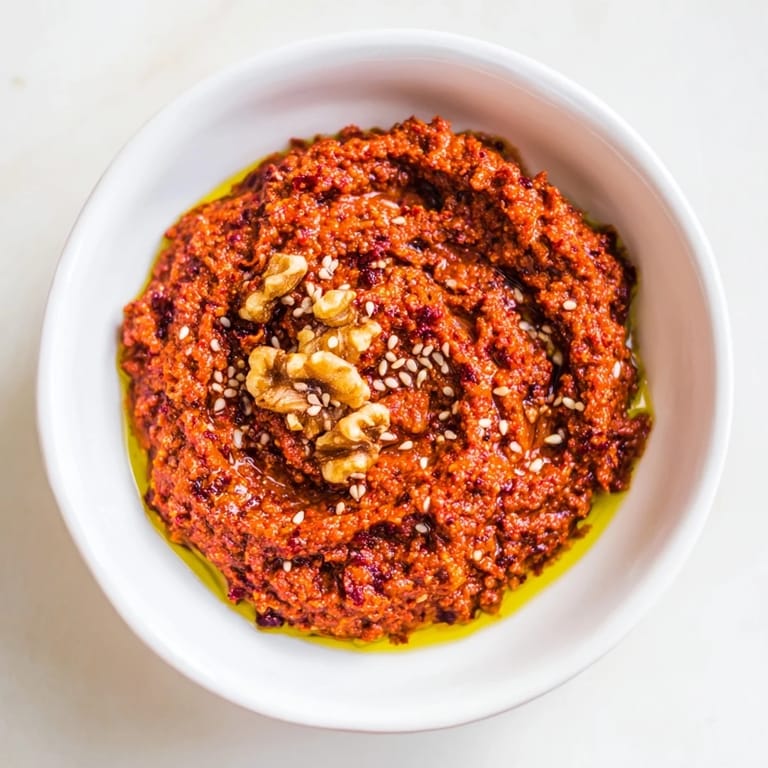
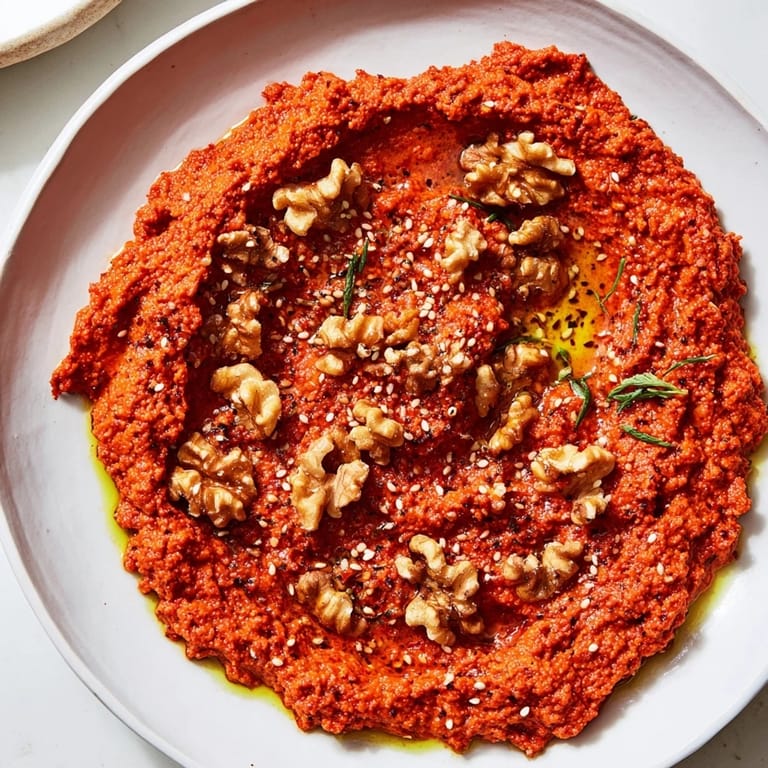
- Spoon the muhammara into a shallow bowl and create a shallow well in the center with the back of a spoon. Drizzle with good olive oil and scatter sesame seeds over the top if you're using them. Serve it alongside warm pita, crackers, or fresh vegetables for dipping.
 Save to Pinterest
 There's a moment when you first taste muhammara—that pause where your tongue tries to figure out what's happening: smoky, sweet, nutty, tangy all at once. That's the moment I realized this dish was special, not because it's complicated, but because it proves that sometimes the simplest ingredients, treated with care, become something people remember.
Why Charred Peppers Matter
Most people roast peppers just until they're soft, but that's not the point here. The blackened, blistered skin is where the actual flavor lives—it's almost burnt, but in the best way possible. When you char them properly, you unlock a smoky depth that you simply cannot get any other way. This is why grilling them over an open flame works too; if you have the option, fire gives you even more control and intensity. The moment that smell hits your kitchen is when you know you're on the right track.
The Pomegranate Molasses Secret
If muhammara feels flat when you first taste it, pomegranate molasses is usually the answer. It's a thick, dark syrup made from reduced pomegranate juice, and it brings a sophisticated tang that regular vinegar or lemon juice alone cannot replicate. The sweetness underneath cuts through the richness of the walnuts, and the acidity keeps everything bright and alive. Start with less than you think you need, taste, and build from there—it's forgiving once you understand its power.
From Dip to Centerpiece
Muhammara works beautifully on a mezze platter alongside hummus, baba ghanoush, olives, and fresh herbs. It also works as a spread for sandwiches, a topping for grilled vegetables, or even as a condiment for roasted chicken. Make it ahead and store it in the refrigerator for up to five days—it actually tastes better the next day when the flavors have had time to settle and deepen.
- If you want it smokier, grill the peppers over a gas flame or open fire instead of roasting them in the oven.
- Adjust the heat level by using less Aleppo pepper if you prefer mild, or more if you like a serious kick.
- Always taste and season at the very end; these flavors are bold and personal, so trust your own palate over any recipe.
 Save to Pinterest
 This dip has a way of becoming a regular thing once you make it once. It's the kind of recipe that feels a little fancy but asks almost nothing of you in return.
Recipe FAQs
- → What gives the dip its smoky flavor?
The smoky taste comes from roasting the red peppers until their skins are charred, adding depth and rich aroma.
- → Can I use gluten-free breadcrumbs?
Yes, gluten-free breadcrumbs work well and maintain the texture without affecting the flavor.
- → How can I adjust the heat level in the dip?
Adjust the spiciness by varying the amount of Aleppo pepper or red chili flakes to suit your taste.
- → What is pomegranate molasses used for?
Pomegranate molasses adds a tangy sweetness that balances the nuts and spices in the dip.
- → How should I store the dip after preparation?
Keep it refrigerated in an airtight container for up to five days to maintain freshness.
- → Can toasted sesame seeds be omitted?
Yes, sesame seeds are optional and can be left out or replaced based on preference or allergy concerns.