 Save to Pinterest
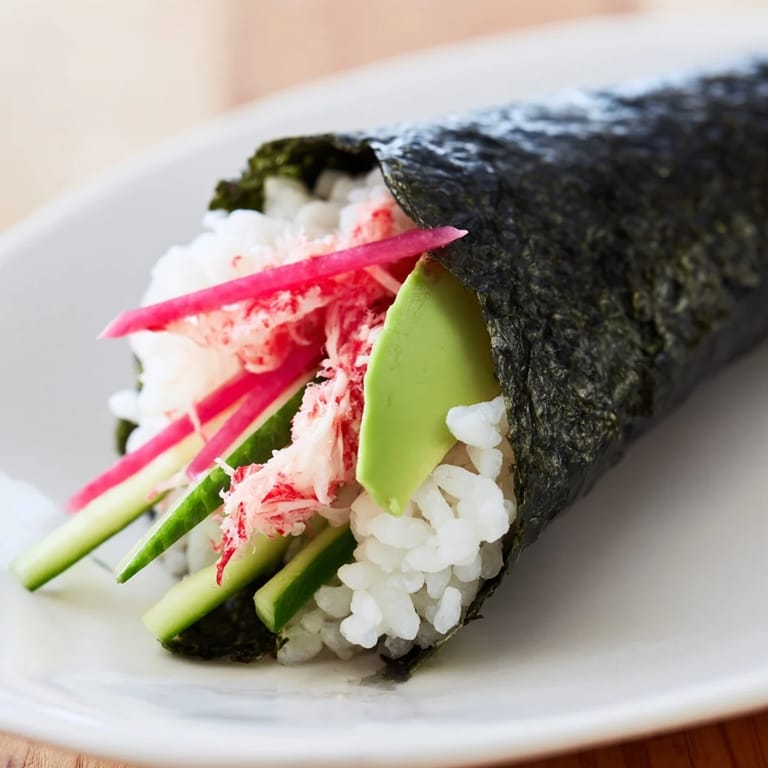
 My sister called me in a panic from her apartment kitchen, asking if I could teach her how to make sushi rolls without a mat because she'd promised her coworkers something special for lunch. Twenty minutes later, we were laughing at our first lumpy cone attempts, but by roll number three, something clicked—the nori crackling softly as we shaped it, the cool avocado giving way under gentle pressure. That's when I realized hand rolls aren't about perfection; they're about the tactile joy of building something delicious in your palm.
I made these for a small dinner party during one of those rare August evenings when it was too hot to use the oven, and the refreshing crispness felt like exactly what everyone needed. One guest—who claimed they didn't like sushi—had three hand rolls before admitting the fresh cucumber and buttery avocado had won them over completely. Those kinds of quiet victories are what stick with you in the kitchen.
Ingredients
- Sushi rice (1 cup short-grain Japanese): This isn't regular rice; the starch content makes it sticky and forgiving, which is exactly what you need when shaping by hand. Rinsing it thoroughly prevents gumminess.
- Water (1 1/4 cups): The ratio matters more than you'd think—too much and your rice becomes mushy, too little and it dries out before dinner.
- Rice vinegar, sugar, and salt: This trio is the secret handshake of sushi rice, giving it that subtle tang and sweetness that makes you keep reaching for another roll.
- Ripe avocado (1, sliced): Check for slight give when you gently squeeze—rock hard won't slice cleanly, and overripe will turn to mush in your hands.
- English cucumber (1/2, julienned): The watery crunch is essential; it balances the richness of the avocado and crab.
- Cooked crab meat (120 g): Whether real or imitation, make sure it's properly shredded so it distributes evenly through each roll.
- Mayonnaise (1 tbsp, optional): Just a touch binds the crab together and adds a whisper of creaminess without overwhelming the delicate flavors.
- Nori sheets (4, halved): The roasted seaweed adds umami and a satisfying crackle; store in an airtight container or it'll absorb moisture and lose its snap.
- Toasted sesame seeds, soy sauce, pickled ginger, wasabi: These are your finishing touches and flavor boosters, allowing everyone to dial in their perfect bite.
Tired of Takeout? 🥡
Get 10 meals you can make faster than delivery arrives. Seriously.
One email. No spam. Unsubscribe anytime.
Instructions
- Rinse your rice like you mean it:
- Run cold water over the sushi rice in a fine mesh strainer, stirring gently with your fingers until the water runs almost clear. This removes excess starch and prevents your final rice from being gluey and disappointing.
- Cook the rice with intention:
- Combine rinsed rice and water in a saucepan, bring to a boil, then drop the heat to low, cover, and let it steam for 15 minutes. Remove from heat and keep it covered for another 10 minutes—this resting period is non-negotiable.
- Make your seasoning elixir:
- Whisk together rice vinegar, sugar, and salt in a small bowl until the granules dissolve completely. Warm vinegar dissolves faster, so consider heating it gently if you're in a hurry.
- Dress the warm rice gently:
- Tip the cooked rice into a wide, shallow bowl, then fold in the vinegar mixture using a rice paddle or wooden spoon in a slicing, turning motion—this aerates the grains and ensures even seasoning without crushing them. Spread it out and let it cool to room temperature, fanning it occasionally if you're impatient like I am.
- Prep your fillings with care:
- Slice your avocado lengthwise around the pit, twist gently, then use a spoon to scoop out clean slices. Julienne your cucumber into matchsticks, and if you're mixing crab with mayo, do that now so it's ready to go.
- Build your first cone:
- Hold a half-sheet of nori shiny-side down in your palm or on a mat, then spread about 2 to 3 tablespoons of cooled rice diagonally across one corner, leaving the edges clear. Layer your avocado, cucumber, and crab on top, add a pinch of sesame seeds if you like, then roll the seaweed into a tight cone starting from the rice-filled corner.
- Seal with grace:
- Once you've rolled your cone, press a few grains of rice along the seam where the nori overlaps to seal it shut. If it doesn't stick, dip your finger in water and run it along the edge—the moisture helps.
- Finish with confidence:
- Repeat with your remaining nori sheets and fillings until you have eight gorgeous hand rolls. Serve immediately with small bowls of soy sauce, pickled ginger, and wasabi so everyone can customize their experience.
 Save to Pinterest
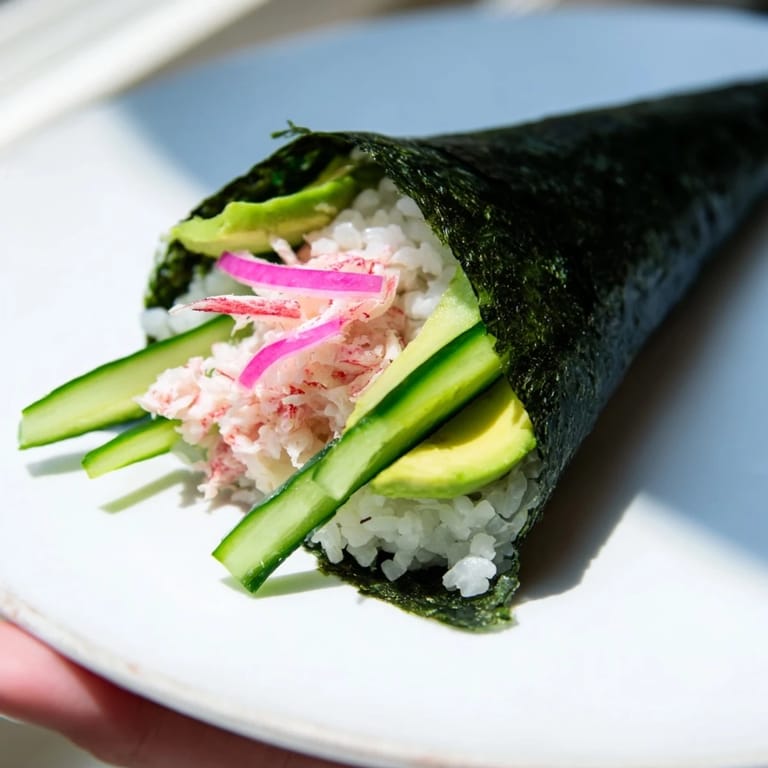
 There's something almost meditative about sitting down with people and eating hand rolls, each person rolling their own and tweaking the fillings to match their mood. No fussing with chopsticks, no worrying about the rice falling apart—just pure, handheld enjoyment.
The Art of Not Overstuffing
I learned this lesson the hard way on my second batch, when I got generous with the fillings and my cone burst open mid-bite, spraying rice and cucumber everywhere. The key is restraint: about 2 to 3 tablespoons of rice, then a modest amount of avocado, cucumber, and crab. Think of it like building a delicious architecture where everything has a place and nothing collapses under its own ambition.
Why Hand Rolls Beat Traditional Rolls
You don't need a bamboo mat, special rolling technique, or the confidence that comes from years of practice—just your hands, some common sense, and the willingness to accept that your first one might look like abstract art. The beauty is in the imperfection, and honestly, hand rolls taste just as good whether they're picture-perfect or slightly wonky. There's also something wonderfully interactive about letting guests build their own, turning a meal into a moment of creativity.
Storage, Substitutions, and Smart Moves
Fresh is always best with nori, but if you're making these ahead, store the components separately—cooked rice in a covered container, fillings in individual bowls, nori in an airtight container—and assemble just before serving. You can swap the crab for cooked shrimp, smoked salmon, or even seared tuna if that's what calls to you, and vegetarians can load up on extra avocado, cucumber, and crispy pickled vegetables for equal satisfaction.
- Add a small spoonful of sriracha or wasabi-mayo to the crab mixture if you want a spicy edge that won't overwhelm the delicate flavors.
- Keep a small bowl of water nearby to dip your fingers in when rolling—it helps the nori seal and prevents sticking.
- If your avocado is on the firm side, slice it just before assembling to prevent browning.
 Save to Pinterest
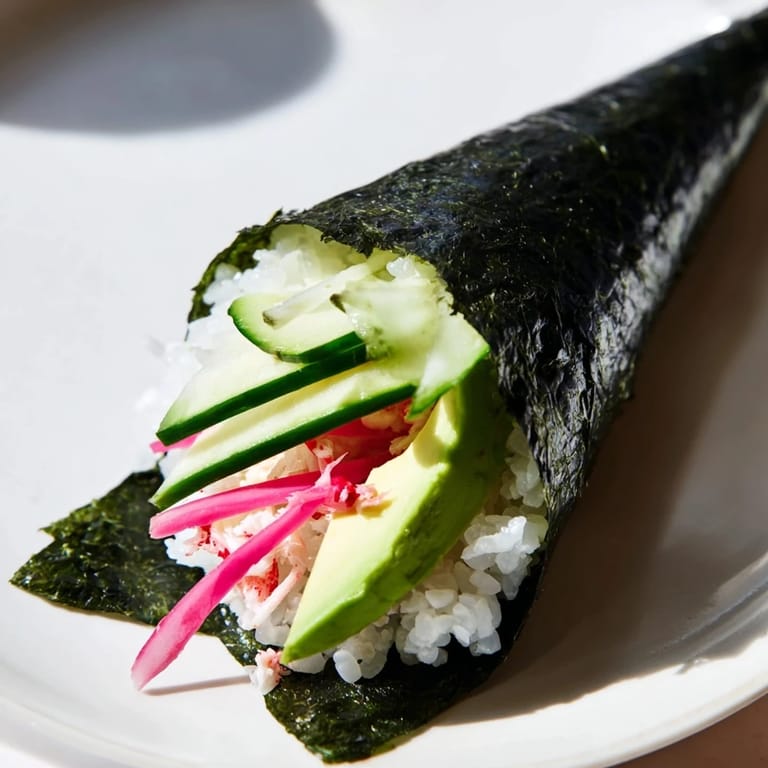
 Hand rolls are a reminder that good food doesn't require complicated techniques or expensive equipment—just fresh ingredients treated with a little respect and your own two hands bringing it all together. Make these when you want something that tastes like a restaurant, feels like a celebration, and comes together in less time than you'd think possible.
Recipe FAQs
- → What type of rice should I use for these hand rolls?
Use short-grain Japanese sushi rice, which has the right stickiness and texture for proper rolling. Regular long-grain rice won't hold together as well and will compromise the structural integrity of your rolls.
- → Can I prepare the rice ahead of time?
Yes, you can cook the rice several hours ahead, but season it just before assembling. Keep seasoned rice at room temperature in a covered container. Do not refrigerate, as cold rice becomes hard and loses its ideal texture.
- → What's the best way to prevent the nori from tearing?
Ensure your nori is fresh and roasted. Handle it gently and don't overfill with rice. If nori tears during rolling, simply use another sheet. Always place the shiny side down on your palm for easier handling and better adhesion.
- → Are there good protein alternatives to crab?
Absolutely. Cooked shrimp, smoked salmon, cooked chicken, or marinated tofu work wonderfully. Adjust seasoning to complement your chosen protein. For shellfish allergies, tofu provides excellent texture contrast with the other fillings.
- → How quickly should I eat these after making them?
Enjoy hand rolls immediately after assembly while the nori is crisp and fresh. Nori will gradually soften from moisture released by the fillings, which happens within 30-60 minutes. Make only what you'll eat right away for optimal texture.
- → Do I need a bamboo mat to roll these?
No, a bamboo mat is optional. You can hand-roll directly on your palm, which is traditional for hand rolls (temaki). The mat is helpful if you prefer a guide, but hand-rolling in your palm actually makes tighter, neater cones.