 Save to Pinterest
 The smell of lemon hitting hot olive oil is what I remember most clearly. I'd just come home from a long meeting, starving and impatient, when I pulled together this salmon dish on instinct. The leeks were wilting in the crisper, the onion had sprouted a single green shoot, and I had exactly four salmon fillets thawing in the fridge. What started as fridge archaeology became one of those rare recipes that worked perfectly the first time, no adjustments needed.
I made this for my sister the night she told me she was moving across the country. We sat at my tiny kitchen table, scraping every last bit of dressing off our plates, and she said it tasted like something she'd miss. I wrote the recipe down for her on the back of an envelope, which she later texted me to say she'd laminated. That's when I knew it was a keeper.
Ingredients
- Salmon fillets (about 150 g each), skin-on: The skin crisps beautifully against the pan and protects the flesh from drying out, so don't remove it even if you're tempted.
- Leeks, trimmed and sliced into 1/2-inch rounds: Leeks turn silky and sweet when roasted, almost caramelized, and they soak up all the lemony juices from the fish.
- Red onion, sliced into wedges: I prefer red onion here because it stays tender and adds a pop of color, but yellow onion works if that's what you have.
- Olive oil: Use a decent one for drizzling the vegetables, it makes a difference in how everything browns.
- Sea salt and black pepper: Simple seasoning lets the fish and vegetables shine without competing flavors.
- Lemon, sliced: Roasting lemon slices directly on the salmon infuses it with a mellow, slightly bitter brightness that's nothing like squeezing raw lemon over cooked fish.
- Fresh flat-leaf parsley, finely chopped: The backbone of the dressing, it needs to be fresh and vibrant, not the dusty dried stuff from the back of your cupboard.
- Garlic clove, minced: Just one small clove is enough to add a whisper of sharpness without overpowering the herbaceous parsley.
- Dijon mustard: This adds body and a subtle tang that ties the dressing together and keeps it from tasting flat.
- Capers, drained and chopped: Briny, salty little bursts that cut through the richness of the salmon like tiny flavor grenades.
- Lemon zest: The zest has all the aromatic oils that make the dressing smell alive and taste like sunshine.
- Extra-virgin olive oil: Save your best olive oil for this dressing, it's one of the main ingredients and you'll taste every note.
- Fresh lemon juice: Freshly squeezed is non-negotiable here, bottled lemon juice tastes like regret and plastic.
Tired of Takeout? 🥡
Get 10 meals you can make faster than delivery arrives. Seriously.
One email. No spam. Unsubscribe anytime.
Instructions
- Preheat and Prep:
- Get your oven to 400°F (200°C) and let it heat fully while you prep the vegetables. A properly hot oven is what gives the leeks and onions those caramelized edges.
- Arrange the Vegetables:
- Spread the leeks and red onion in a single layer on a large baking sheet, drizzle with olive oil, season with salt and pepper, and toss everything with your hands to coat evenly. Don't crowd the pan or they'll steam instead of roast.
- Roast the Vegetables First:
- Slide the baking sheet into the oven and roast the vegetables for 10 minutes. This head start ensures they get tender and golden while the salmon cooks more gently.
- Nestle the Salmon:
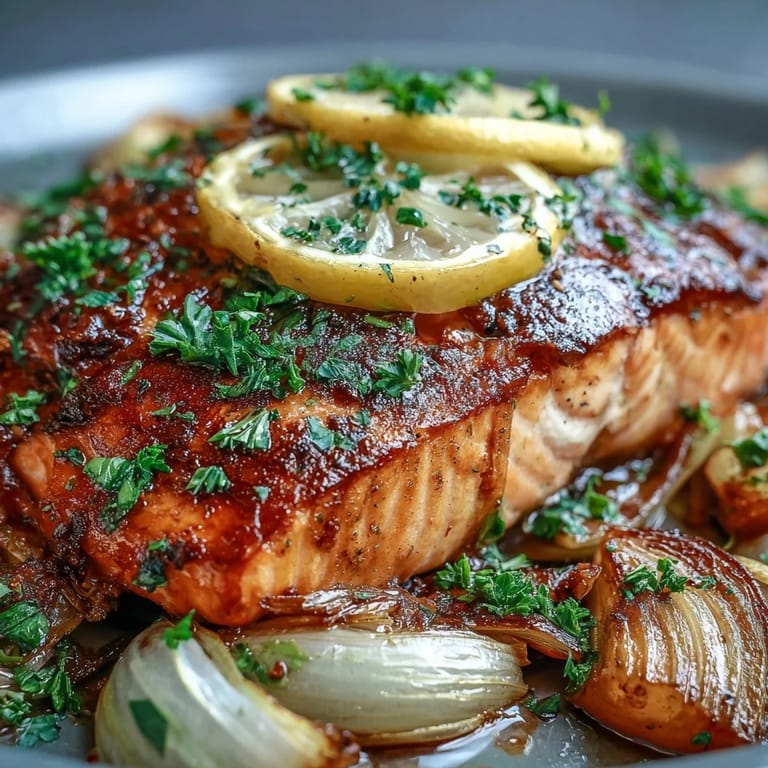
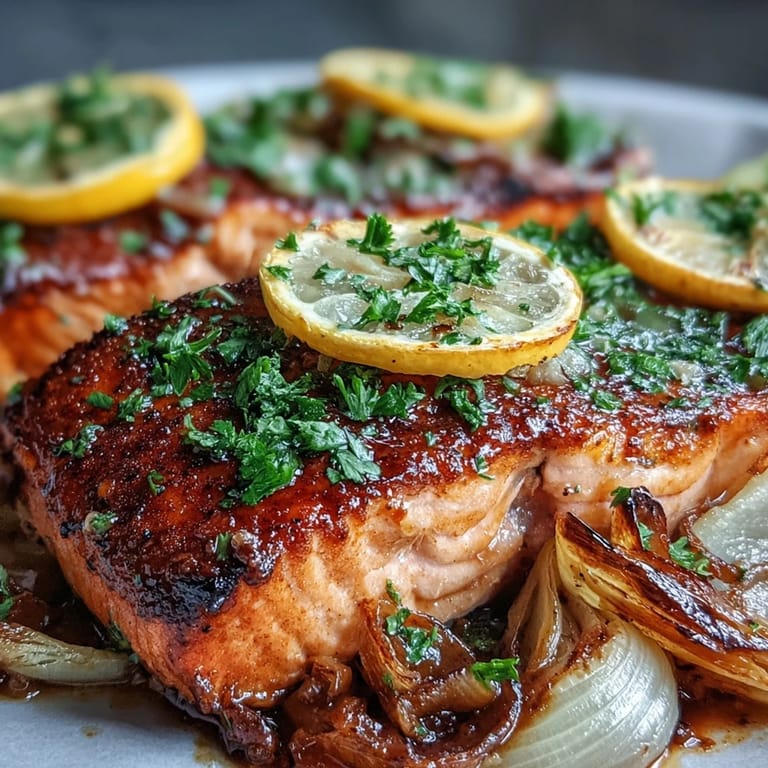
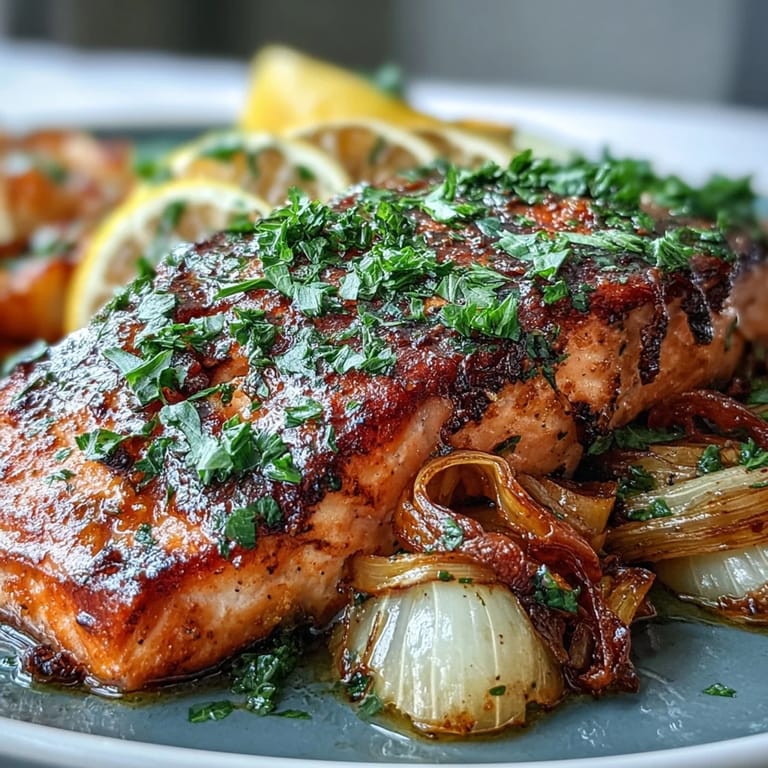
- Pull the pan out, tuck the salmon fillets skin-side down among the vegetables, and lay lemon slices over the top of each fillet. The lemon will release its oils and perfume the whole pan.
- Roast Until Just Done:
- Return the pan to the oven and roast for 12 to 15 minutes, until the salmon is opaque and flakes easily but still looks glossy in the center. Overcooked salmon is a tragedy, so check early.
- Make the Parsley Dressing:
- While the salmon bakes, combine parsley, garlic, Dijon mustard, capers, lemon zest, olive oil, and lemon juice in a small bowl and stir until it's thick and fragrant. Taste it and adjust salt and pepper until it sings.
- Plate and Dress:
- Transfer the roasted salmon and vegetables to plates, spoon the parsley dressing generously over the salmon, and serve immediately while everything is still hot and the dressing is cool and punchy.
 Save to Pinterest
 One evening I served this to a friend who claimed she hated salmon because it always tasted fishy. She ate two portions and asked for the recipe before she left. That's the power of good ingredients and a dressing that refuses to be boring.
How to Pick the Best Salmon
Look for fillets that are firm to the touch, with a bright color and a clean ocean smell, never ammonia or anything sour. I always ask the fishmonger what came in that morning and buy accordingly. If you can only find frozen, that's fine, just thaw it slowly in the fridge overnight and pat it completely dry before roasting so the skin has a chance to crisp.
What to Serve Alongside
I usually keep it simple with roasted baby potatoes tossed in olive oil and sea salt, or a bowl of steamed jasmine rice to soak up the dressing. A crisp green salad with a sharp vinaigrette works too, though honestly the dish is so complete it barely needs anything else. Sometimes I'll throw asparagus on the baking sheet in the last few minutes of roasting if I'm feeling ambitious.
Storage and Leftovers
Leftover salmon keeps well in the fridge for up to two days and is delicious cold on top of a salad or flaked into grain bowls. The parsley dressing loses some of its brightness after a day, so I usually make it fresh if I'm reheating leftovers. Reheat the salmon gently in a low oven or eat it chilled, microwaving it will dry it out and make you sad.
- Store the dressing separately in a small jar so it doesn't make the fish soggy.
- Leftover roasted leeks and onions are excellent stirred into scrambled eggs the next morning.
- If you're meal prepping, roast everything but wait to add the dressing until just before serving.
 Save to Pinterest
 This is the kind of recipe that makes you look like you know what you're doing in the kitchen, even on nights when you barely have the energy to stand. Keep the ingredients on hand and you'll never be more than forty minutes from something truly good.
Recipe FAQs
- → Can I use frozen salmon fillets?
Yes, but ensure they are completely thawed and patted dry before roasting. Excess moisture can prevent proper browning and affect cooking time.
- → How do I know when the salmon is perfectly cooked?
The salmon should flake easily with a fork and reach an internal temperature of 145°F. It should appear opaque throughout with a slightly translucent center for optimal moisture.
- → Can I make the parsley dressing ahead of time?
Absolutely. The dressing can be prepared up to 2 days in advance and stored in an airtight container in the refrigerator. Stir well before serving as ingredients may separate.
- → What other vegetables work well with this dish?
Cherry tomatoes, asparagus, zucchini, or fennel are excellent alternatives. Adjust roasting times based on vegetable density to ensure everything cooks evenly.
- → Can I remove the salmon skin before cooking?
While you can cook skinless fillets, keeping the skin on helps protect the fish during roasting and adds flavor. The skin crisps beautifully and can be easily removed after cooking if preferred.
- → How should I store leftovers?
Store cooked salmon and vegetables separately from the dressing in airtight containers in the refrigerator for up to 2 days. Reheat gently to avoid overcooking the fish.