 Save to Pinterest
 The first time I truly understood what it meant to cook a family meal was standing in a kitchen in Doha, watching my neighbor prepare majboos while her children played nearby. She moved with such ease—caramelizing onions until they turned deep mahogany, layering rice and meat with the confidence of someone who had cooked this dish a thousand times without thinking twice. I realized that majboos isn't just dinner; it's the sound of a crowded table, the smell of cardamom and black limes hanging in the air, and the quiet satisfaction of feeding people you love.
I made this for a potluck once without realizing I was the only one bringing a warm main dish—everyone else brought salads and sides. By the end of the night, the majboos was completely gone and three people asked for the recipe. That's when I knew this dish had something special: it fills people up, makes them feel cared for, and tastes authentic without needing fancy equipment or hard-to-find ingredients.
Ingredients
- Lamb, bone-in and cut into large pieces: Bones release gelatin that enriches the broth and makes each grain of rice silky; they're also edible once tender and give people something to enjoy.
- Basmati rice, rinsed and soaked for 30 minutes: This step removes excess starch so grains stay separate and fluffy instead of turning mushy or clumpy.
- Onions, thinly sliced: These become the foundation of flavor—caramelize them slowly until they're golden and sweet, almost jammy.
- Garlic and green chilies: Added after the onions to keep them fresh and sharp rather than burned; adjust the chilies based on your heat preference and who's eating.
- Tomatoes, chopped: They break down into the sauce and add brightness that prevents the dish from feeling heavy.
- Ground coriander, cumin, turmeric, cinnamon, cardamom, and cloves: These spices are the soul of majboos—each one matters, so don't skip any or substitute without thinking about what you're losing.
- Black limes (loomi), pierced: This is the secret that makes majboos taste authentic; they add an earthy, slightly fermented note that nothing else can replicate, though you can omit them if you can't find them.
- Saffron threads, soaked in warm water: Worth the investment—just a small amount adds color and a delicate floral note that elevates the entire dish.
- Ghee or vegetable oil: Ghee adds richness and nuttiness, but oil works fine if that's what you have.
- Water or low-sodium chicken stock: Stock adds depth, but water lets the spices shine if that's your preference.
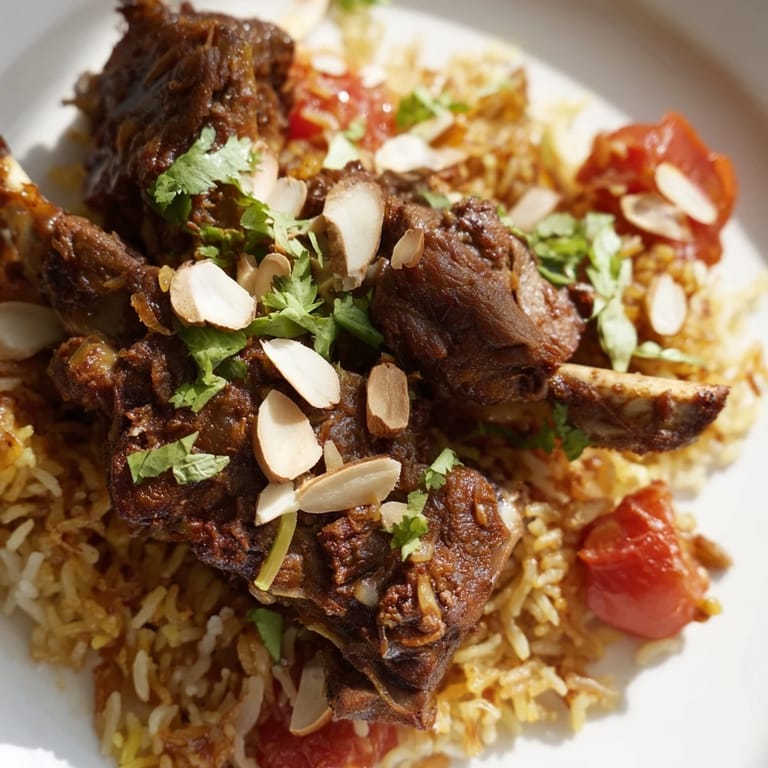
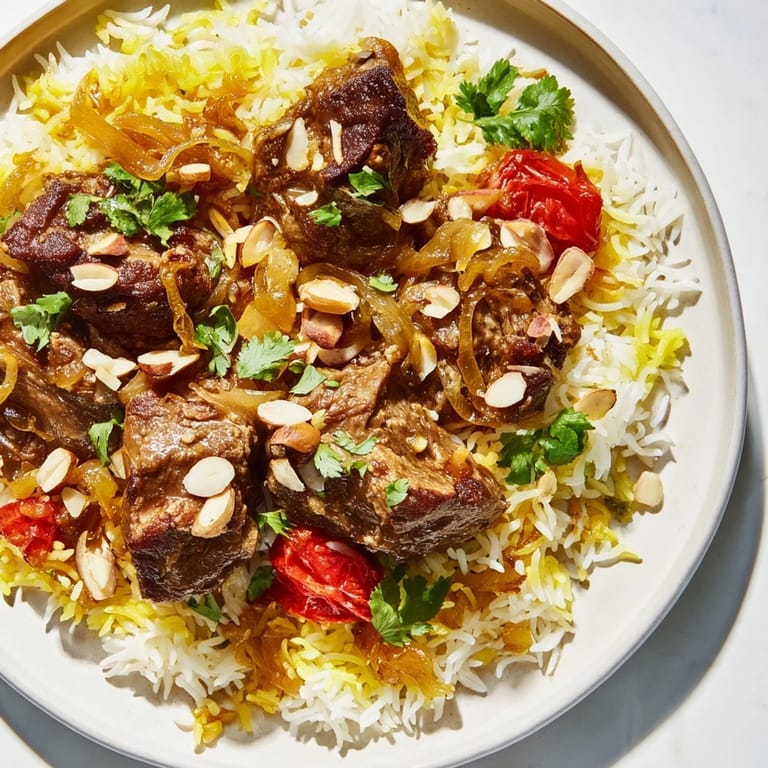
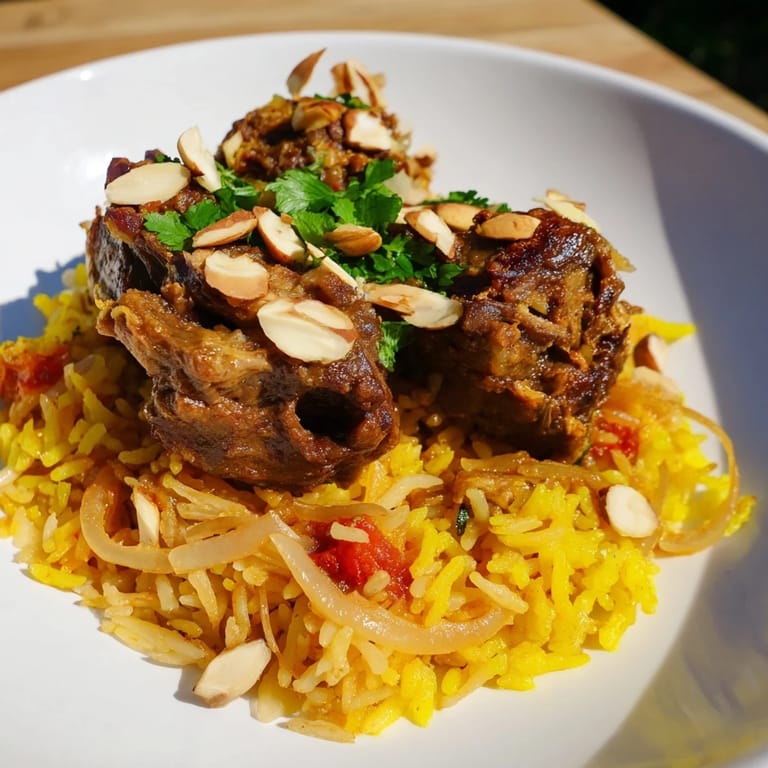
- Toasted slivered almonds and fresh cilantro: These aren't just garnish—they add crunch and brightness that make people take notice.
Tired of Takeout? 🥡
Get 10 meals you can make faster than delivery arrives. Seriously.
One email. No spam. Unsubscribe anytime.
Instructions
- Season and brown the meat:
- Pat the lamb dry and season generously with salt and pepper. This step matters more than it seems—dry meat browns faster and deeper, creating flavor you can't rush.
- Build your aromatic base:
- Heat ghee over medium heat and add sliced onions, stirring occasionally. This takes about 10 minutes and you want them deep golden, almost caramelized—this is where the sweetness comes from. When they're ready, stir in garlic and green chilies for just a minute until fragrant.
- Sear the lamb:
- Push the onions to the side and add lamb pieces to the hot ghee, letting them sit for a moment before stirring to brown all sides. This takes about 8 minutes total and builds a crust that locks in juices.
- Add tomatoes and spices:
- Stir in chopped tomatoes and cook until they soften and begin to break down, about 5 minutes. Then add all your ground spices, black limes, and bay leaves, stirring everything together until the meat is coated and the kitchen smells incredible.
- Braise the meat:
- Pour in water or stock and bring to a boil, then reduce heat and cover. Let this simmer gently for 45–50 minutes until the lamb is fork-tender; you should be able to pull it apart without effort. Taste and adjust seasoning if needed.
- Layer in the rice:
- Remove the lamb pieces with a slotted spoon and set aside, then add your soaked, drained rice to the broth and stir gently to coat each grain. Arrange the lamb pieces back on top and drizzle the saffron water over everything.
- Finish cooking covered:
- Cover the pot tightly with foil or a lid and cook on low heat for 25–30 minutes until the rice is fluffy and the liquid is absorbed. Resist the urge to peek—steam escaping means longer cooking time. When it's done, you'll hear nothing but the gentle hiss of residual moisture.
- Rest and serve:
- Turn off the heat and let the pot sit covered for 10 minutes; this allows flavors to settle and any remaining moisture to distribute evenly. Gently fluff the rice with a fork, arrange everything on a platter, and finish with toasted almonds and fresh cilantro.
 Save to Pinterest
 There's a moment that happens every time I make majboos when the pot is resting and the whole kitchen fills with steam and spice—that's when I know someone's about to have a really good meal. It's more than food; it's a conversation starter and an edible connection to something older and more meaningful than just dinner.
The Story Behind Majboos
Majboos means "mixed" or "pressed together" in Arabic, and the name tells you everything about how this dish works—meat, rice, and spices cooked together until they become one unified whole. It's a cornerstone of Qatari and broader Gulf Arab cuisine, often served at celebrations, family gatherings, and special occasions where generous portions are expected. The dish reflects centuries of trade and cultural exchange; the spices speak to Indian influence, the technique shows Persian roots, and the final result is purely Gulf Arab in character.
Why Bone-In Meat Matters
Using bone-in lamb or chicken isn't just tradition—the bones release gelatin and collagen during cooking, which enriches the broth and makes every grain of rice taste deeper and more complex. Boneless meat cooks faster but gives you less to work with; the bones also become edible once they've simmered for an hour, which people actually enjoy picking at during the meal. If you only have boneless meat, add an extra 10 minutes to the braising time and don't skip the bone broth if you can find it in the store.
Scaling and Serving
This recipe yields 6 generous servings as a main course, but majboos is incredibly flexible—it actually improves when made in larger batches because the flavors have more time to develop. Leftover majboos keeps beautifully in the refrigerator for up to 3 days and reheats gently on the stovetop with just a splash of water added to the pot. Serve it with cooling sides like plain yogurt, fresh salad, or a spicy tomato sauce on the side so people can balance the heat and richness according to their taste.
- Add yogurt to cool down heat and add creaminess without overpowering the spices.
- A simple salad with lemon juice and olive oil cuts through the richness and refreshes your palate between bites.
- Spicy tomato sauce on the side lets people control the overall heat level without changing the dish itself.
 Save to Pinterest
 Majboos teaches you something important about cooking: the best dishes aren't complicated, they're just honest and made with attention. Once you master this, you'll make it again and again, each time feeling a little more confident and a little more like someone who actually knows what they're doing in the kitchen.
Recipe FAQs
- → What type of meat is best for Qatari Majboos?
Bone-in lamb is preferred for its rich flavor and tenderness, but chicken can be used as a substitute for a lighter option.
- → How do black limes affect the dish?
Black limes, or loomi, add a tangy and slightly smoky citrus note, enhancing the depth of the spice blend.
- → Can I adjust the spiciness of this dish?
Yes, the amount of green chilies can be modified according to your preference or omitted for a milder taste.
- → What is the purpose of soaking basmati rice before cooking?
Soaking basmati rice helps to remove excess starch, resulting in fluffier grains when cooked.
- → How do I know when the lamb is tender?
The lamb is tender when it easily separates with a fork after simmering for 45–50 minutes.
- → What garnishes complement this dish?
Toasted slivered almonds and fresh chopped cilantro add texture and fresh herbal notes to the dish.