 Save to Pinterest
 My neighbor showed up one June afternoon with a basket of strawberries so perfectly ripe they practically glowed, and suddenly I was standing in her kitchen watching her fold pastry edges like she was wrapping a gift. She called it a galette, said it was French, and explained that the beauty of it was how forgiving it could be—no fancy pie tin, no crimping required, just honest fruit and butter and a willingness to let things look a little rough around the edges. That afternoon changed how I thought about baking, and now whenever strawberries hit their peak, this is what I make.
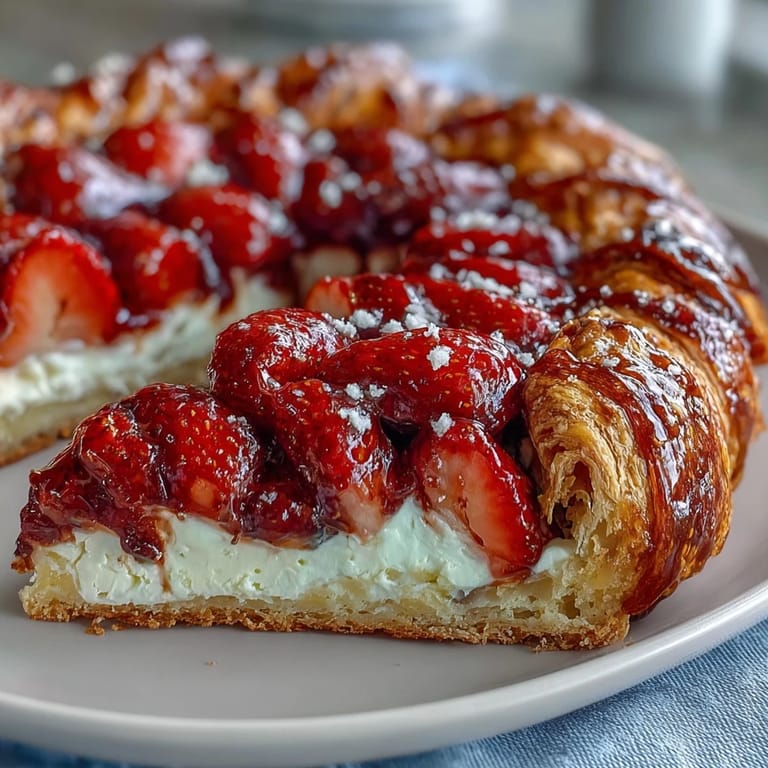
I made this for my mom's birthday dinner last year, and she spent half the meal just staring at it before cutting into a slice—not because it looked fancy, but because it looked like someone had actually cared. The way the berries tumbled across the pastry, still a little glossy from their own juices, the butter pooling golden at the edges where it caught the light. She took one bite and didn't say anything, just smiled, which somehow meant more than words.
Ingredients
- All-purpose flour (1 1/4 cups): The foundation of your pastry, and keeping it cold is honestly the entire secret to flakiness.
- Cold unsalted butter (1/2 cup): This should be so cold you can barely break it with your fingers—warm butter makes tough pastry, and nobody wants that.
- Ice water (3–4 tbsp): Add it slowly and stop as soon as the dough holds together; overmixing turns your pastry into rubber.
- Almond flour (1/2 cup): This creates that delicate, almost custard-like layer between pastry and fruit that feels fancy but takes thirty seconds to make.
- Fresh strawberries (2 cups): Slice them no more than a few hours before baking so they don't weep away all their flavor.
- Cornstarch (1 tbsp): The quiet hero that keeps your galette from turning into a soggy puddle; trust it.
- Coarse sugar (1 tbsp): Those little crystals catch the light and add a subtle crunch that makes the whole thing feel intentional.
Tired of Takeout? 🥡
Get 10 meals you can make faster than delivery arrives. Seriously.
One email. No spam. Unsubscribe anytime.
Instructions
- Make the pastry dough:
- Combine flour, sugar, and salt, then work in the cold butter until everything looks like breadcrumbs—you want little pea-sized pieces of butter still visible throughout. Add ice water one tablespoon at a time, mixing gently until the dough just barely holds together when you squeeze it; you'll feel the moment it shifts from crumbly to cohesive.
- Chill the dough:
- Shape it into a flat disk, wrap it in plastic, and let it sit in the fridge for at least thirty minutes while you do something else. This isn't just busywork—the rest makes the butter firm again and lets the gluten relax so your pastry stays tender.
- Blend the frangipane:
- Cream the softened butter and sugar together until pale, then add almond flour, egg, vanilla, almond extract if using, and salt, stirring until completely smooth. It should look almost like a thick pudding—rich and cohesive with no streaks of flour.
- Season the strawberries:
- Toss your sliced berries with sugar, cornstarch, and lemon juice and set them aside to macerate. The lemon keeps them tasting bright instead of one-note sweet.
- Preheat and prepare:
- Heat your oven to 400°F and line a baking sheet with parchment paper so nothing sticks and cleanup is effortless.
- Roll out the pastry:
- On a lightly floured surface, gently roll the chilled dough into a rough 12-inch circle, transferring it to your prepared baking sheet once it reaches size. It doesn't need to be perfect—uneven edges are part of the charm.
- Spread the frangipane base:
- Spoon the almond mixture onto the center of the dough and spread it evenly, leaving a 2-inch border all around so you have pastry to fold.
- Arrange the strawberries:
- Layer your macerated berries over the frangipane in whatever pattern makes you happy—tight and organized or casual and scattered, both look beautiful.
- Fold the edges:
- Gently bring the pastry border up and over the filling, pleating it as you go to create those rustic folds that look intentional even when they're not. Brush the exposed pastry with milk or cream and sprinkle with coarse sugar.
- Bake until golden:
- Bake for 35 to 40 minutes until the crust is deep golden brown and the filling is bubbling visibly at the edges. You'll smell the butter and almonds coming together, and that's your signal it's almost done.
 Save to Pinterest
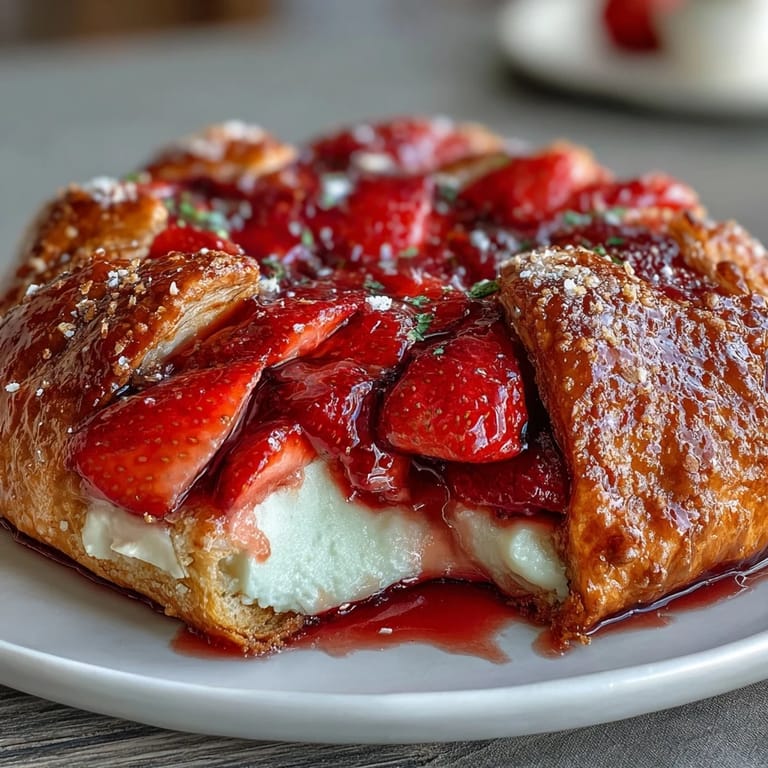
 There's a moment near the end of baking when the galette stops being a project and becomes something alive—the pastry puffs, the fruit starts releasing its own steam, the whole kitchen fills with a smell that's butter and almonds and summer all at once. That's when I know it's going to be good, when I know someone's going to remember this.
Why This Dessert Wins Every Time
The galette sits in that perfect middle ground between homemade and impressive, casual and special. You're not wrestling with a pie tin, you're not piping anything, you're not even pretending you know what you're doing—and somehow that honesty is exactly what people love about it. It tastes like you spent hours when you spent forty minutes, and it looks like you were confident enough to let it be imperfect.
Timing and Seasons
This galette is at its absolute best when strawberries are actually in season and taste like strawberries instead of watery disappointment. Late spring through early summer is the sweet spot, but honestly, the moment fresh berries show up at the market is your cue. You can swap in raspberries, blackberries, peaches, or cherries depending on what's calling to you, and the technique stays exactly the same.
Serving and Storage
Serve it warm or at room temperature—both are perfect, just different. Warm, the pastry is still flaky and the filling is soft. Room temperature, everything is a little more structured and easier to slice cleanly. A generous dollop of whipped cream or vanilla ice cream is optional but never wrong, and leftovers keep in an airtight container for up to two days, though they rarely last that long.
- Let it cool completely before storing so condensation doesn't make the pastry soggy.
- If the edges of your pastry brown too quickly while the filling cooks, cover just those edges with foil.
- This galette also freezes beautifully unbaked—just wrap it tightly and bake directly from frozen, adding five extra minutes to the time.
 Save to Pinterest
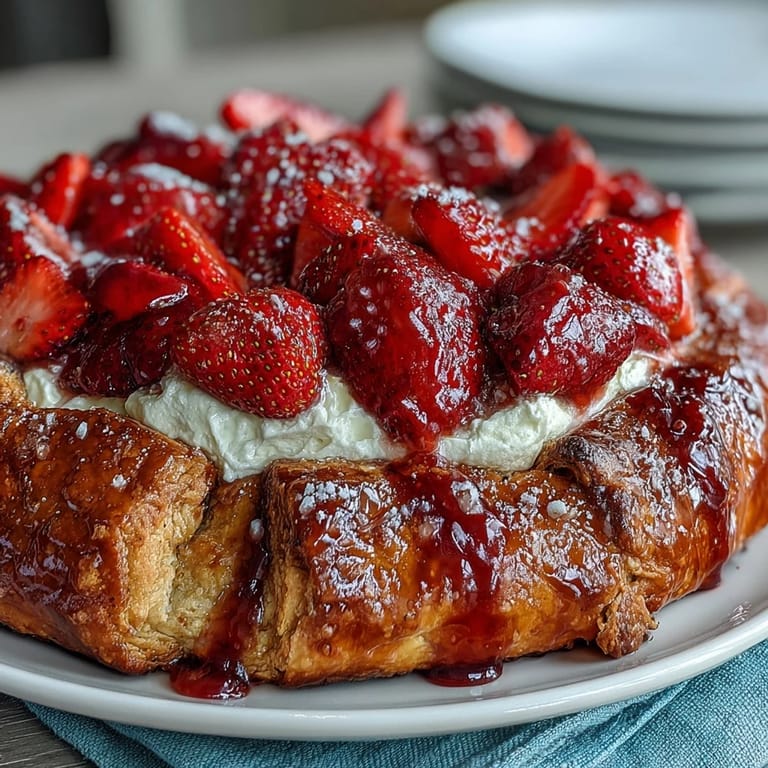
 This galette has a way of becoming someone's favorite thing you make, the dessert they ask for by name. That's worth the minimal effort.
Recipe FAQs
- → What is frangipane and how is it used here?
Frangipane is a smooth almond cream made with almond flour, sugar, butter, and eggs. It adds a rich, nutty layer beneath the strawberry topping.
- → How do I ensure the pastry stays crisp?
Keep the butter cold when mixing and chill the dough before rolling. Bake until the edges turn golden for a crisp texture.
- → Can I substitute strawberries with other fruits?
Yes, stone fruits or mixed berries can be used to create variations while maintaining balance with the almond filling.
- → Is it necessary to use cornstarch with the strawberries?
Cornstarch helps thicken the fruit juices during baking, preventing the tart from becoming soggy.
- → How should I store leftovers?
Store cooled portions wrapped in plastic wrap or airtight containers in the fridge. Best enjoyed within two days.