 Save to Pinterest
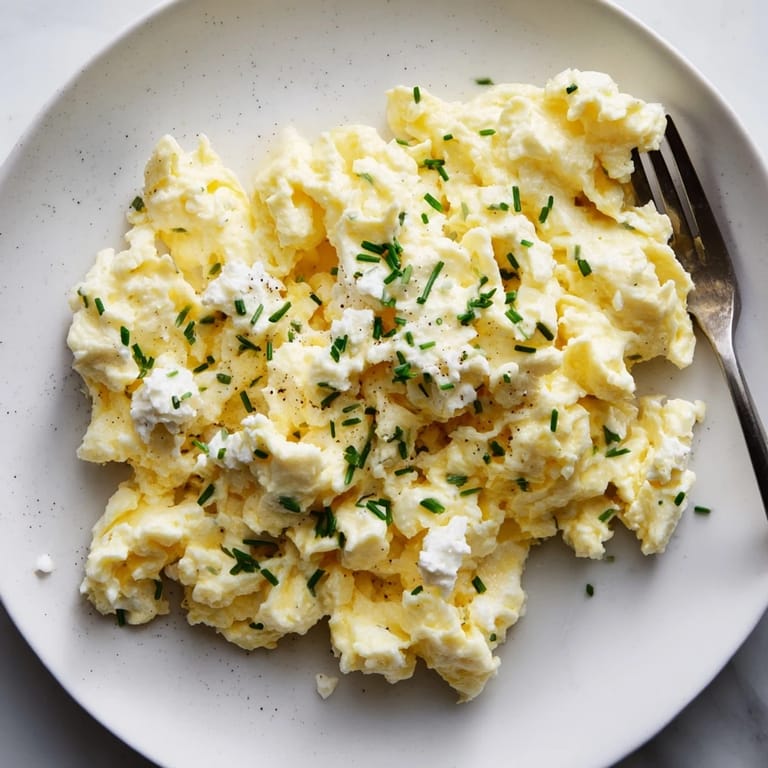
 There's something magical about the moment when cottage cheese hits hot butter and eggs—a small kitchen revelation that happened by accident on a Tuesday morning when I was trying to stretch breakfast further while keeping my protein intake up. What started as a desperate pantry improvisation became something I make constantly now, something that genuinely tastes better than regular scrambled eggs and somehow feels indulgent despite being so simple. The cottage cheese creates this impossibly creamy, cloud-like texture that regular eggs alone just can't achieve, and it happens in less time than it takes to pour coffee.
I served this to my sister during a rushed Saturday morning visit, and she asked for the recipe before she'd even finished her plate—which never happens. She'd been skeptical when I mentioned the cottage cheese, but one bite changed everything. Now she texts me pictures of her version, little victories of fluffiness from her own kitchen three states away.
Ingredients
- 4 large eggs: The foundation of everything—pick the freshest ones you can find because they whisk into silkier ribbons and the yolks taste richer.
- 1/3 cup cottage cheese (full fat preferred): This is what makes the magic happen; full fat creates that cloud-like texture while non-fat versions stay dense and grainy, a lesson I learned the hard way.
- 1 tablespoon milk or cream: Just enough to loosen the mixture and help the eggs cook evenly without making them soupy.
- 1/4 teaspoon salt: Don't skip this—it pulls out the eggs' flavor and brings the cottage cheese's tangy notes forward.
- 1/8 teaspoon freshly ground black pepper: Fresh pepper matters here because you're not hiding it under sauce or cheese; it's part of the whole picture.
- 1 tablespoon unsalted butter: This foams and carries all the heat evenly, creating those tiny golden edges you're after.
- Chives or parsley for garnish: A small green moment that makes breakfast feel intentional rather than rushed.
Tired of Takeout? 🥡
Get 10 meals you can make faster than delivery arrives. Seriously.
One email. No spam. Unsubscribe anytime.
Instructions
- Combine everything:
- Whisk the eggs, cottage cheese, milk, salt, and pepper together in a bowl until the mixture looks slightly frothy and the cottage cheese breaks down into the egg base. You want it smooth and uniform, not lumpy—this is what gives you that cloud-like result.
- Melt the butter:
- Heat your skillet over medium-low heat and let the butter melt slowly until it's foaming and smells nutty. This low-and-slow approach prevents the eggs from cooking too fast and getting rubbery.
- Start the eggs:
- Pour the mixture into the skillet and resist the urge to touch it immediately; let it sit untouched for about 20 seconds so the bottom can set slightly. Then with your spatula, gently sweep from the edges toward the center, like you're folding air into them.
- Cook with patience:
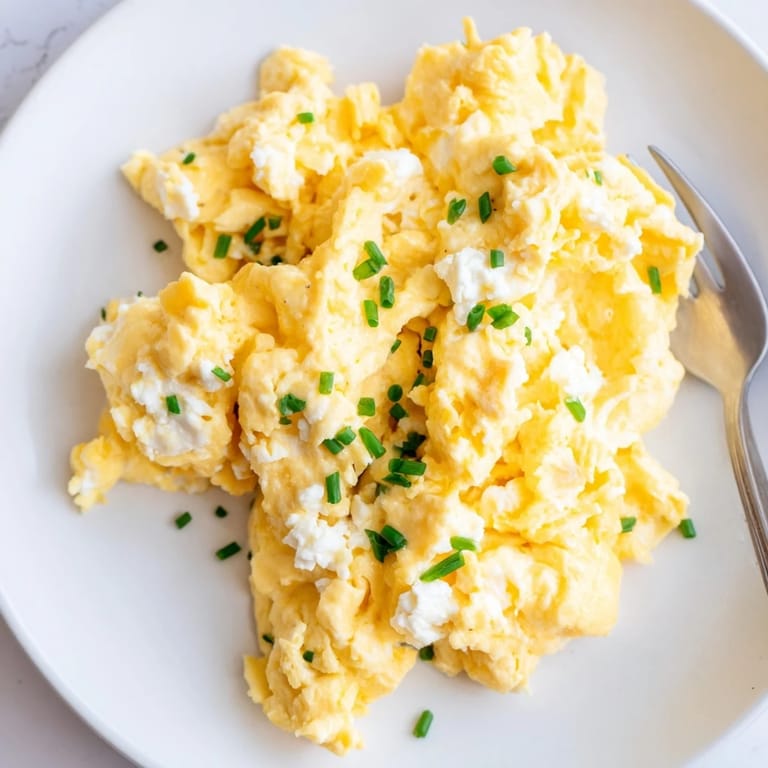
- Keep stirring occasionally and gently for about 2-3 minutes, watching for that moment when the eggs still look slightly wet on top but hold their shape. This is the sweet spot—remove them immediately because they continue cooking from residual heat.
- Finish and serve:
- Transfer to your plate right away, garnish with chives or parsley if you have them, and eat while they're still steaming. The texture matters most when they're fresh and warm.
 Save to Pinterest
 There's a specific texture to these eggs that reminds me of my grandmother's cooking—not because she made them this way, but because they have that quality of being perfectly tended to, cooked with attention rather than distraction. It's funny how a recipe with five ingredients can taste like someone cared.
Why Cottage Cheese Works Here
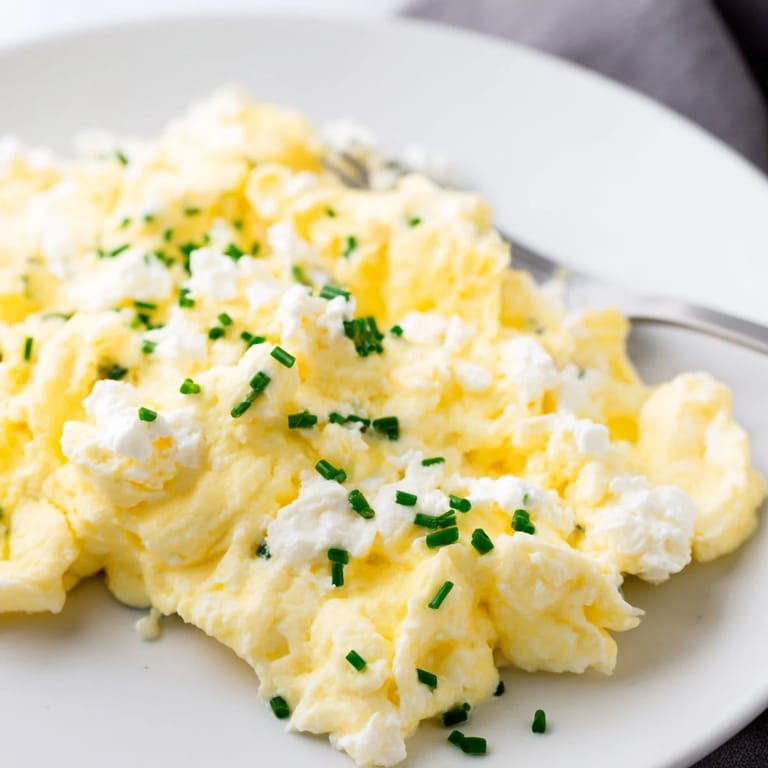
Cottage cheese is mostly water and protein, which means it adds moisture without heaviness and protein without bulk. As it heats, it breaks down and distributes throughout the eggs, creating tiny pockets of creaminess that make the whole thing feel luxurious. The tanginess also balances the richness of the butter and yolks, keeping everything bright instead of heavy.
Variations That Work
Once you master the basic version, the variations are endless and almost impossible to get wrong. Fold in sautéed spinach or tomatoes just before serving, scatter crispy bacon pieces on top, or swirl in smoked salmon for something more elegant. Even a small handful of shredded cheddar or feta melted right into the hot eggs becomes something special without requiring extra effort.
Serving Suggestions and Final Thoughts
Serve these alongside whole-grain toast for texture contrast, or with sliced avocado if you want to push the protein and healthy fat angle further. A small salad with lemon vinaigrette cuts through the richness beautifully, and fresh fruit on the side rounds out a breakfast that feels complete rather than one-dimensional.
- Toast your bread while the eggs cook so everything finishes at the same time.
- If you're cooking for two, this recipe doubles perfectly without any timing adjustments.
- Leftover eggs are one of the rare things that reheat decently—just add a splash of milk and warm gently over low heat.
 Save to Pinterest
 This breakfast feels like both indulgence and self-care, which is the rare intersection where food actually lives up to what we tell ourselves about nourishment. It's been one of the unexpected joys of my week, every time I make it.
Recipe FAQs
- → How does cottage cheese affect the eggs' texture?
Cottage cheese adds creaminess and moisture, resulting in exceptionally fluffy and soft eggs when gently cooked.
- → Can I use skim or low-fat cottage cheese?
Full-fat cottage cheese provides the best creaminess, but low-fat versions can be used, with slightly less richness.
- → What’s the best way to cook these eggs for fluffiness?
Cook over medium-low heat undisturbed briefly, then gently stir until softly set for light, airy eggs.
- → Are there recommended garnishes or add-ins?
Chopped chives or parsley add freshness; optional additions include shredded cheddar, sautéed spinach, or smoked salmon.
- → Is this suitable for a high-protein diet?
Yes, combining eggs and cottage cheese boosts protein content while maintaining a creamy texture.
- → Can this be prepared ahead of time?
It’s best enjoyed fresh, but leftovers can be gently reheated to retain softness.