 Save to Pinterest
 The first time I pulled salmon out of a bath of warm olive oil, I thought I'd ruined it. It looked too pale, too delicate, like it might fall apart if I breathed too hard. Then I tasted it. That silky, buttery texture was unlike anything I'd ever made at home. Adding the tahini and pistachio crust came later, after a dinner party where I wanted something that looked impressive but didn't require last-minute panic. This dish became my secret weapon.
I made this for my sister's birthday once, and she still brings it up every time we talk about food. She's not usually a salmon person, but the way the oil gently cooked the fish without any of that fishy smell won her over. We sat on the balcony with lemon wedges and flatbread, tearing off pieces and scooping up the pistachio topping. It was one of those meals where conversation stopped every few bites because everyone was too busy eating.
Ingredients
- Salmon fillets: Look for fillets that are evenly thick so they cook at the same rate, and make sure all pin bones are removed or you'll be picking them out later.
- Olive oil: You need enough to mostly cover the fish, but don't worry, you can strain it afterward and use it for roasting vegetables or sauteing greens.
- Lemon zest: Zest it right over the salmon before adding the oil so the oils release into the dish and perfume everything.
- Pistachios: Chop them finely but not into dust, you want some texture to contrast with the soft fish.
- Tahini: Stir it well before measuring because the oil separates, and a good tahini will make the crust creamy and rich.
- Fresh herbs: Use a mix of parsley, dill, and mint for brightness, but if you only have two of the three, it will still be delicious.
- Garlic: Grate it finely or mince it to a paste so it blends into the crust without any harsh bites.
- Honey: Just a teaspoon balances the tahini's bitterness and helps the crust stick to the salmon.
- Ground cumin: A small amount adds warmth without overpowering the herbs.
Tired of Takeout? 🥡
Get 10 meals you can make faster than delivery arrives. Seriously.
One email. No spam. Unsubscribe anytime.
Instructions
- Preheat and Prep:
- Set your oven to 100°C and choose a dish that fits the fillets snugly so you don't waste oil. Season the salmon with salt, pepper, and lemon zest right in the dish.
- Submerge in Oil:
- Pour olive oil over the salmon until it's mostly covered, then slide the dish into the oven. The low heat will gently poach the fish over 25 to 30 minutes until it's just opaque and flakes with a fork.
- Make the Crust:
- While the salmon cooks, mix the pistachios, tahini, garlic, herbs, lemon juice, honey, cumin, and a pinch of salt and pepper in a bowl. Stir until it forms a thick paste that you can spread easily.
- Lift and Drain:
- Carefully remove the salmon from the oil using a slotted spatula and set each fillet on a paper towel to blot excess oil. Let them cool for a minute or two so the crust doesn't slide off.
- Top and Serve:
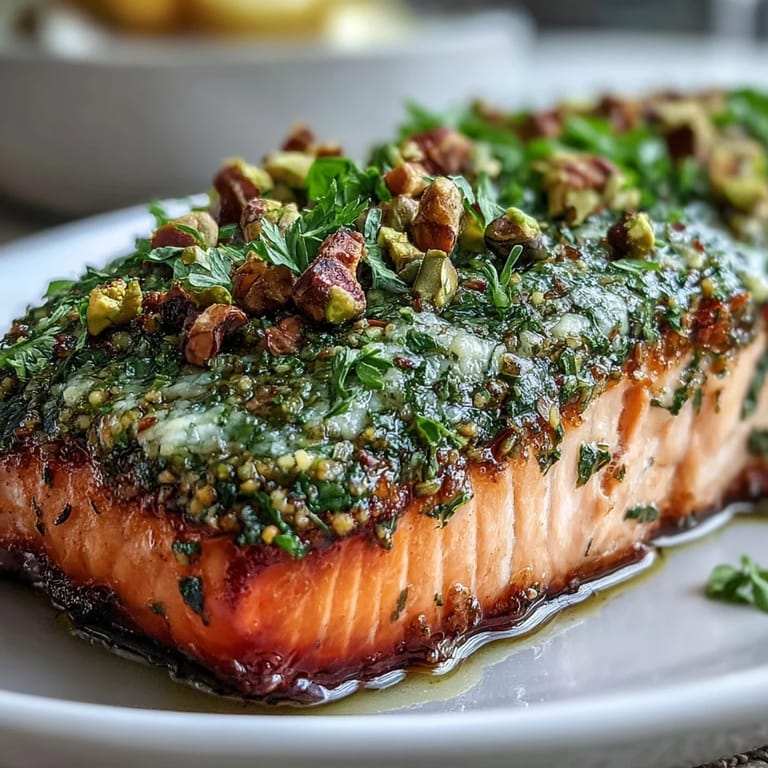
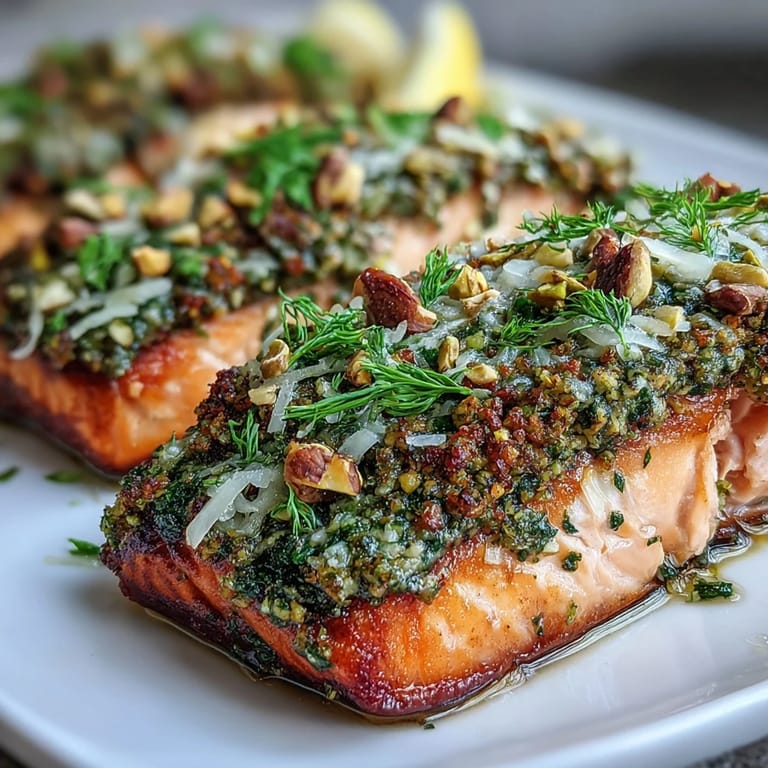
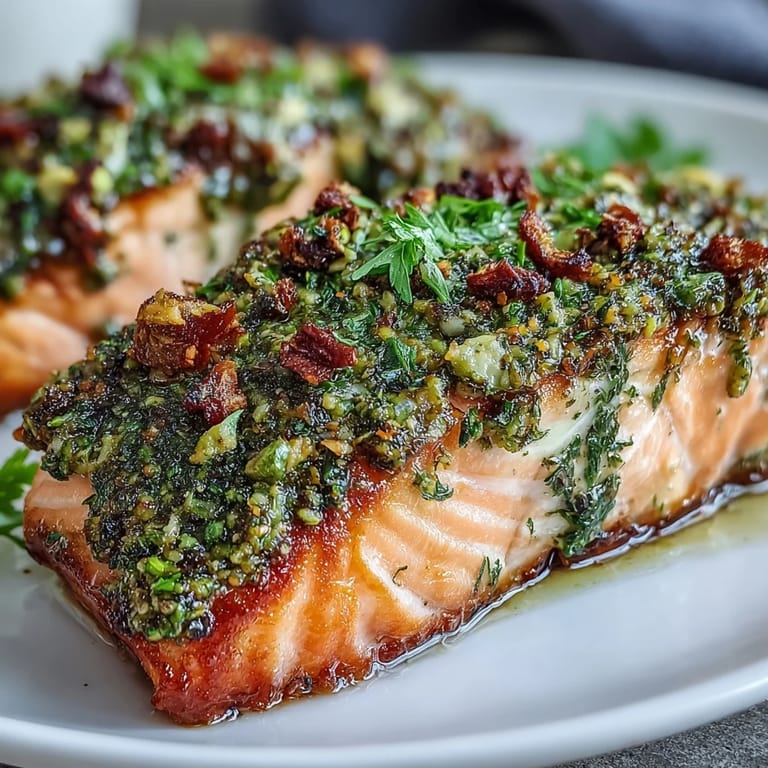
- Spread a generous layer of the tahini-pistachio mixture over each fillet, pressing gently so it sticks. Serve warm or at room temperature with lemon wedges and extra herbs.
 Save to Pinterest
 The best part about this dish is how it makes people slow down. I've served it at casual dinners and slightly fancier gatherings, and every time, the table gets quiet for a moment. There's something about the combination of that silky salmon and the crunch of pistachios that makes you want to savor each bite. It's become the dish I make when I want to remind myself that cooking doesn't have to be complicated to feel special.
Serving Suggestions
I like to serve this with a simple green salad dressed in lemon and olive oil, or warm flatbread for scooping. Roasted vegetables like asparagus or zucchini work beautifully on the side, and if you want something more substantial, a grain like freekeh or couscous soaks up any extra tahini that falls onto the plate. Keep it light so the salmon stays the star.
Storage and Leftovers
Leftover salmon keeps in the fridge for up to two days in an airtight container. I've eaten it cold, flaked over salad, or gently warmed in a low oven with a little extra olive oil drizzled on top. The crust softens a bit overnight but the flavors deepen, which I actually prefer sometimes. Just don't microwave it or you'll dry out all that tender texture you worked so hard to create.
Make It Your Own
If pistachios aren't your thing, try almonds or walnuts for a different nutty flavor. You can swap the herbs based on what's in your fridge, basil or cilantro work well too. For extra crunch, spread the crust on the salmon and pop it under the broiler for a minute or two before serving, just watch it closely so it doesn't burn.
- Add a pinch of chili flakes to the crust if you like a little heat.
- Use the leftover confit oil to dress roasted potatoes or drizzle over hummus.
- Try this method with other fish like cod or halibut if salmon isn't available.
 Save to Pinterest
 This recipe taught me that sometimes the simplest techniques yield the most memorable results. I hope it becomes one of those dishes you return to when you want to cook something that feels both comforting and a little bit fancy.
Recipe FAQs
- → What is confit and why use this technique for salmon?
Confit is a gentle cooking method where food is slowly cooked submerged in fat or oil at low temperature. For salmon, this technique produces incredibly tender, buttery fillets that remain moist and flake beautifully. The low heat prevents overcooking and creates a luxurious texture.
- → Can I prepare the tahini-pistachio crust ahead of time?
Yes, you can make the crust mixture up to 2 days in advance. Store it in an airtight container in the refrigerator, and bring to room temperature before spreading on the salmon. This makes entertaining much easier.
- → What can I serve alongside this salmon dish?
This pairs beautifully with light, fresh sides like a crisp green salad, roasted vegetables, couscous, quinoa, or warm flatbread. Lemon-dressed greens or a cucumber-tomato salad complement the rich fish perfectly.
- → Can I use a different type of fish?
Yes, firm white fish like cod, halibut, or sea bass work well with the confit method. Adjust cooking time based on fillet thickness, checking for opaque flesh that flakes easily. The tahini-pistachio crust pairs wonderfully with most fish varieties.
- → How do I know when the salmon is properly cooked?
The salmon is done when it's just opaque throughout and flakes easily with a fork. At 100°C, this typically takes 25-30 minutes. The flesh should be tender and moist, not dry or chalky. A slight translucence in the center is acceptable if you prefer medium doneness.
- → What should I do with the leftover confit oil?
Strain the cooled oil through a fine mesh sieve or cheesecloth and store in an airtight container in the refrigerator. This flavorful oil is excellent for salad dressings, sautéing vegetables, or using in future confit preparations.