 Save to Pinterest
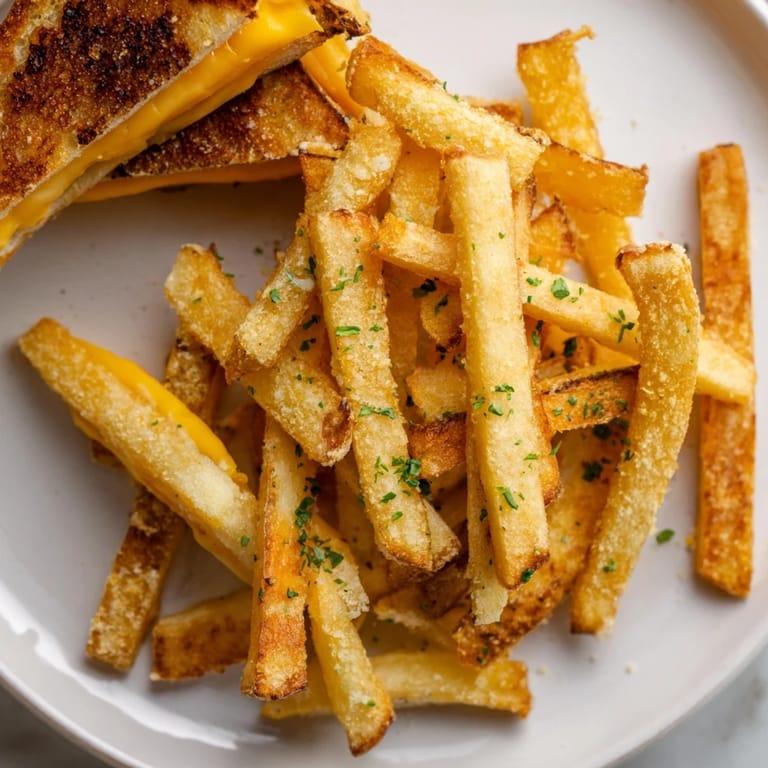
 There's something about the smell of beef tallow hitting hot oil that instantly transports me back to my grandmother's kitchen, where she'd fry potatoes in the rendered fat saved from Sunday roasts. She'd pair them with the most indulgent grilled cheese, and I'd watch in awe as she'd press the sandwich just right to get that perfect golden crust while the cheese melted into every corner. That combination stuck with me all these years, and now it's become my go-to comfort meal whenever I want to feel both grounded and a little bit fancy.
I made this for my roommate on a cold Tuesday evening when we were both too tired to think about anything fancy, and the moment she bit into that first fry, her whole face changed. She actually closed her eyes, and I remember thinking that I'd just witnessed pure, uncomplicated joy—the kind that only really good food can deliver. We barely spoke for the first few minutes, just ate and smiled, and that's when I realized this dish isn't just about ingredients; it's about giving someone a moment of real comfort.
Ingredients
- Russet potatoes (4 large): The starch content in russets is what gives you that fluffy interior, so don't substitute—I learned this the hard way with waxy potatoes that stayed dense no matter how long I fried them.
- Beef tallow (1 quart): This is the magic ingredient that elevates everything; rendered beef fat creates a savory richness that vegetable oil simply cannot match, and it's worth seeking out at butcher shops or farmers markets.
- Kosher salt (2 tsp) and black pepper (½ tsp): Season your fries right after they come out of the oil when they're still hot and the seasoning will stick to the surface.
- Fresh parsley (1 tsp, optional): A tiny garnish that adds color and a fresh note that cuts through the richness.
- Sourdough bread (8 slices): The tanginess of sourdough balances the savory cheese and butter in a way plain bread never could.
- Sharp cheddar cheese (8 slices): Buy real cheese, not the plastic-wrapped stuff—sharp cheddar has complexity that mild cheese lacks, and it melts into something glossy and delicious.
- Unsalted butter (4 tbsp, softened): Softened butter spreads evenly without tearing the bread, and the even coating is what gets you that gorgeous golden crust.
- Mayonnaise (2 tbsp, optional): This might sound odd, but mayo has a lower smoke point than butter, which actually helps brown the bread faster—it's a trick restaurant cooks use.
Tired of Takeout? 🥡
Get 10 meals you can make faster than delivery arrives. Seriously.
One email. No spam. Unsubscribe anytime.
Instructions
- Soak those potatoes like you mean it:
- Cut your russets into ¼-inch sticks and submerge them in cold water for at least 30 minutes; this removes surface starch so your fries actually crisp up instead of staying soft in the middle. Pat them bone-dry with paper towels when you're ready—any moisture is the enemy of crispness.
- Do your first fry slow and low:
- Heat your beef tallow to 325°F and fry the potatoes in batches (don't crowd them) for 4 to 5 minutes until they're just tender but not browned. This step cooks the inside gently so you don't end up with raw centers.
- Finish them hot and quick:
- Bump the temperature up to 375°F and fry again for just 2 to 3 minutes until they're golden and shattered-crispy on the outside. The contrast between that shattering exterior and creamy inside is what makes these worth the effort.
- Build your sandwich with intention:
- Spread your softened butter (and mayo, if you're using it) on one side of each bread slice, making sure it goes all the way to the edges—thin coverage leads to pale spots. Layer one or two cheese slices between two slices of bread with the buttered sides facing outward.
- Cook low and patient:
- Heat your skillet to medium and let the sandwich cook for about 3 to 4 minutes per side, pressing gently with a spatula halfway through so the cheese melts evenly and the bread turns golden instead of burnt. You'll hear it sizzle and smell the butter toasting—that's when you know it's working.
- Plate while everything is hot:
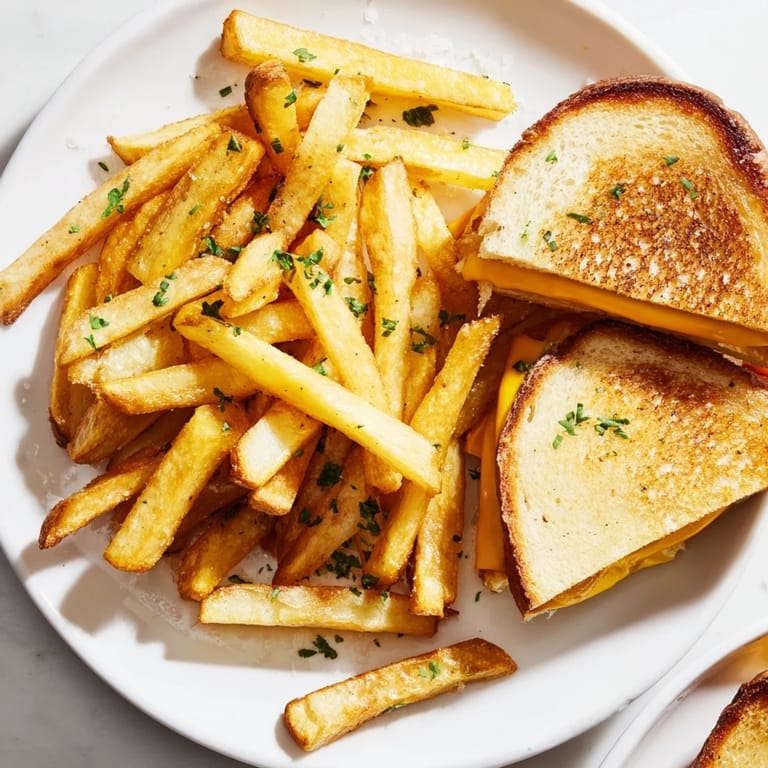
- The moment your sandwich comes off the skillet and your fries come out of the oil, get them on a plate together—the warmth keeps everything crispy and the flavors meld better when they're eaten together.
 Save to Pinterest
 What surprised me most about this dish is how it became a quiet ritual rather than just something I made when I was hungry. It's the kind of meal that makes you sit down and actually be present, and there's something grounding about that in a world that's always asking us to rush. Every time I smell that beef tallow, I'm reminded that the simplest things done well—potatoes fried twice, bread toasted in butter, cheese melted—are often the things that matter most.
The Story Behind Beef Tallow
Beef tallow might sound fancy or intimidating, but it's really just rendered beef fat that butchers used to use for everything before vegetable oils became cheap and convenient. What most people don't realize is that tallow fries are how McDonald's used to taste before they switched their oil in the 1990s—there's a reason older generations talk about how good their fries were. The flavor is savory, almost meaty, which sounds heavy until you actually taste it alongside something bright and tangy like sharp cheddar and sourdough. It's one of those cooking revelations that makes you understand why our grandparents' food tasted the way it did.
Cheese Selection and Melting
Sharp cheddar is my go-to because it has enough character to stand up to the richness of beef tallow, but this is where you can get creative without the dish falling apart. I've had success mixing cheddar with Gruyère for extra nuttiness, and once I tried a tiny amount of smoked gouda mixed in, which added a subtle complexity that caught everyone off guard. The key is choosing cheeses that melt smoothly—avoid anything too crumbly, and always use real cheese because the emulsifiers in processed cheese make it clump instead of flow. Cold cheese comes straight from the fridge when you assemble your sandwich, and it melts during cooking rather than getting greasy, which is actually what you want here.
Variations and Swaps
If beef tallow is genuinely impossible to find where you live, duck fat is legitimately your best alternative—it has a similar richness and flavor depth, though it's usually pricier. For the grilled cheese itself, sourdough is my favorite bread because it's sturdy enough not to fall apart and tangy enough to balance everything, but a good brioche or even thick-cut white bread works if that's what you have. The mayo addition seems strange to people until they taste the difference—it's not about flavor, it's about that extra browning power that gets you closer to restaurant-quality results without any actual taste change.
- Try mixing two cheeses for complexity, but stick to melting cheeses or you'll end up with chunks.
- If you don't have mayonnaise, a touch of Dijon mustard spread thin adds depth without making the bread soggy.
- Leftovers can be reheated gently in a low oven, but eat them fresh if you possibly can—that crispness fades fast.
 Save to Pinterest
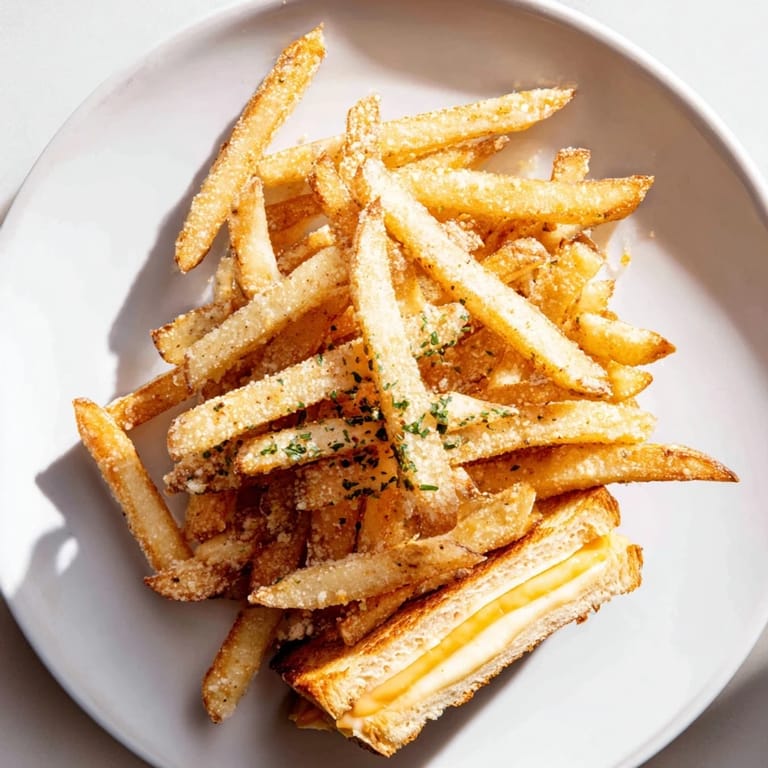
 This meal exists at that perfect intersection of simple and special, where the ingredients do most of the work but your attention and care make all the difference. Make it when you want to feel like someone cares about you, because honestly, someone putting in the effort for beef tallow fries and a proper grilled cheese is showing you something real.
Recipe FAQs
- → What makes beef tallow fries different from regular fries?
Beef tallow fries offer a richer, more savory flavor and an ultra-crispy texture due to the high smoke point and unique fatty profile of the rendered beef fat.
- → How do you achieve crispy fries without sogginess?
Double frying is key: first to cook the potato through at a lower temperature, then frying again at a higher temperature for a golden, crispy finish.
- → Can I substitute beef tallow with another fat?
Yes, duck fat or vegetable oil can be used, but beef tallow imparts a distinctive rich flavor that enhances the fries’ taste and crispness.
- → How do you keep grilled cheese from becoming soggy?
Spreading butter evenly on the sandwich exterior and cooking over medium heat allows a golden crust to form, sealing in the melted cheese and preventing sogginess.
- → What cheese varieties work best for grilling?
Sharp cheddar provides great melt and flavor; mixing with Gruyère or mozzarella adds complexity and creaminess to the sandwich.