 Save to Pinterest
 The first time I tasted Yemeni saltah, it arrived in a bowl that seemed to contain three dishes at once—layers of history, warmth, and unexpected textures all stacked together. My friend's mother had made it on a quiet Friday afternoon, and I watched her whip fenugreek into clouds of pale foam with the kind of practiced rhythm that comes from years of feeding family. That moment taught me that some of the world's most comforting dishes aren't complicated—they're just honest, built from a few good ingredients layered with intention and served with generosity.
I made this for my small study group during exam season, and something shifted—instead of the usual stressed silence, people started talking, laughing, asking for seconds. One person said the warmth of it felt like being understood, and I realized that saltah isn't just food; it's a way of saying you've taken time to build something layered and thoughtful for the people sitting across from you.
Ingredients
- Beef or lamb, cubed: The meat is your foundation—choose cuts that have some marbling so they become tender and rich rather than stringy after simmering.
- Vegetable oil: You need enough to build a proper fond at the bottom of the pot, so don't skimp here.
- Onion and garlic: These are your flavor base; getting them golden and fragrant before adding meat makes all the difference.
- Tomatoes: Fresh is better if you can manage it, but canned works when that's what you have on hand.
- Potato and carrot: They thicken the stew naturally and add substance without feeling heavy.
- Spice blend (cumin, coriander, black pepper, turmeric, fenugreek): Toast these in your mind as a unified flavor profile—warm, earthy, slightly bitter in the best way, with fenugreek adding a maple-like sweetness that sounds strange until you taste it.
- Ground fenugreek seeds: This is the star of the hulbah topping; source it from a spice shop or online because it's what creates that distinctive foggy texture and warm, almost sweet note.
- Flatbread (malawah or lahoh): The bread soaks up the broth and becomes almost creamy—it's not a side, it's part of the dish itself.
Tired of Takeout? 🥡
Get 10 meals you can make faster than delivery arrives. Seriously.
One email. No spam. Unsubscribe anytime.
Instructions
- Brown your foundation:
- Heat oil and let your onions turn golden and soft—this takes patience, about 5 minutes. Add garlic and chili, then the meat, and let it sit undisturbed for a minute or two on each side so it actually browns instead of steaming. You're building flavor here, not just cooking.
- Build the stew base:
- Once meat is browned, add your tomatoes, vegetables, and all the spices at once. Let them toast together for a few minutes—you'll smell when they're ready, a warm aroma that fills the kitchen. Then add your broth, bring it to a gentle boil, cover, and let it simmer low and slow for 1 to 1.5 hours until the meat is so tender it wants to fall apart.
- Create the fenugreek foam:
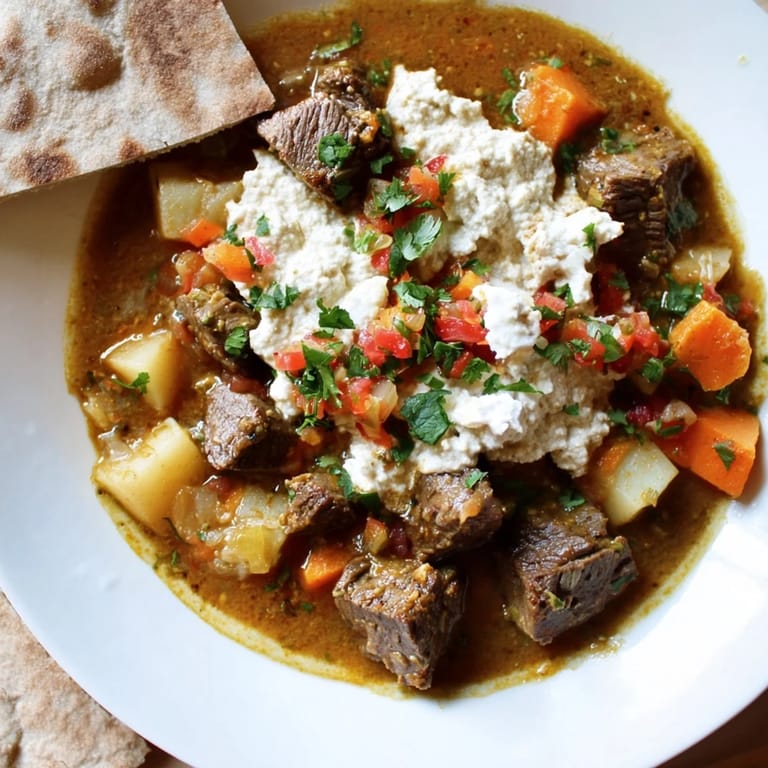
- While the stew cooks, soak your ground fenugreek in cold water for a full hour—this is non-negotiable because it softens the seeds and makes them whippable. After soaking, drain the water and whisk vigorously with a fork or small whisk until it becomes light and fluffy, almost like whipped egg whites. Fold in your fresh tomato, cilantro, chili, and lemon juice just before serving.
- Assemble and serve:
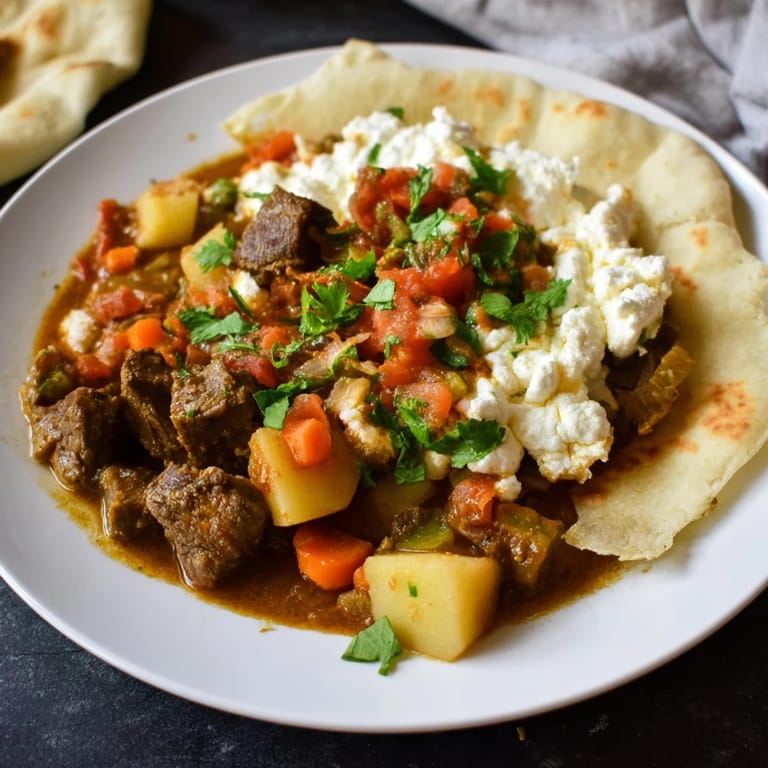
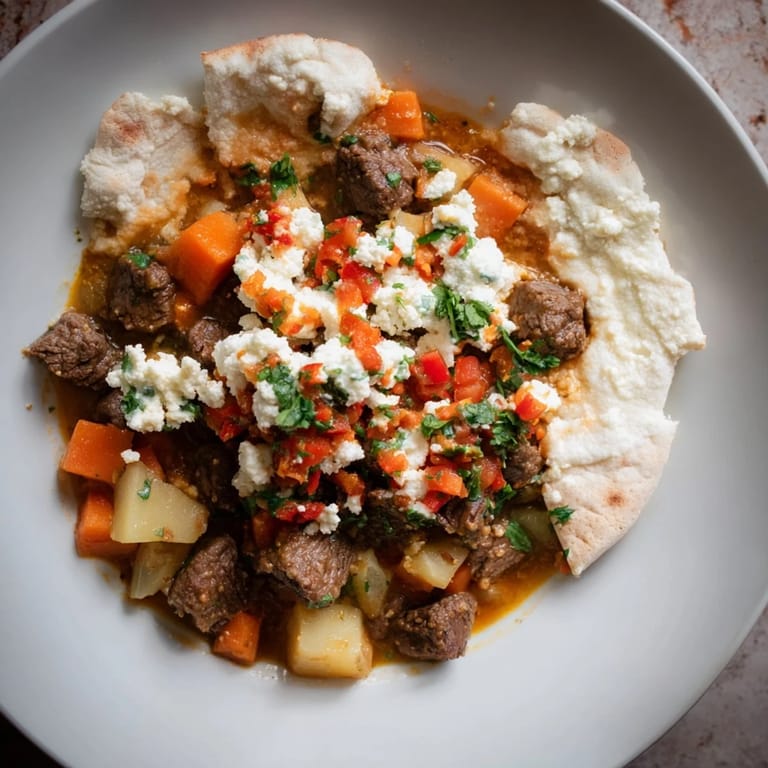
- Tear your flatbread into pieces and layer it in serving bowls, then ladle the hot stew over it so the bread soaks up the broth but still has some structure. Top with a generous spoonful of hulbah and serve immediately, letting people mix the layers as they eat.
 Save to Pinterest
 I remember one evening when my neighbor came over uncertain and tired, and I made this stew knowing it would be too warm to share details with words right away. We ate in silence for the first few minutes, and then slowly, with the food doing something in the background, the conversation started to flow naturally. That's when I understood that saltah is about more than sustenance—it's about creating space for connection.
Why the Layers Matter
The genius of saltah is that nothing stands alone. The bread would be dry, the stew would be one-note, and the fenugreek by itself would be strange—but together, they create something that tastes more interesting with each spoonful. This is true in cooking and sometimes in life; good things happen when you honor each component's role and let them work together rather than trying to make one element carry the whole weight.
Adapting for Your Kitchen
If you can't find traditional Yemeni flatbread, pita or even naan will work, though the texture shifts slightly. I've made this with whatever vegetables I had—sometimes celery instead of carrot, sometimes just potato and onion when that's what the season offered. The spices are flexible too; if fenugreek feels too unfamiliar, you can reduce it slightly, though I'd encourage you to try the full amount at least once because it's what makes this distinctly Yemeni rather than just another stew.
The Rituals Around This Dish
In Yemen, saltah is often eaten communally, with family or close friends gathering around a shared bowl or individual bowls placed closely together. The ritual of mixing the layers—breaking down the bread, stirring the hulbah through the stew, finding the balance in each spoonful—becomes its own kind of meditation. You can honor that tradition even alone, or you can serve it as an invitation for slowness and presence when you're feeding others.
- Make the hulbah while the stew simmers so everything is ready at the same moment and served at peak temperature.
- Consider setting the table with a small bowl of extra zhug (Yemeni hot sauce) or fresh chili oil on the side for people who want more heat.
- This dish tastes even better the next day when the flavors have settled, so don't hesitate to make extra.
 Save to Pinterest
 Saltah has taught me that the most memorable meals are often the ones built with intention and shared without pretense. Make this when you want to nourish someone, including yourself, in a way that feels both ancient and new.
Recipe FAQs
- → What cut of meat works best for authentic Saltah?
Beef or lamb cut into cubes around 2 cm gives the ideal texture and richness for this dish.
- → How is the fenugreek topping prepared?
Ground fenugreek seeds are soaked in water, then whipped vigorously until fluffy, then combined with tomato, cilantro, lemon, and chili for a tangy foam.
- → Can I use broth instead of water for cooking?
Yes, beef broth enhances the stew’s depth and complements the spices beautifully.
- → What breads are suitable as the base layer?
Traditional Yemeni flatbreads like malawah or lahoh are ideal, but pita or naan can be good substitutes.
- → Is it possible to make a vegetarian version?
Omitting meat and increasing root vegetables or beans allows a flavorful vegetarian alternative while preserving the dish's heartiness.