 Save to Pinterest
 There's something about arranging fresh fruit on a platter that makes you feel like you've accomplished something without really trying. My neighbor stopped by one spring morning while I was playing around with a pile of strawberries and blueberries, and by the time she left, she'd convinced me to bring this exact setup to her daughter's brunch the following weekend. The real revelation wasn't the fruit itself—it was discovering that a simple yogurt sauce could transform the whole experience into something guests actually got excited about.
I made this for my daughter's end-of-school-year picnic, packed it in a shallow container with the sauce in a separate jar, and watched how quiet the kids got when they started dipping fruit. That's when I realized this wasn't just appetizer material—it was the thing people remembered talking about. One parent asked for the recipe right there on the grass, yogurt on her chin, completely unselfconscious about it.
Ingredients
- Strawberries: Buy them firm and bright red, and hulling them just before assembly keeps them fresher looking on the platter.
- Blueberries: These need barely any prep, but give them a gentle rinse and make sure they're completely dry so they stay jewel-like on the display.
- Pineapple: Fresh pineapple tastes so much brighter than canned, and cutting it into cubes rather than spears makes dipping easier.
- Kiwis: The vivid green is a visual anchor on any platter, and they stay firm for hours if you slice them just before serving.
- Red grapes: Halving them prevents rolling around and makes them easier for kids to grab.
- Mango: Choose fruit that yields slightly to pressure, and dice it into cubes for a professional-looking arrangement.
- Apple and pear: Slice these closer to serving time so they don't brown, though a tiny squeeze of lemon juice buys you a little buffer.
- Orange: Segmenting it takes an extra minute but the pieces stay intact and look so much more elegant than wheels.
- Greek yogurt: The tanginess balances the fruit's sweetness, and using plain yogurt gives you control over the final flavor profile.
- Honey: This sweetens the sauce without making it heavy, and a good drizzle stirred in creates something almost creamy.
- Lemon zest and juice: These two ingredients are what elevate the sauce from basic to something people actually remember.
- Vanilla extract: Optional, but it whispers in the background and makes everything taste a little more complete.
Tired of Takeout? 🥡
Get 10 meals you can make faster than delivery arrives. Seriously.
One email. No spam. Unsubscribe anytime.
Instructions
- Prepare your fruits:
- Rinse everything under cool water and dry thoroughly on paper towels—wet fruit won't arrange as prettily and looks less appetizing. Once dry, move through each fruit with your knife: hulling berries, peeling kiwis, segmenting that orange, creating a collection of prepped components ready for arranging.
- Build your platter:
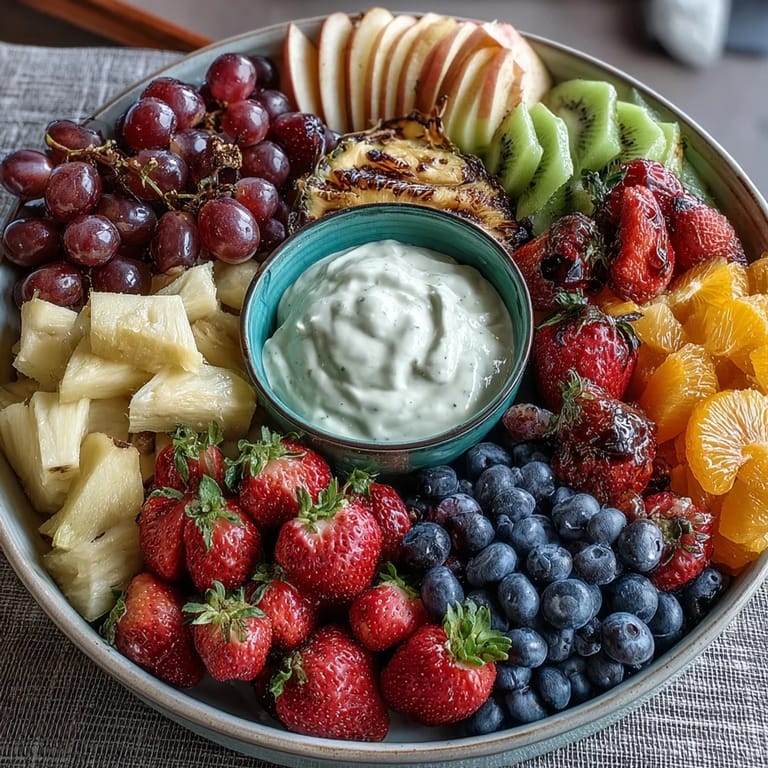
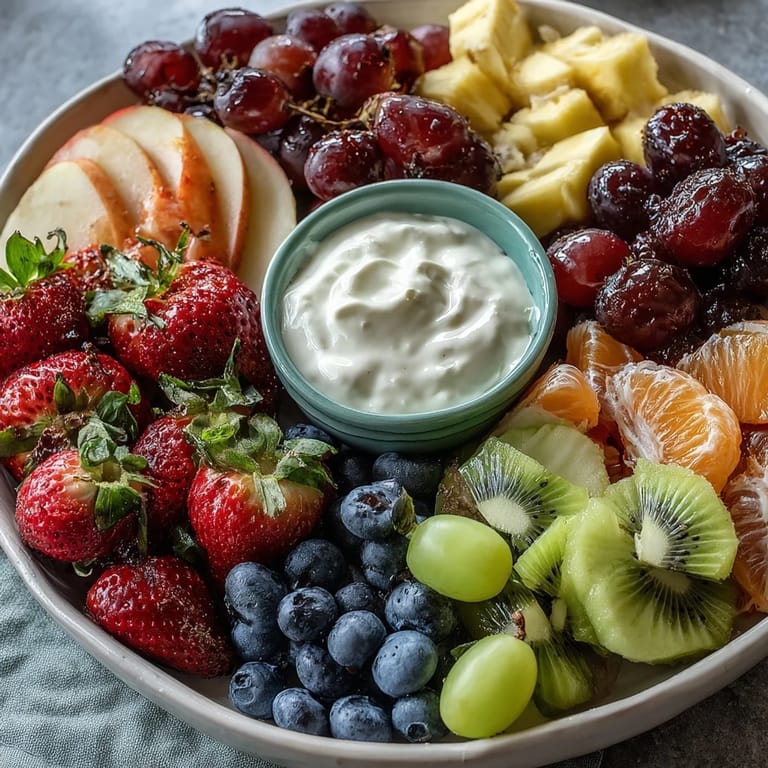
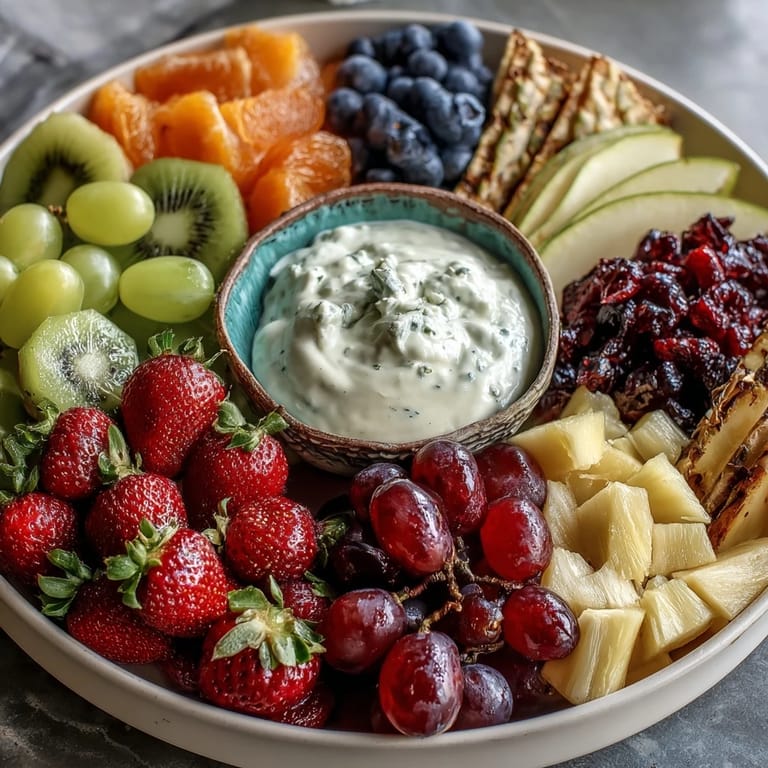
- Start by placing your largest pieces first, then nestle smaller fruits into the gaps, grouping by color so you create visual rhythm across the surface. Think of it like painting with fruit—reds and oranges on one side, greens and yellows on the other, purples scattered through to tie everything together.
- Make the dipping sauce:
- Whisk yogurt, honey, lemon zest, lemon juice, and vanilla together until it's completely smooth with no streaks of honey, then taste and adjust sweetness or tartness to your preference. The sauce should taste like it's almost singing—bright and creamy at once.
- Final assembly:
- Place that bowl of sauce right in the center of the platter or off to one side depending on your arrangement, and if you have fresh mint leaves, scatter a few across the fruit for color and a gentle suggestion of extra flavor. Serve immediately, or cover loosely and refrigerate for up to two hours before guests arrive.
 Save to Pinterest
 There was this moment at my cousin's wedding shower when someone's five-year-old took a strawberry, dipped it in the yogurt sauce with such careful concentration, and then looked around the table like she'd just discovered gold. That's when I understood that food is really about creating little moments where people feel taken care of, even if it's just through fruit and a bowl of creamy sauce.
The Arrangement Strategy
The secret to making a fruit platter look intentional rather than thrown together is thinking about height, color, and negative space. Don't cram everything right next to each other—leave little breathing room where people can see the platter itself. I used to arrange fruit in perfect lines like I was organizing a file cabinet, and it looked corporate and cold. Now I pile strawberries in a loose mound here, scatter blueberries there, let the composition breathe. It takes the same amount of time but feels so much more generous and inviting when someone looks at it.
Sauce Variations That Work
The yogurt sauce is honestly just a starting point, and once you understand the basic ratio of yogurt to sweetener to bright acid, you can play around endlessly. I've made versions with lime instead of lemon, added a pinch of cardamom one time that was unexpectedly beautiful, even tried a tiny bit of rose water when I was feeling fancy. The yogurt provides the creamy base, honey or maple syrup adds sweetness, and the citrus keeps it from feeling one-dimensional. Everything else is just you experimenting in your own kitchen, discovering what resonates with your palate.
Making It Work For Dietary Needs
This platter is naturally vegetarian and gluten-free, which makes it perfect for mixed groups where you're never quite sure what everyone eats. For vegans, swap Greek yogurt with coconut yogurt or cashew cream, and use maple syrup instead of honey—the sauce tastes different but no less delicious. The fruit itself is universal, which is partly why I love this dish so much; it brings people together instead of making anyone feel like they're eating around limitations.
- Coconut yogurt gives the sauce a subtle tropical note that pairs surprisingly well with stone fruits and berries.
- If someone has a nut allergy, skip any toasted nuts as garnish but don't skip the platter itself.
- Always double-check honey labels if serving to children under one year, and communicate allergen information clearly to guests.
 Save to Pinterest
 This is the kind of recipe that taught me that sometimes the simplest things you offer people—fresh fruit arranged with intention and a sauce made with care—matter so much more than you expect. Make it for someone and watch how the gesture means everything.
Recipe FAQs
- → How can I keep the fruits fresh and prevent browning?
To maintain freshness and prevent fruit browning, coat sliced fruits like apples and pears with a light lemon juice drizzle before arranging them on the platter.
- → What fruits can I substitute or add to this platter?
Seasonal fruits such as blackberries, peaches, melon, or raspberries work well as alternatives or additions, adding variety and color to the platter.
- → Can I prepare the honey-yogurt sauce in advance?
Yes, prepare the sauce up to a day ahead and store it chilled. Stir well before serving to maintain its smooth consistency.
- → Is there a way to make the sauce vegan-friendly?
Replace Greek yogurt with coconut or almond-based yogurt and substitute honey with maple syrup for a vegan version with similar creamy sweetness.
- → What garnishes complement the fruit platter?
Fresh mint leaves, toasted coconut flakes, or finely chopped nuts add texture, aroma, and visual appeal for an elevated presentation.