 Save to Pinterest
 There's something almost magical about how a jar of good marinara can transform into dinner when you're running on fumes. I discovered this dish on a Tuesday night when my fridge felt empty but my pantry was full—I had pasta, a jar of sauce I'd been saving, and a bag of spinach that needed rescuing. Twenty minutes later, I had the kind of meal that made me feel like I'd actually cooked something, not just assembled ingredients. It's become my go-to when time is tight but ambition isn't completely gone.
I made this for my sister last month when she stopped by unexpectedly after a long day, and watching her face when she realized it was actually good—not just 'quick good,' but genuinely satisfying—reminded me why simple food matters. She's the type to order takeout, and somehow this beat it. That's when I knew this wasn't just a weeknight survival dinner; it was something worth making on purpose.
Ingredients
- Dried spaghetti or penne (12 oz): The shape doesn't matter as much as cooking it to that perfect al dente moment—just slightly resistant when you bite it, not mushy.
- Salt for pasta water: This is where the pasta gets its flavor, so don't skip it or make it timid; the water should taste like the sea.
- Olive oil (2 tbsp): Use something you'd actually taste—not the cheapest bottle, but you don't need the fanciest either.
- Garlic, minced (3 cloves): Mince it yourself if you have thirty seconds; jarred garlic works but fresh garlic will actually perfume your kitchen.
- Jarred marinara sauce (24 oz): This is the backbone, so pick a jar you genuinely like eating straight from a spoon.
- Fresh baby spinach (5 oz): Baby spinach wilts faster and disappears into the sauce more gracefully than larger leaves.
- Red pepper flakes (optional, 1/2 tsp): This adds a whisper of heat without overwhelming; taste as you go since heat preferences vary wildly.
- Parmesan cheese (1/4 cup grated, plus more for serving): Grate it yourself if possible—pre-grated cheese has anti-caking agents that make it less creamy in the sauce.
- Fresh basil (optional): Tear it by hand right before serving so it stays bright instead of bruised and dark.
- Freshly ground black pepper: The finishing touch that brings everything into focus.
Tired of Takeout? 🥡
Get 10 meals you can make faster than delivery arrives. Seriously.
One email. No spam. Unsubscribe anytime.
Instructions
- Get the water going:
- Fill your large pot about three-quarters full with water and let it come to a rolling boil with salt stirred in. You want it actively bubbling before the pasta goes in so it cooks evenly and doesn't become gluey.
- Cook the pasta:
- Add pasta to the boiling water and stir it immediately so the pieces don't stick to each other. Follow the package directions but start checking two minutes before it says it's done—you're looking for that moment when it's tender but still has a slight firmness inside.
- Toast the garlic:
- While the pasta cooks, warm olive oil in your large skillet over medium heat and add your minced garlic. Let it sizzle for about 30 seconds—just long enough to smell it and know it's awake, not so long that it turns brown and bitter.
- Build the sauce:
- Pour in your marinara sauce and let it come to a gentle simmer, which means small bubbles breaking the surface, not an aggressive boil. Stir in the red pepper flakes if you're using them.
- Wilt the spinach:
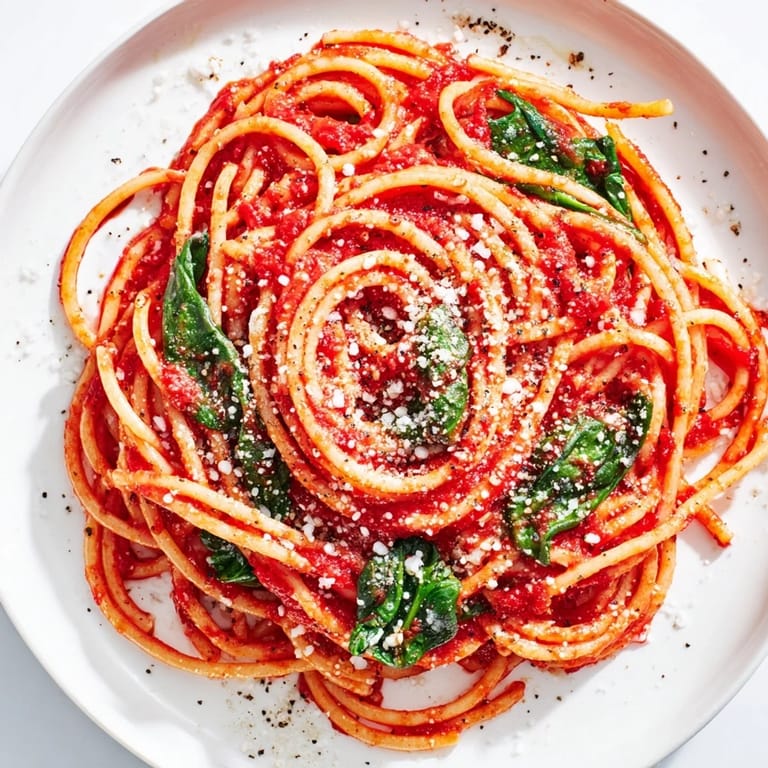
- Add all your spinach to the simmering sauce—it will look like way too much, but stir it and watch as it collapses and softens into the red sauce, which takes just 2 or 3 minutes. This is oddly satisfying to watch.
- Bring it together:
- Drain your pasta but before you do, save about half a cup of that starchy cooking water in a mug—it's your secret weapon for thinning the sauce if needed. Add the hot pasta to the sauce and toss everything together so the sauce clings to every strand.
- Taste and adjust:
- If the sauce feels too thick, add a splash of that pasta water and stir. Add your grated Parmesan and a few good grinds of black pepper, then taste. This is your moment to decide if it needs more seasoning or heat.
- Serve immediately:
- Divide into bowls while everything is still steaming, top with extra Parmesan and torn basil if you have it, and eat while the pasta is hot.
 Save to Pinterest
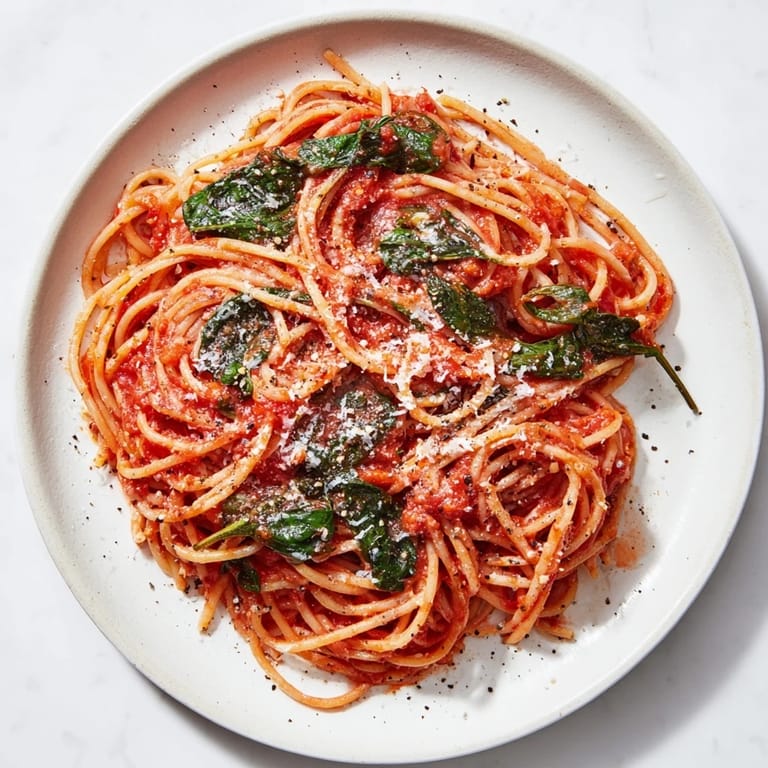
 There was a quiet moment last spring when I made this for myself on a Sunday evening, and I sat by the window eating it while it was still a little steamy, and realized I'd somehow made something better than what I'd order. That's when this dish went from 'busy person's dinner' to something I actually choose to make.
How to Make It Your Own
The beauty of this dish is that it's a canvas. I've added white beans when I wanted more protein and substance, and I've stirred in sautéed mushrooms when I had them lingering in my crisper. Some people add a splash of red wine to the sauce, which deepens it beautifully, or a pinch of sugar if their marinara tastes sharp. The spinach is flexible too—arugula or kale work if that's what you have, though they'll need an extra minute to soften. This isn't a recipe that demands precision; it's one that rewards flexibility.
Flavor Layers You're Building
What makes this taste better than you'd expect is the simple act of actually cooking the sauce instead of just heating it up. That 30 seconds of garlic sizzling, the gentle simmer where the sauce relaxes and the flavors meld—it's the difference between assembled and cooked. The pasta water that you stir in at the end isn't just thinning the sauce; it's emulsifying it slightly, making it coat everything more evenly and taste richer than it has any right to. It's a small technique that feels like a secret.
What Makes This a Go-To Meal
This dish lives in that perfect pocket where it takes almost no time but feels intentional and nourishing. It's not lazy because everything is fresh and there's actual cooking happening, but it's not demanding either. You're not standing over the stove managing multiple things at once; you're just watching water boil and sauce simmer, which somehow feels like the opposite of stress.
- Keep a good jar of marinara in your pantry so this dinner is always an option.
- If you're cooking for guests, grate the Parmesan ahead of time and tear the basil right before serving for maximum freshness.
- Leftover pasta keeps in the fridge for a few days and actually tastes good reheated with a splash of water stirred in to wake up the sauce.
 Save to Pinterest
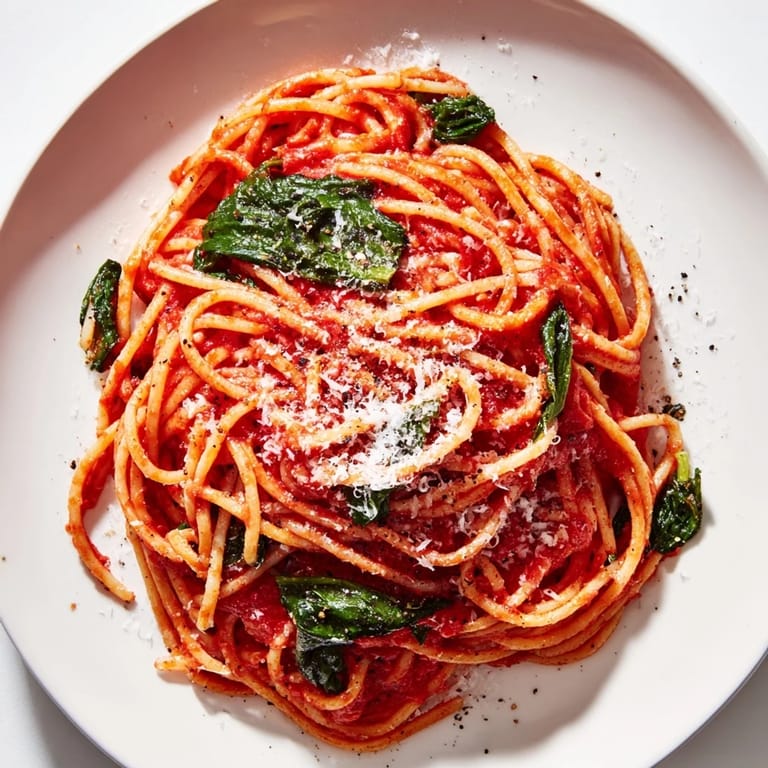
 This is the kind of meal that reminds you that good food doesn't have to be complicated, and sometimes the best dishes are the ones you make without thinking twice. It's there for you on the nights you need it most.
Recipe FAQs
- → Can I use a different type of pasta?
Yes, spaghetti or penne work well, but you can use any pasta shape you prefer to suit your taste and texture preferences.
- → How can I make the dish vegan?
Simply omit the Parmesan cheese or substitute it with a plant-based alternative to keep the dish vegan-friendly.
- → What can I add for extra protein?
Adding cooked white beans or sautéed mushrooms complements the dish with additional protein and depth of flavor.
- → How do I adjust the sauce consistency?
If the sauce is too thick, add reserved pasta cooking water gradually until the desired consistency is reached.
- → Is this suitable for gluten-free diets?
Yes, you can use gluten-free pasta to make the dish suitable for gluten-free diets without sacrificing flavor.