 Save to Pinterest
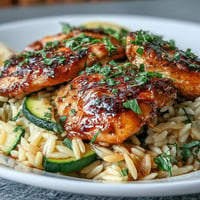
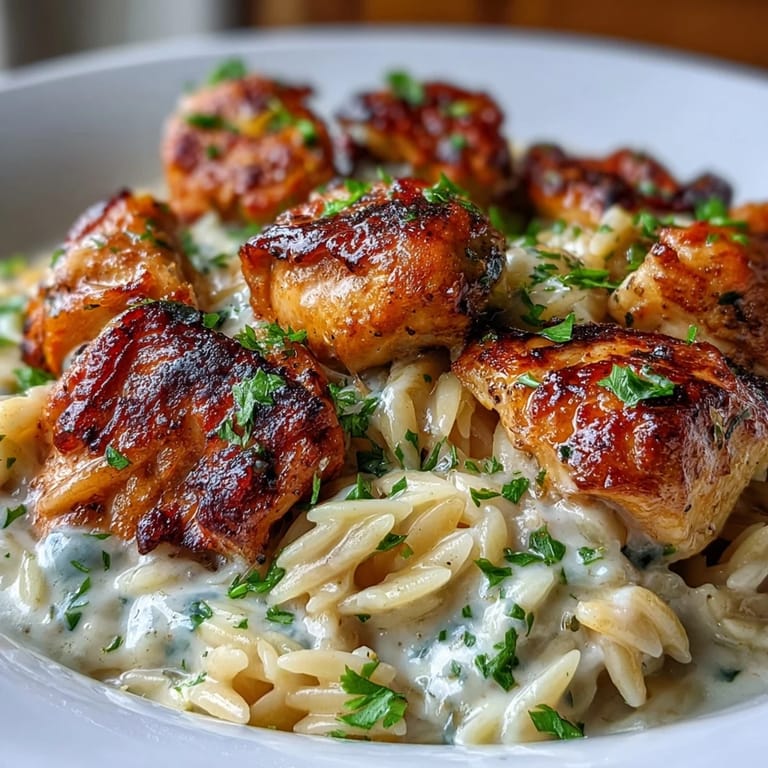
 There's something about a one-pot meal that stops me mid-week chaos. I discovered this creamy garlic Parmesan chicken orzo on a Tuesday when I had twenty minutes and zero motivation to dirty more than one pan. The first spoonful—buttery, garlicky, with that perfect tender bite of chicken and pasta—felt like I'd cracked some kind of culinary code. It's become my go-to when I want restaurant-quality comfort without the cleanup, and honestly, my family fights over the last bowl.
I made this for my sister's book club last month, and watching four grown adults go quiet mid-conversation because their food was too good to talk over felt like the highest compliment. She texted me the next day asking for the recipe, and now it rotates through her dinner lineup too. That's when I knew this wasn't just another pasta dish—it was the kind of meal that builds its own little fan club.
Ingredients
- Chicken thighs or breasts (1 lb, cut into bite-size pieces): Thighs stay juicier than breasts, but honestly, use what you have—both work beautifully here, and the cream sauce hides any potential dryness anyway.
- Kosher salt, black pepper, Italian seasoning (1 tsp each, plus ½ tsp pepper): These three are the quiet foundation that makes the chicken taste like actual food, not just protein filler.
- Olive oil (1 tbsp): Just enough to get a golden sear without making everything slick—medium-high heat is your friend here.
- Garlic and onion (4 cloves minced, 1 small diced): The aroma that fills your kitchen is half the reason to make this dish; don't skip it or rush it.
- Baby spinach (1 cup, roughly chopped, optional): It wilts into nothing visually but adds earthiness that balances all the richness; leave it out only if you're serving someone who'll wage war over leafy greens.
- Orzo pasta (1½ cups): Those tiny rice-shaped noodles soak up the sauce like little flavor sponges—this is where the magic happens.
- Low-sodium chicken broth (3 cups): Low-sodium matters because you're adding salty Parmesan later; trust me on this one.
- Heavy cream (½ cup): This is not the time to skimp on quality—cheap cream can break and turn grainy, and your sauce won't shine.
- Freshly grated Parmesan (¾ cup): Freshly grated, not the green-shaker stuff, because pre-shredded cheese has cellulose that creates a weird texture instead of a silky sauce.
- Unsalted butter (2 tbsp): Butter carries flavor better than oil here; use real butter, not a substitute.
- Fresh parsley (2 tbsp chopped) and extra Parmesan: These aren't just garnish—they wake up the palate and remind you why you made this in the first place.
Tired of Takeout? 🥡
Get 10 meals you can make faster than delivery arrives. Seriously.
One email. No spam. Unsubscribe anytime.
Instructions
- Season and sear the chicken:
- Sprinkle your chicken pieces with salt, pepper, and Italian seasoning, getting each piece coated. Heat that olive oil until it shimmers and almost smokes, then listen for the sizzle—that sound means you're about to get golden, caramelized edges.
- Build the flavor base:
- Once the chicken's a beautiful golden brown (about 5–7 minutes), scoop it onto a plate. Reduce your heat to medium and add butter, then soften your onion until it's translucent and sweet, about 3 minutes. Add the minced garlic and cook just until fragrant—too long and it turns bitter, so watch for that moment when your kitchen smells irresistible.
- Toast the orzo:
- Stir those tiny pasta shapes into the butter and aromatics for 1–2 minutes, coating them with all that golden goodness. This step changes everything because toasted orzo has a nuttier, deeper flavor than plain pasta.
- Add the broth and simmer:
- Pour in your chicken broth and scrape up every brown bit clinging to the bottom of the pan—that's concentrated flavor you don't want to waste. Bring it to a gentle boil, then drop the heat to a simmer, cover it up, and let it cook for 8–10 minutes until the orzo is tender and has absorbed most of the liquid.
- Return the chicken and finish strong:
- Add your seared chicken back in along with any juices that pooled on the plate. Stir in the heavy cream and grated Parmesan, then add that spinach if you're using it. Simmer gently for 2–3 minutes while stirring so the sauce becomes creamy and luxurious without breaking.
- Taste, adjust, and celebrate:
- This is where you taste and decide if it needs more salt, pepper, or Parmesan—trust your palate. Finish with fresh parsley and a handful of extra Parmesan, and you're done.
 Save to Pinterest
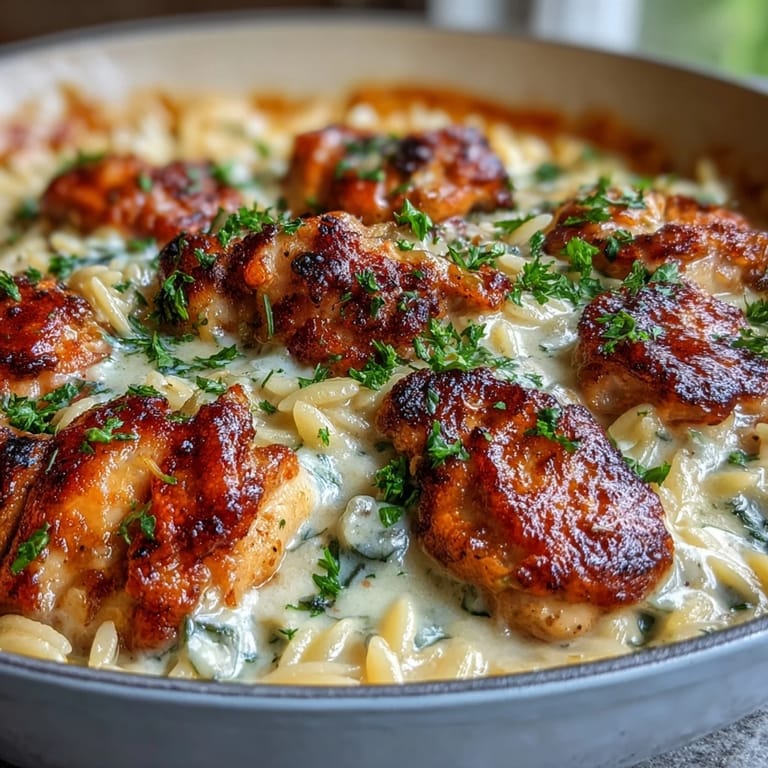
 There's a moment about halfway through cooking when the whole dish starts coming together—when the broth is simmering and your kitchen smells like garlic, butter, and the promise of something really good. That's when you know this meal is going to land.
Why This Works as a Weeknight Meal
The genius of this dish is that every component cooks on its own timeline but finishes at exactly the same moment. The orzo doesn't get mushy because it simmers in broth instead of boiling aggressively, and the chicken stays tender because it's already cooked before the sauce goes in. You're not watching three separate pots; you're watching one beautiful skillet transform into dinner.
Customizing Without Fear
I've made this with mushrooms sautéed alongside the onions, with sun-dried tomatoes thrown in at the end, even with roasted red peppers that add a subtle sweetness. The frame is strong enough that it holds whatever you want to add. My neighbor swapped the spinach for fresh basil at the very end, and it tasted like summer in a bowl. The cream sauce is forgiving—it wants to be delicious and doesn't care much how you get there.
Making It Your Own
The first time you make this, follow the recipe as written so you understand how it works and tastes. After that, it becomes your template. Some nights I add a squeeze of lemon juice right at the end to cut through the richness, other times I'll stir in a splash of white wine while the orzo simmers. The flexibility is part of what keeps this dish interesting enough to rotate into your regular lineup without feeling tired.
- If you have no spinach, roasted broccoli florets added at the end are absolutely magnificent.
- A pinch of red pepper flakes in the sautéed garlic adds a subtle heat that keeps the richness from feeling heavy.
- Leftover chicken orzo reheats beautifully with just a splash of broth stirred in, though this rarely happens because people go back for seconds.
 Save to Pinterest
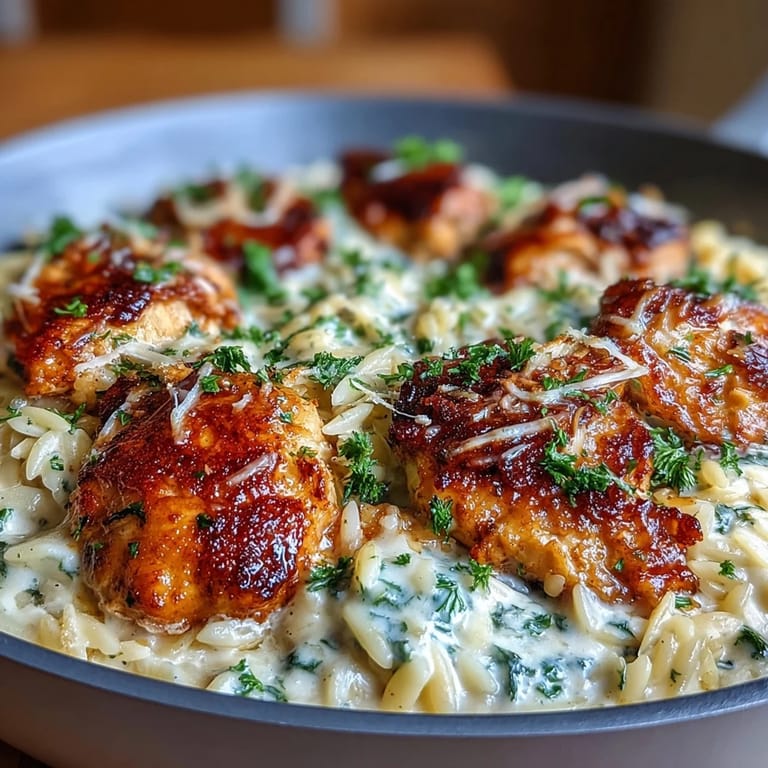
 This is the meal that whispers your name when you're standing in front of the open fridge with zero ideas and forty-five minutes until everyone's hungry. Make it once, and you'll find yourself craving it regularly.
Recipe FAQs
- → Can I use chicken breasts instead of thighs?
Yes, boneless skinless chicken breasts work well. Cut them into bite-sized pieces and adjust cooking time as needed—breasts may cook slightly faster than thighs. Be careful not to overcook to maintain tenderness.
- → What can I substitute for orzo pasta?
Small pasta shapes like ditalini, small shells, or even broken spaghetti work as substitutes. Keep in mind that cooking times may vary slightly depending on the pasta shape you choose.
- → Can I make this lighter?
Yes! Substitute half-and-half for the heavy cream, and consider using less Parmesan or a lighter cheese alternative. Adding more vegetables like mushrooms or bell peppers also increases nutrition while maintaining flavor.
- → How do I store leftovers?
Store cooled leftovers in an airtight container in the refrigerator for up to 3-4 days. The orzo will continue absorbing liquid, so you may need to add a splash of chicken broth or cream when reheating to restore the creamy consistency.
- → Can I freeze this dish?
While possible, freezing may affect the creamy texture. The sauce can separate slightly upon thawing. If freezing, do so without the final cream addition, then add fresh cream when reheating for best results.
- → Is this gluten-free?
No, traditional orzo contains wheat. To make gluten-free, substitute with gluten-free orzo or rice-shaped gluten-free pasta, and ensure your chicken broth and other ingredients are certified gluten-free.