 Save to Pinterest
 My neighbor Yuki taught me this soup on a gray afternoon when I showed up at her door complaining about feeling run down. She didn't say much, just filled a pot with dashi and started moving through the steps with the kind of quiet efficiency that made it all seem impossibly simple. Twenty minutes later, I was holding a warm bowl that tasted like comfort itself, and I understood why this soup has been a staple in Japanese kitchens for centuries. It's the kind of dish that asks so little of you but gives back so much.
I made this for my daughter when she was recovering from being sick, and watching her face change as she tasted it was something special. The warmth, the umami from the miso, the gentle texture of the tofu, all of it seemed to settle something in her. She asked for it three days in a row, which for a teenager is basically a declaration of love.
Ingredients
- Dashi stock (4 cups): This is the soul of the soup, so use a quality vegetarian dashi if you're going plant-based, or splurge on good kombu and shiitake.
- White or yellow miso paste (3 tablespoons): The umami heart of the dish, and it's worth seeking out authentic miso from a Japanese market because the difference is noticeable.
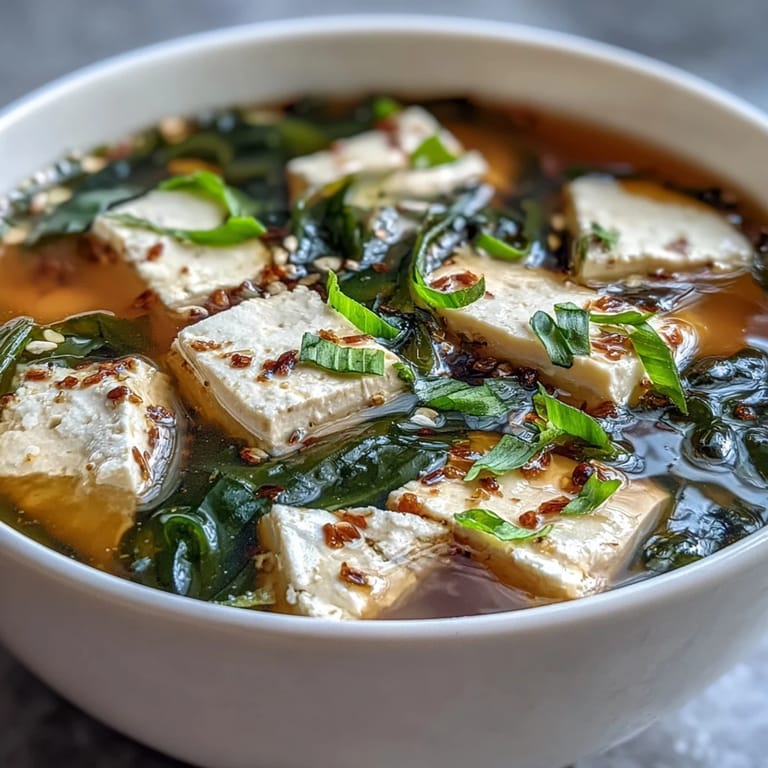
- Silken tofu (200g, cut into 1/2-inch cubes): The silken variety is essential here, not firm tofu, because you want those soft, delicate curds that barely hold their shape.
- Dried wakame seaweed (2 tablespoons): Don't skip soaking it first, or it'll be tough and chewy instead of tender.
- Scallions (2, finely sliced): These finish the bowl with a bright note and a bit of texture that keeps things interesting.
Tired of Takeout? 🥡
Get 10 meals you can make faster than delivery arrives. Seriously.
One email. No spam. Unsubscribe anytime.
Instructions
- Warm your foundation:
- Pour the dashi into a medium saucepan and bring it to a gentle simmer over medium heat. You'll notice how the smell changes, becoming deeper and more inviting.
- Prepare the seaweed:
- While the stock is warming, place your wakame in cold water and let it soften for 5 minutes, then drain it completely. This step ensures tender seaweed instead of something tough and unpleasant.
- Dissolve the miso properly:
- Scoop the miso paste into a small bowl and add one ladle of hot dashi, whisking until it's completely smooth. This prevents lumps and ensures even flavor throughout.
- Bring it all together gently:
- Add the tofu cubes and drained wakame to the simmering dashi and let everything warm through for 2 to 3 minutes, stirring very carefully to keep the tofu intact. You'll see the soup come alive as the ingredients soften slightly.
- Finish with miso:
- Remove the pot from heat and stir in your dissolved miso paste slowly, never letting it boil afterward because heat destroys the beneficial probiotics and dulls the flavor. This is the most important moment, so take your time.
- Serve with care:
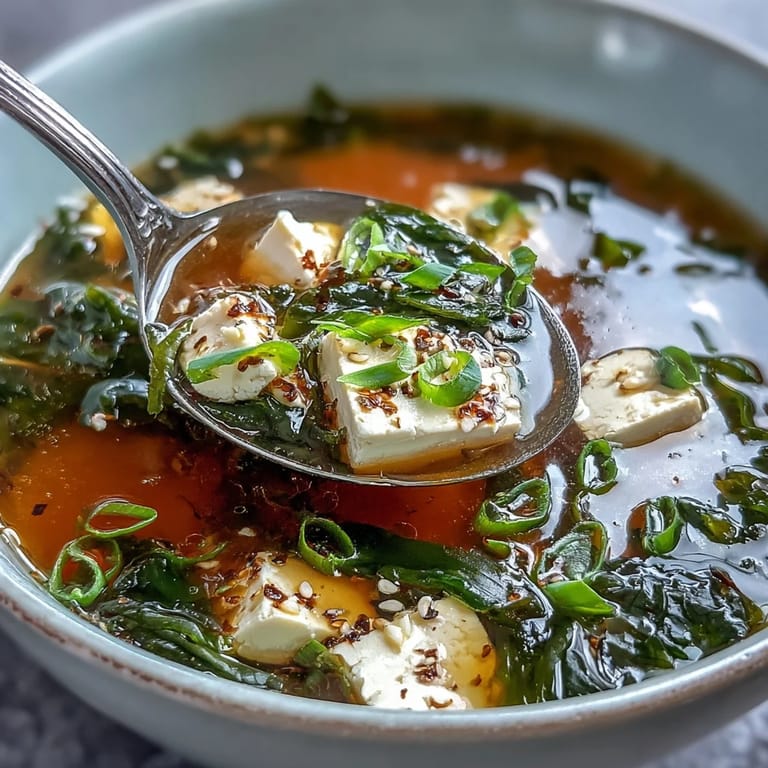
- Ladle into bowls and scatter the sliced scallions on top, then serve immediately while everything is still steaming.
 Save to Pinterest
 There's something almost meditative about eating this soup slowly, letting each spoonful warm you from the inside out. It became my go-to on mornings when the world felt too loud, or on evenings when I needed something that felt like being taken care of.
The Art of Balancing Umami
Miso soup teaches you something fundamental about Japanese cooking, which is that the deepest satisfaction comes from balance rather than complexity. The umami in the miso and dashi creates a savory depth that feels almost mysterious until you realize it's just really good ingredients talking to each other. Once you understand this, you'll start seeing umami everywhere in the kitchen.
Tofu as a Canvas
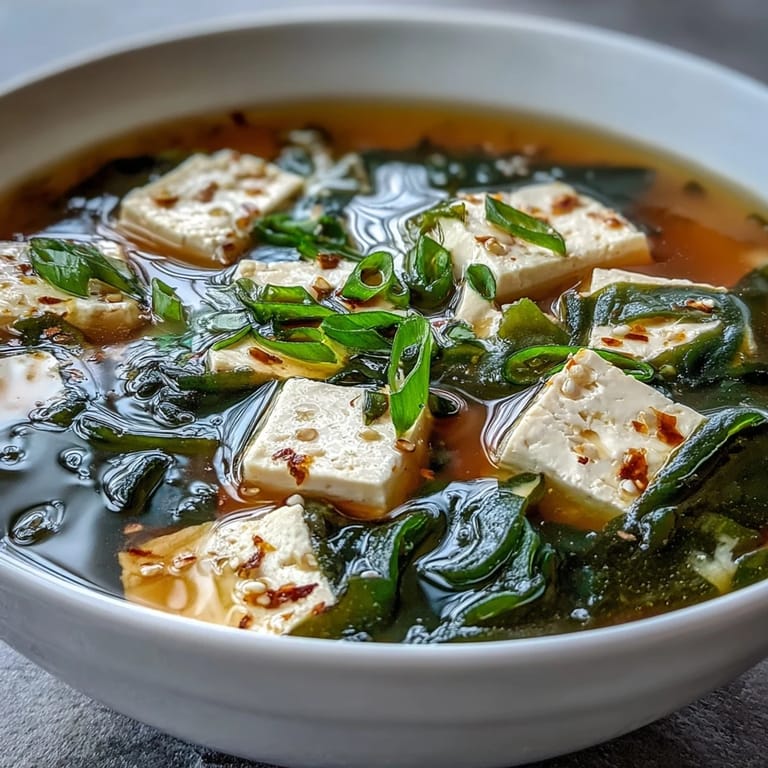
Silken tofu in a hot broth is like watching watercolor paint diffuse into water, gentle and subtle but absolutely transformative. The key is treating it with respect, cutting it carefully and stirring gently so it maintains its delicate structure. If you've had tofu that felt grainy or tough in soup, it was likely firm tofu handled roughly, which is a completely different experience.
Variations and Flexibility
Once you've made this basic version, you'll start imagining possibilities, and that's exactly when it becomes yours. I've added paper-thin mushroom slices, fresh spinach that wilts in seconds, even a soft-boiled egg for something more substantial. The foundation is so solid that it welcomes creativity without losing its essence.
- Try mixing white and red miso for deeper, more complex flavor.
- Thin mushroom slices or fresh spinach add variety without overwhelming the delicate broth.
- For something more filling, add a soft-boiled egg or a handful of cooked rice.
 Save to Pinterest
 This soup has a way of becoming part of your routine once you've made it a few times, the kind of thing you return to when you need comfort or clarity. It's proof that some of the best food requires almost nothing except attention and good ingredients.
Recipe FAQs
- → What type of miso works best?
White or yellow miso paste offers a milder, sweeter flavor perfect for beginners. Red miso has a stronger, more intense taste. For added depth, combine both varieties in your broth.
- → Can I make this vegan?
Absolutely. Simply use vegetarian dashi made from kombu seaweed and dried shiitake mushrooms instead of traditional fish-based dashi. Double-check your miso paste label to ensure no fish-derived ingredients are included.
- → Why shouldn't I boil the miso?
Boiling miso paste destroys its beneficial probiotics and enzymes while creating a grainy texture. Always remove the soup from heat before stirring in the dissolved miso. This preserves both the health benefits and smooth consistency.
- → How long does leftover soup keep?
Store leftovers in an airtight container in the refrigerator for up to 2 days. Note that the tofu may absorb more miso flavor over time, which some people actually prefer. Reheat gently without boiling.
- → What can I add for extra protein?
Edamame beans, cooked shrimp, or thinly sliced chicken breast work beautifully. For vegetarian options, try adding more tofu varieties or soft-boiled eggs. Adjust your broth seasoning accordingly if adding salty ingredients.