 Save to Pinterest
 There's something about the smell of lentils simmering with cumin and allspice that transports me back to my grandmother's kitchen, where mjadra wasn't just dinner—it was proof that the simplest ingredients could become something profound. The first time I made it myself, I burned the onions slightly, but she laughed and said that's when you know you're paying attention. Now, whenever I cook this dish, I'm reminded that Lebanese food doesn't need fancy techniques or long ingredient lists to be memorable—just patience, good olive oil, and the willingness to let caramelized onions do their magic.
I made this for my roommate during a particularly rough week, and watching her face light up when she tasted it—that moment when comfort food actually comforts—reminded me why this dish matters. It's humble enough to feel casual, but nourishing enough to feel like someone really cared about feeding you well.
Ingredients
- Brown or green lentils, 1 cup rinsed: The backbone of mjadra—choose brown or green lentils because red ones get too soft and muddy. Rinsing them removes dust and helps them cook evenly.
- Long-grain rice, ¾ cup rinsed: Basmati works beautifully because each grain stays separate and doesn't turn mushy. Rinse it until the water runs clear to remove excess starch.
- Water or vegetable broth, 4 cups: Broth adds subtle depth, but water lets the spices shine through—either works, so follow your mood.
- Olive oil, 2 tablespoons for the base: Good olive oil matters here because it carries the flavor of the spices and becomes part of the dish's personality.
- Cumin, allspice, cinnamon (1 tsp, ½ tsp, ½ tsp): This spice trio is the secret—toast them together in the warm oil for a few seconds before adding liquid to wake up their flavor.
- Bay leaf, 1: Adds a subtle herbal note that you don't taste directly but absolutely would miss if it wasn't there.
- Salt and black pepper to taste: Start conservative with salt since broth can be salty; you can always add more after tasting.
- Yellow onions, 3 large thinly sliced: Caramelizing onions is meditation—slow, steady, and impossible to rush, but the golden reward is worth every minute.
- Olive oil, 3 tablespoons for onions: Extra oil here because onions need room to release their moisture and turn silky and sweet.
Tired of Takeout? 🥡
Get 10 meals you can make faster than delivery arrives. Seriously.
One email. No spam. Unsubscribe anytime.
Instructions
- Toast and sauté the lentils:
- Warm the 2 tablespoons of olive oil in a large saucepan over medium heat until it shimmers slightly. Add the rinsed lentils and bay leaf, stirring for about 2 minutes—you want to coat them in oil and hear them start to make soft clicking sounds against the pan.
- Build the cooking foundation:
- Pour in 4 cups of broth or water and bring everything to a boil. Once it's rolling, reduce the heat and let it simmer uncovered for 15 minutes—the lentils will begin to soften but should still have some resistance when you bite into one.
- Start the caramelized onions (do this while lentils cook):
- Heat 3 tablespoons of olive oil in a large skillet over medium-low heat. Add your sliced onions and a small pinch of salt, then cook for the next 25–30 minutes, stirring every few minutes to make sure they brown evenly rather than stick and burn. They should turn deep golden and smell like autumn.
- Add the rice and spices:
- After the lentils have had their 15 minutes, stir in the rinsed rice, cumin, allspice, cinnamon, salt, and pepper. The mixture should look fragrant and golden from the spices coating everything in oil.
- Finish cooking covered:
- Cover the saucepan and reduce the heat to low. Let it simmer for 20–25 minutes until the rice is tender, the lentils have softened completely, and the liquid has been absorbed. If it looks too dry before the rice is ready, add a splash of water—this is normal and nothing to worry about.
- Fluff and finish:
- Remove the bay leaf, then use a fork to gently fluff the mjadra, separating any grains that stuck together. Taste it now and adjust salt and pepper if needed—the flavors should be warm and balanced, not one-dimensional.
- Plate and crown with onions:
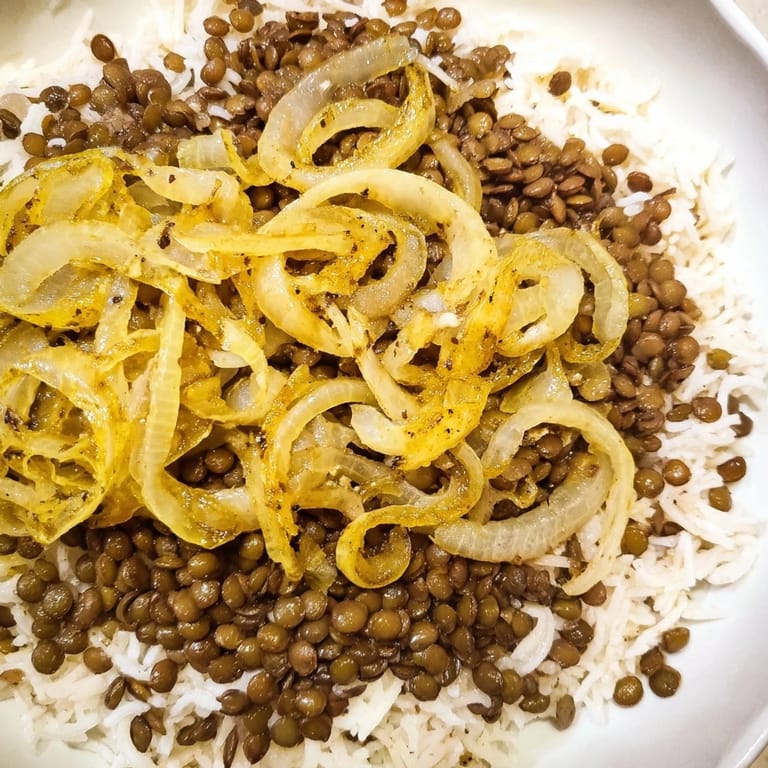
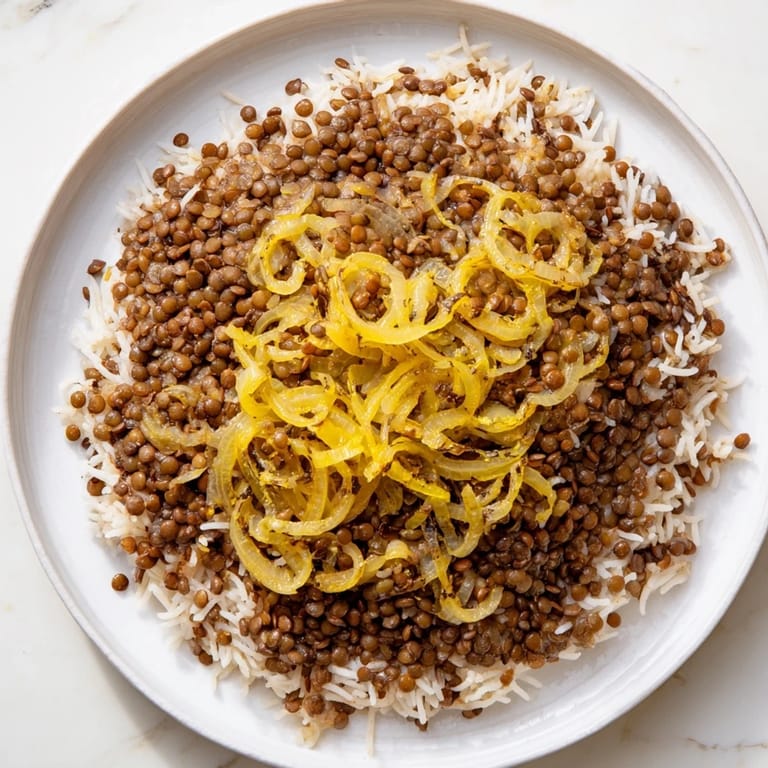
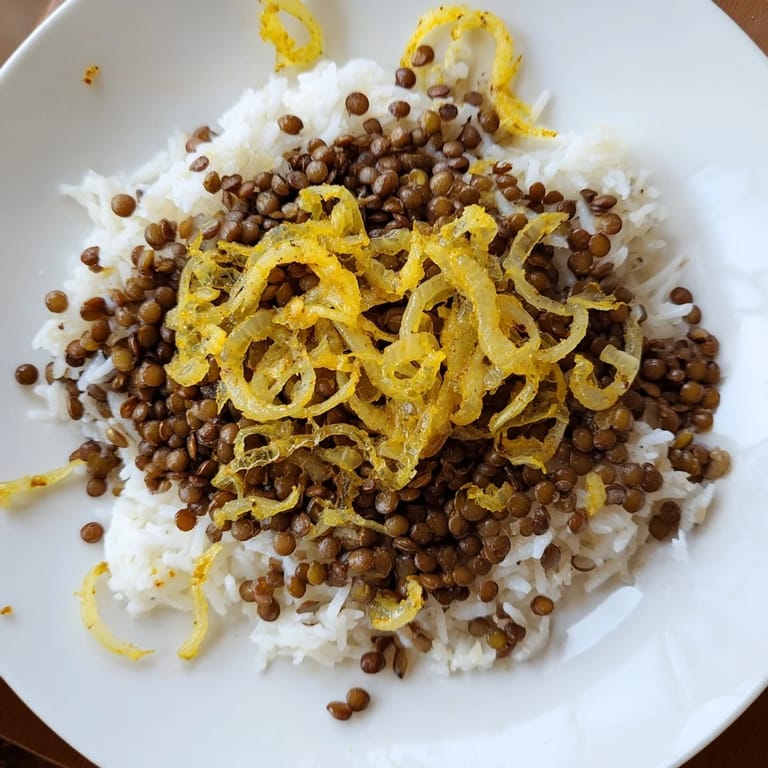
- Transfer the mjadra to a serving bowl or individual bowls and pile those caramelized onions generously on top. The contrast between the soft grains and the sweet, jammy onions is the entire point of this dish.
 Save to Pinterest
 My neighbor once asked why I spent 30 minutes on onions for a weeknight dinner, and I finally understood how to explain it: because the onions aren't a topping—they're the love note the dish leaves on your tongue. That's when mjadra stopped being just dinner for me.
Why This Dish Feels Complete
Mjadra works because it respects the ingredients instead of competing with them. The lentils and rice create a neutral canvas, the spices add warmth without shouting, and the caramelized onions bring sweetness and texture that makes every bite interesting. It's the kind of dish that teaches you something about cooking if you pay attention—that sometimes the best flavor comes not from complicated techniques, but from understanding what each element contributes and letting it do its job.
Serving and Pairing Ideas
Mjadra tastes equally good hot right from the pot or at room temperature the next day, which makes it perfect for packed lunches or casual family dinners where people serve themselves whenever they're hungry. A simple tomato and cucumber salad cuts through the richness and adds brightness, or if you're not vegan, a dollop of cool plain yogurt creates this beautiful contrast of temperatures and textures. Fresh parsley scattered on top adds a last-minute herbal freshness that people always notice, even if they can't quite name what changed.
Storing and Making It Your Own
Leftovers actually taste better after a day or two in the fridge because the spices have time to deepen and meld together, and it keeps for up to 4 days stored in an airtight container. If you want to experiment, red lentils create a softer, almost creamy texture but cook faster, so reduce the simmering time to about 10 minutes—the dish changes personality slightly but stays delicious. You can also add a handful of chopped parsley or mint to the base before serving, swap the water for vegetable broth for extra richness, or even stir in a spoonful of tahini at the end for creaminess.
- Make double the caramelized onions because you'll want extra in the leftover container.
- If the mixture looks too thick while cooking, remember a splash of water fixes it instantly—don't panic and don't add too much.
- This dish is naturally vegan and gluten-free, so it's the kind of food that brings everyone to the same table.
 Save to Pinterest
 This is the kind of recipe I find myself returning to again and again, not just because it tastes good, but because it never fails to remind me that the best food is the food that nourishes you and the people around you. Make it, taste it, and you'll understand why it's been a staple across the Levantine table for generations.
Recipe FAQs
- → What type of lentils works best for this dish?
Brown or green lentils are ideal as they hold their shape well during cooking and provide a hearty texture.
- → Can I use broth instead of water when cooking the lentils and rice?
Yes, using vegetable broth enhances the flavor and adds depth to the lentils and rice.
- → How do I achieve perfectly caramelized onions?
Cook sliced onions slowly over medium-low heat with olive oil and a pinch of salt, stirring often until they turn a deep golden brown.
- → Is it possible to make this dish gluten-free?
Absolutely, as long as the broth used is gluten-free, the dish naturally contains no gluten ingredients.
- → What spices are used to season the lentils and rice?
Cumin, allspice, and cinnamon are combined with salt, pepper, and a bay leaf to create a warm and aromatic flavor profile.