 Save to Pinterest
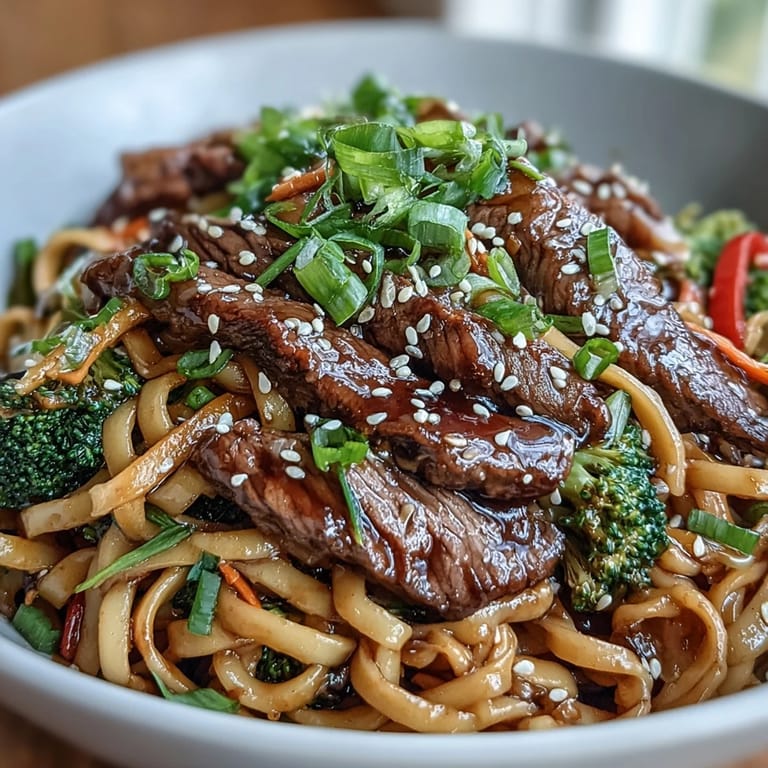
 The smell hit me before I even opened the door, garlic and ginger mingling with something sweet and savory that made my stomach growl. My neighbor was testing a new skillet recipe, and when she invited me in, I watched her toss glossy noodles with seared beef and bright vegetables in one fluid motion. That night, I scribbled notes on a napkin, determined to recreate the magic in my own kitchen. It took three tries to get the sauce balance right, but now this dish is my weeknight hero.
I made this for my brother the week he moved into his first apartment, armed with nothing but a single skillet and a questionable spatula. We stood shoulder to shoulder at his tiny stove, and I showed him how to slice the steak thin and let the vegetables keep their crunch. He burned the garlic once, laughed it off, and started over. Now he texts me photos every time he makes it, each bowl a little more confident than the last.
Ingredients
- Rice noodles: These silky strands soak up sauce beautifully and cook in minutes, just don't over-boil them or they turn to mush.
- Flank steak: Slicing against the grain is the secret to tender bites, and a half-frozen steak is easier to cut paper-thin.
- Broccoli florets: They add a satisfying crunch and soak up the savory sauce while staying bright green if you don't overcook them.
- Bell pepper: Red or yellow peppers bring sweetness and color, and I always slice them into strips that match the carrot for even cooking.
- Carrot: Julienned carrots add a slight earthiness and a pop of orange that makes the bowl look as good as it tastes.
- Green onions: A fresh, sharp garnish that cuts through the richness and adds a little snap at the end.
- Garlic: Minced fine so it blooms in the hot oil without burning, releasing that irresistible aroma that fills the whole kitchen.
- Ginger: Freshly grated ginger adds warmth and a subtle zing that balances the sweetness of the sauce.
- Soy sauce: The salty backbone of the sauce, and I always taste before adding more because brands vary wildly in intensity.
- Brown sugar: It caramelizes slightly in the heat, adding a glossy sheen and a hint of molasses depth.
- Sesame oil: Just a tablespoon transforms the dish with its nutty, toasted fragrance, but more can overwhelm.
- Vegetable oil: A neutral base for high-heat cooking that lets the other flavors shine without competing.
- Sesame seeds: Toasted seeds add a final crunch and a whisper of nuttiness that ties everything together.
Tired of Takeout? 🥡
Get 10 meals you can make faster than delivery arrives. Seriously.
One email. No spam. Unsubscribe anytime.
Instructions
- Soften the noodles:
- Boil the rice noodles until they are just tender, then drain and rinse them under cool water to stop the cooking. This keeps them from clumping while you prep everything else.
- Sear the beef:
- Heat the vegetable oil in your largest skillet over medium-high heat, then add the sliced steak in a single layer and let it brown for 2 to 3 minutes without stirring too much. Pull it out and set it aside so it stays tender.
- Bloom the aromatics:
- Toss the garlic and ginger into the hot skillet and stir for 30 seconds, just until the fragrance makes you lean in closer. Watch them closely because they can scorch in a blink.
- Stir-fry the vegetables:
- Add the broccoli, bell pepper, and carrot to the pan and keep everything moving for about 5 minutes. You want them tender but still crisp, with a little char on the edges.
- Mix the sauce:
- In a small bowl, whisk together the soy sauce, brown sugar, and sesame oil until the sugar dissolves completely. Taste it and adjust if you like things sweeter or saltier.
- Reunite beef and sauce:
- Return the beef to the skillet and pour the sauce over everything, stirring so each piece gets coated. Let it bubble for a moment so the flavors meld.
- Toss in the noodles:
- Add the drained noodles and gently toss everything together using tongs or a spatula, making sure the noodles are evenly coated and heated through. This takes about 2 minutes of gentle folding.
- Finish and garnish:
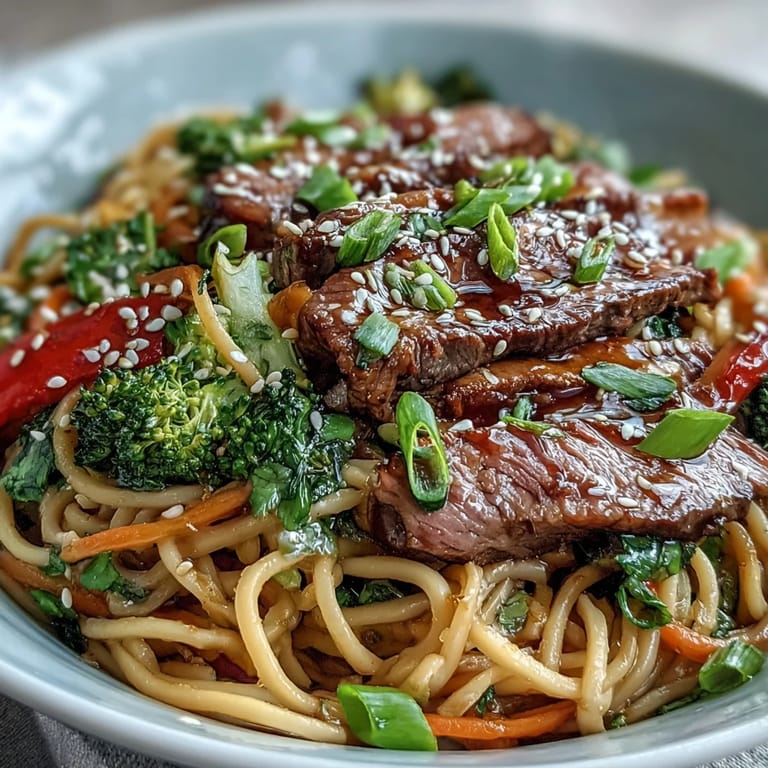
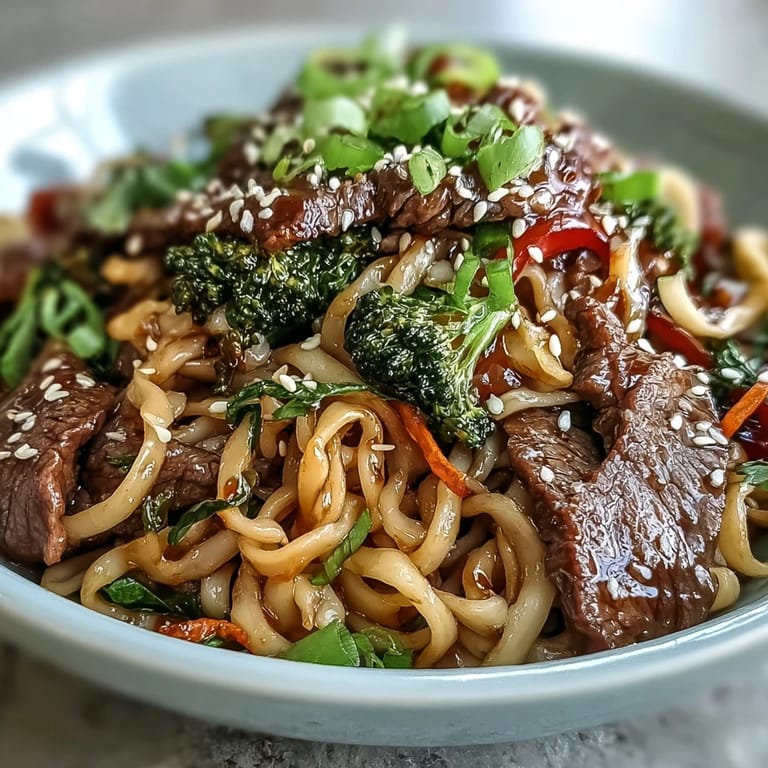
- Sprinkle chopped green onions and sesame seeds over the top before you serve. The contrast of fresh and toasted flavors makes every bowl feel complete.
 Save to Pinterest
 One rainy Tuesday, I made a double batch and packed it into mismatched containers for my coworkers. By noon, three people had asked for the recipe, and one admitted she ate it cold straight from the fridge at midnight. That is when I knew this dish had crossed over from dinner to something people actually crave.
Customizing Your Bowl
I have swapped the flank steak for chicken thighs, pressed tofu, and even shrimp, and each version brought its own personality to the table. Snap peas and zucchini sneak in beautifully when I have them on hand, and a spoonful of gochujang stirred into the sauce turns it into a spicy, funky dream. The beauty of this recipe is that it welcomes whatever you have, as long as you keep the sauce ratio and the heat high.
Storing and Reheating
Leftovers hold up surprisingly well in the fridge for up to three days, tucked into an airtight container. I reheat them gently in a skillet with a splash of water to loosen the noodles, or sometimes I eat them cold because the flavors deepen overnight. Just know that the vegetables will soften a bit, but the sauce stays glossy and the beef stays tender if you do not overcook it the first time.
Serving Suggestions
I like to serve this straight from the skillet, family-style, with extra sesame seeds and sliced green onions in little bowls so everyone can garnish their own. A cold beer or iced green tea cuts through the richness, and if I am feeling fancy, I add a quick cucumber salad on the side for crunch. Sometimes I double the batch and freeze half before adding the noodles, then finish it fresh on a night when I need dinner in under ten minutes.
- Pair it with a simple cucumber and rice vinegar salad for a refreshing contrast.
- Serve alongside steamed edamame or kimchi to round out the meal.
- Keep extra soy sauce and chili oil on the table for anyone who wants to dial up the flavor.
 Save to Pinterest
 This recipe has become my answer to tired evenings and last-minute guests, a one-pan wonder that never fails to impress. I hope it finds a place in your kitchen rotation, bringing the same comfort and sizzle it has brought to mine.
Recipe FAQs
- → What cut of beef works best?
Flank steak is ideal because it's lean and absorbs marinades well. Slice it thinly against the grain for maximum tenderness.
- → Can I make this spicy?
Absolutely. Add sriracha or gochujang to the sauce mixture for extra heat. Start with one teaspoon and adjust to taste.
- → How do I prevent rice noodles from sticking?
Rinse cooked noodles under cold water after draining to stop the cooking process and remove excess starch. Toss with a small amount of oil before adding to the skillet.
- → What vegetables can I substitute?
Snap peas, zucchini, mushrooms, or baby corn work beautifully. Use whatever fresh vegetables you have on hand for a customizable bowl.
- → How long do leftovers keep?
Store in an airtight container in the refrigerator for up to three days. Reheat gently in a skillet or microwave, adding a splash of water if needed.