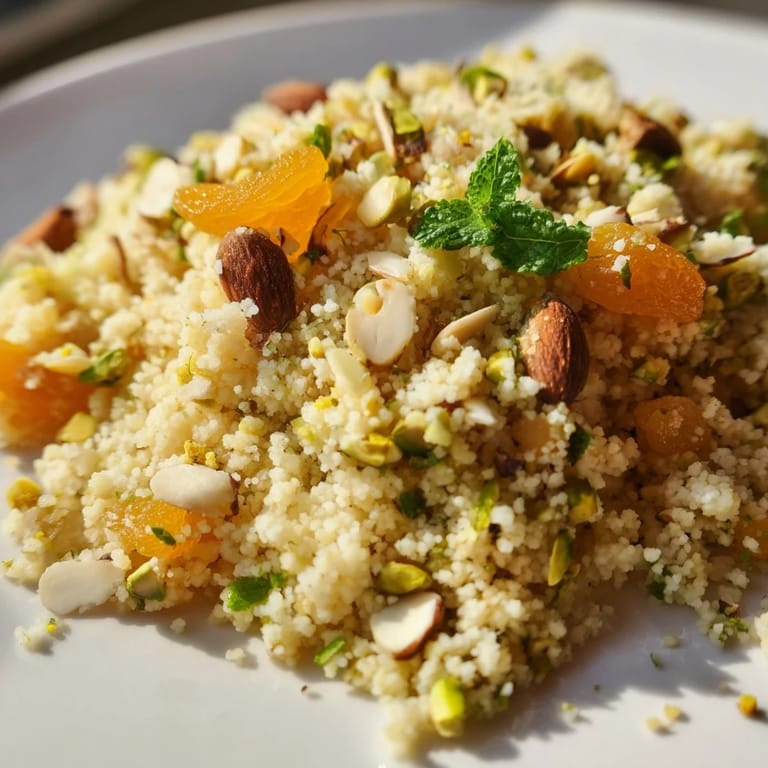
 Save to Pinterest
 My neighbor brought this couscous pilaf to a potluck on a chilly autumn evening, and the moment I smelled those warm spices wafting from the covered dish, I knew I had to learn how to make it myself. There's something about the way cinnamon and cumin dance together that just feels like comfort in a bowl. That night, I went home and started experimenting, and after a few tries, I figured out the magic: toasting those spices and letting them bloom in hot oil before everything else comes together. Now it's become my go-to when I need something that looks impressive but comes together faster than you'd think possible.
I made this for my sister's book club gathering last spring, and watching everyone go back for seconds told me everything I needed to know. One guest asked if it was from a fancy restaurant, and I loved being able to say I made it at home. The way the kitchen smelled during those 15 minutes of cooking—all those spices mingling together—made everyone want to linger in there instead of sitting in the living room.
Ingredients
- Couscous: The tiny pearls absorb the flavorful broth beautifully and create that perfect tender-but-distinct texture, though you want to be careful not to oversoak it or it turns mushy.
- Vegetable broth: This is your flavor foundation, so use something you'd actually taste on its own rather than the thin stuff from the back of the pantry.
- Dried apricots and golden raisins: These bring natural sweetness and a chewy texture that balances the savory spices, and soaking them in the hot broth plumps them up beautifully.
- Slivered almonds and pistachios: Toasting them yourself brings out their oils and flavor in a way store-bought toasted nuts can't quite match, and they add a satisfying crunch.
- Olive oil: Good quality matters here since it's one of your primary flavoring ingredients, so don't skimp.
- Onion and garlic: These create the aromatic base that everything else builds on, and you want them soft and golden before the spices go in.
- Cumin, cinnamon, coriander, and turmeric: This spice blend is what makes the dish sing, and blooming them in hot oil for just 30 seconds unlocks their full potential.
- Fresh parsley and mint: The mint is optional but truly transforms the dish with brightness, cutting through the richness with a cool, fresh note.
- Lemon wedges: A squeeze of fresh lemon at the end brings everything into focus like you've just turned up the volume on a song.
Tired of Takeout? 🥡
Get 10 meals you can make faster than delivery arrives. Seriously.
One email. No spam. Unsubscribe anytime.
Instructions
- Bloom your spices in hot oil:
- Heat the olive oil over medium heat, add your chopped onion, and let it soften for a couple minutes until the edges start turning golden. Add the minced garlic and cook just until you can smell it filling your kitchen, then add all your spices at once and let them toast for about 30 seconds, stirring constantly so they don't burn.
- Welcome in the dried fruit:
- Stir in those chopped apricots and raisins, coating them thoroughly in the spiced oil so they start to wake up. Pour in your broth and bring everything to a boil, which should only take a minute or two.
- Let the couscous rest and absorb:
- Remove from heat, quickly stir in the couscous, then cover with a lid and set a timer for exactly 5 minutes. This might feel short, but couscous is incredibly efficient at absorbing liquid, and longer than that and you risk a mushy result.
- Fluff and fold in the finishing touches:
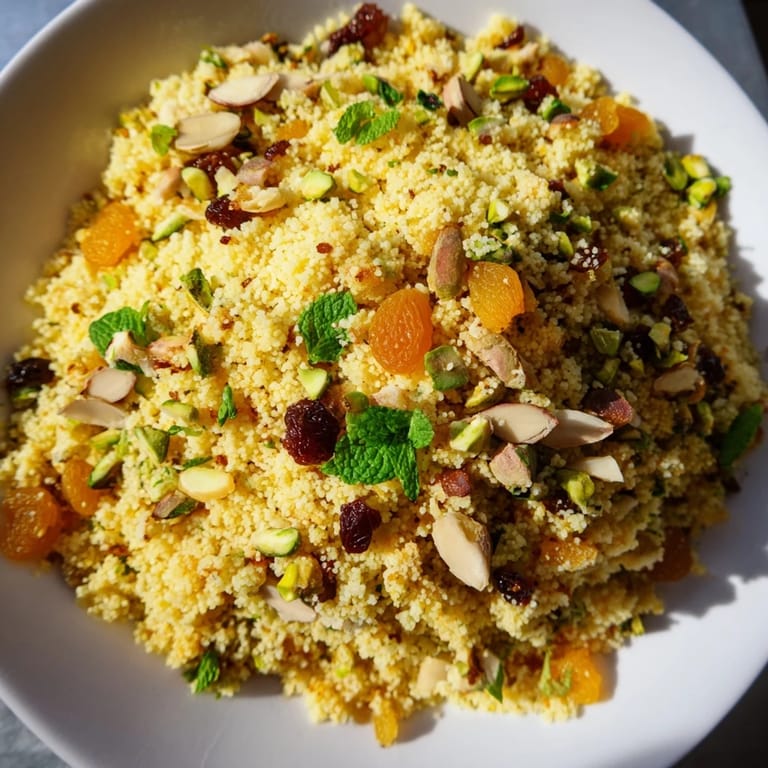
- Use a fork to gently break up any clumps of couscous, working through it like you're aerating the grains. Then fold in your toasted nuts, fresh herbs, and adjust the seasoning with a taste.
 Save to Pinterest
 There was a moment during that book club dinner when everyone was eating, barely talking, just focused on their bowls, that I realized how food can create a kind of quiet joy. This dish did that—it brought people together without any fuss or pretense. That's when I knew I'd keep making it for years to come.
The Secret Power of Spice Blooming
The moment you add those spices to the hot oil, something chemical and wonderful happens—the heat releases their essential oils and awakens flavors that would stay dormant if you added them directly to the broth. I learned this the hard way by dumping everything in at once during my first attempt, and the result was flat and one-dimensional. Once I started blooming the spices first, the entire dish transformed into something with depth and complexity. It's a technique that takes 30 seconds but changes everything about how the couscous tastes.
Playing With Dried Fruits and Texture
While dried apricots and raisins are classic, I've had success substituting dried cranberries for a more tart note, or dried dates for something with deeper molasses-like sweetness. The beauty of this dish is that it's forgiving enough to let you follow your instincts based on what's in your pantry or what flavor profile you're craving. The key is choosing dried fruits with enough texture that they don't disappear into the couscous but instead remain distinct little pockets of flavor and chew.
Serving and Pairing Ideas
This pilaf works equally well as a side dish or as a light meal on its own, especially if you stir in some cooked chickpeas for protein. I love serving it alongside grilled chicken or lamb, but it's just as wonderful with roasted vegetables for a vegetarian spread. The brightness of the fresh mint and lemon at the end means it pairs beautifully with almost anything, and leftover couscous is even better the next day when the flavors have had time to mingle.
- Make it heartier by adding a can of chickpeas or white beans stirred in after fluffing.
- Store leftovers in an airtight container in the fridge for up to three days, and reheat gently with a splash of broth to restore moisture.
- For meal prep, you can make this ahead and serve it cold as a salad by adding extra lemon juice and a drizzle of olive oil.
 Save to Pinterest
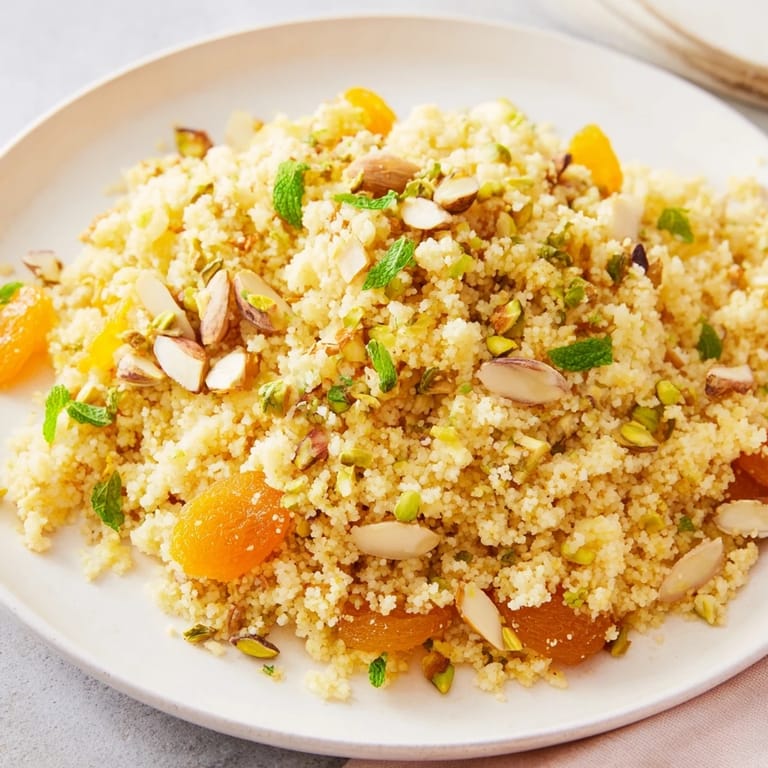
 This couscous pilaf became my answer to the question of how to feed people something nourishing and beautiful without spending all evening in the kitchen. It's the kind of dish that makes you look like you tried harder than you actually did.
Recipe FAQs
- → Can I prepare this ahead of time?
Yes, you can make this pilaf a few hours in advance. Store it in an airtight container in the refrigerator and gently reheat before serving with a splash of broth to restore moisture.
- → What can I substitute for the dried fruits?
Dried cranberries, cherries, dates, or figs work wonderfully. Use the same quantity and adjust sweetness to your taste preference.
- → How do I make this vegan?
Simply use vegetable broth instead of chicken broth. All other ingredients are naturally plant-based, making this a perfect vegan side dish.
- → What pairs well with this pilaf?
Serve alongside grilled vegetables, roasted chicken, lamb, or fish. It also works beautifully with chickpeas stirred in for a complete vegetarian meal.
- → Can I toast the nuts myself?
Absolutely. Toast almonds and pistachios in a dry skillet over medium heat for 2-3 minutes, stirring frequently until fragrant and golden for enhanced flavor.
- → Why does my couscous come out mushy?
Avoid stirring couscous while it absorbs the broth. Use the exact liquid ratio, cover the pan, and let it rest undisturbed for 5 minutes before fluffing with a fork.