 Save to Pinterest
 There's something about the smell of soba noodles cooking that instantly transported me back to a tiny restaurant in Tokyo where I sat at the counter watching steam rise from a ceramic bowl. The chef moved with such ease, his hands knowing exactly when the noodles were tender but still had that satisfying chew. Years later, I realized I could recreate that moment at home—not the exact restaurant magic, but something close enough that my kitchen filled with the same comforting aroma on a random Tuesday afternoon.
I made this for my friend Maya on a sweltering summer evening when cooking over a hot stove felt like the last thing either of us wanted. She arrived sweaty and tired from work, and within 20 minutes we were sitting on my porch with cold bowls of soba, cold drinks in hand, and suddenly the whole evening felt manageable again. She's made it at least twice a week since then, and that's when I knew it wasn't just a recipe—it was a lifeline for busy people who still wanted to eat well.
Ingredients
- Dried soba noodles (250 g): Look for pure buckwheat soba if you need gluten-free; some brands stretch the noodles with wheat flour, which changes both texture and nutrition. The noodles should snap cleanly when you break one in half, a sign of good quality.
- Shelled edamame (1 cup): Frozen edamame is completely acceptable and honestly saves you time—they're picked and frozen at peak ripeness, so don't feel like you're cutting corners.
- Cucumber (1 medium): English cucumbers have thinner skin and fewer seeds, so they julienne more elegantly, but any cucumber works if that's what you have.
- Carrots (2 medium): Julienne them as thin as you can manage; they'll add a subtle sweetness and stay crisp rather than turning soft.
- Scallions (2): The white and light green parts provide a sharp onion bite, while the dark green tops add a fresh garnish.
- Toasted sesame seeds (2 tbsp): Toast your own if possible—raw sesame seeds taste like nothing, but toasted ones are nutty and aromatic.
- Fresh cilantro or mint (1/4 cup optional): Mint brings brightness; cilantro brings herbaceousness; skip both if neither appeals to you, and the dish is still complete.
- Soy sauce (3 tbsp): The backbone of the dressing—use full-sodium soy, not the reduced-sodium version, since you're diluting it with other ingredients anyway.
- Rice vinegar (2 tbsp): Milder and sweeter than distilled vinegar; it rounds out the dressing without sharpness.
- Toasted sesame oil (1 tbsp): A little goes a long way because sesame oil is concentrated and bold; regular sesame oil tastes flat by comparison.
- Tahini or peanut butter (1 tbsp): Tahini keeps the dressing vegan and gives it a subtle earthiness; peanut butter works if that's easier and adds a different kind of richness.
- Honey or maple syrup (1 tbsp): This balances the salty and acidic elements; don't skip it even though it seems small.
- Fresh ginger (1 tsp grated): Ginger adds warmth and a subtle heat that ties everything together; bottled ginger paste works in a pinch.
- Garlic clove (1 small, minced): One clove is enough to flavor the entire dressing without overwhelming it.
- Water (1 tbsp, or more as needed): This thins the dressing to drizzling consistency—you might need more depending on how thick your tahini is.
Tired of Takeout? 🥡
Get 10 meals you can make faster than delivery arrives. Seriously.
One email. No spam. Unsubscribe anytime.
Instructions
- Bring water to a boil for the noodles:
- Use a medium saucepan with plenty of water—soba noodles like room to move around. Once it's at a rolling boil, you're ready to add the noodles.
- Cook the soba noodles:
- Follow the package time, which is usually around 4 to 5 minutes. They should be tender but still have a slight firmness when you bite one—overcooked soba turns mushy and loses its appeal.
- Drain and rinse the noodles:
- Use a colander and run them under cold water until they're completely cool and you can run your fingers through them without sticking. This stops the cooking and prevents them from clumping.
- Blanch the edamame:
- Drop them into the same boiling water for 2 to 3 minutes, then drain in a colander. They should be just tender, not soft.
- Make the sesame dressing:
- In a small bowl, whisk the soy sauce, rice vinegar, sesame oil, tahini, honey, ginger, and garlic until you have a smooth paste. Add water a tablespoon at a time until the dressing flows like a loose peanut butter—not too thick, not too thin.
- Prepare all your vegetables:
- Julienne the cucumber and carrots into thin matchsticks, then slice the scallions. Having everything prepped and ready makes the final assembly feel less rushed.
- Toss noodles with half the dressing:
- In a large bowl, gently combine the cooled soba noodles with about half of the sesame dressing. This coats each noodle without making the bowl look drowning in sauce.
- Divide noodles among bowls:
- Split the dressed noodles evenly among four bowls, creating a loose nest at the bottom of each.
- Top each bowl:
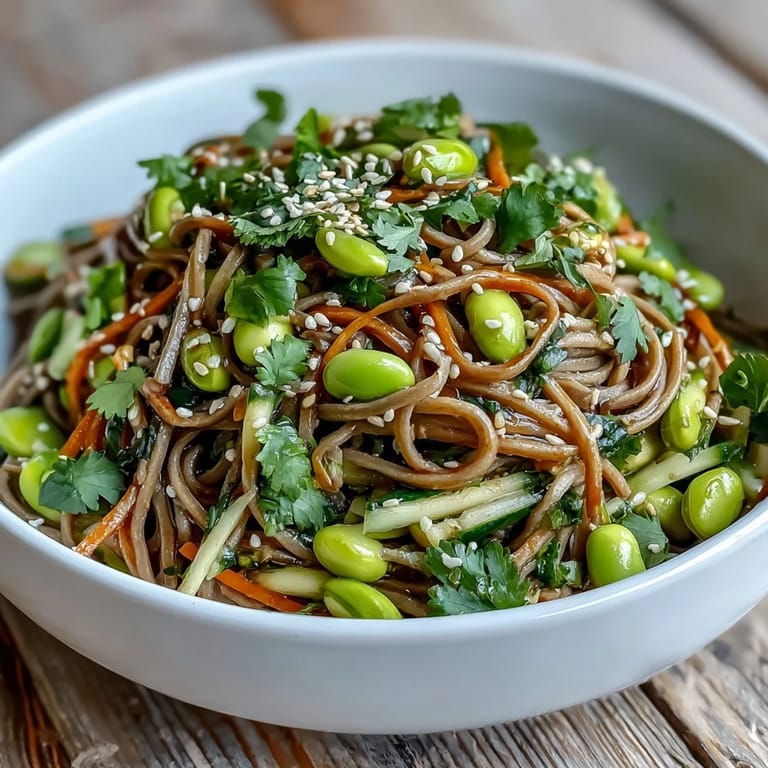
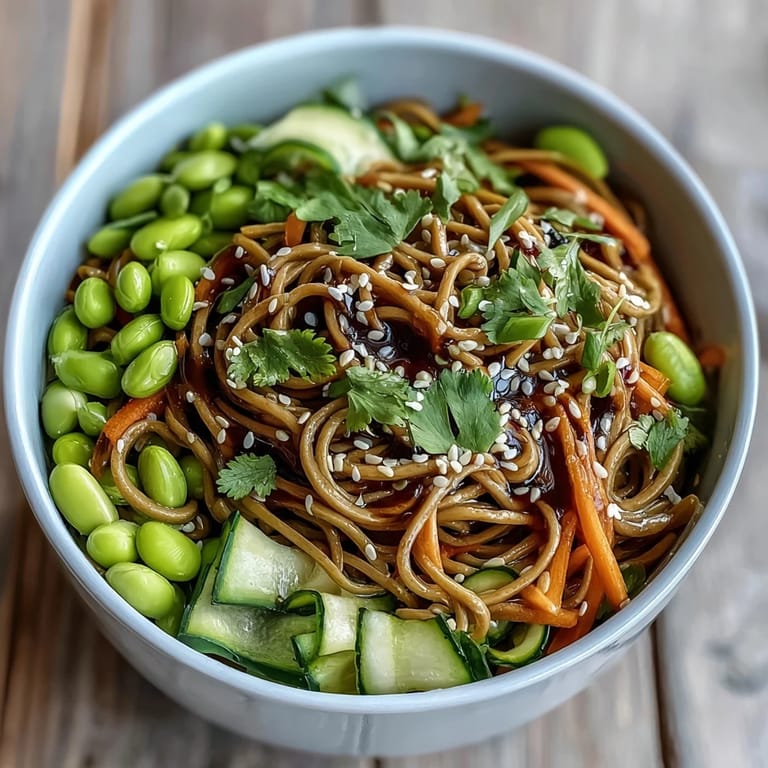
- Arrange the edamame, cucumber, carrots, and scallions on top of the noodles in sections—it looks more intentional this way and lets people see what they're eating.
- Drizzle with remaining dressing:
- Pour the rest of the dressing over the top, letting some pool in the center where it can coat everything as people mix.
- Garnish and serve:
- Sprinkle toasted sesame seeds over the top and add fresh herbs if you're using them. Serve immediately while the noodles are still cool and the vegetables are still crisp.
 Save to Pinterest
 My brother came home from the hospital after a minor surgery feeling weak and overwhelmed by medication, and when he said he was hungry but nothing sounded good, I made this bowl for him. He sat at the kitchen table, and by the time he finished, something in his face had shifted—not just from eating, but from having something light and colorful and intentional placed in front of him when he needed it. That's when I stopped thinking of this as a recipe and started thinking of it as a small act of care.
Why This Bowl Feels Complete
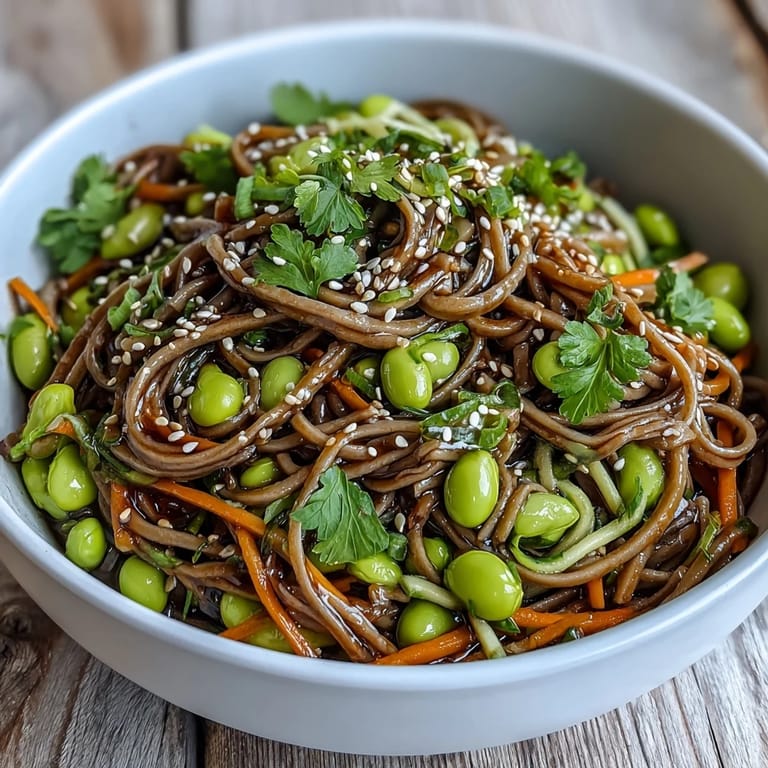
The key to this dish working is the balance of textures and temperatures. You've got soft, chewy noodles against crisp vegetables, cool throughout but warm with flavor from the dressing. The edamame adds protein and a slightly creamy texture when you bite them, while the sesame seeds provide a little crunch and nuttiness. Each element has a reason for being there, and when you toss it all together, nothing overwhelms anything else.
Making It Your Own
The framework of this bowl is flexible enough to accommodate whatever you have in your kitchen. I've made it with shredded cabbage instead of cucumber when cucumbers weren't in season, added thin slices of radish for a peppery kick, and once swapped the edamame for roasted chickpeas when that was what I had. The dressing stays the same and holds everything together, so you can play with the vegetables without worrying about the dish falling apart.
Serving and Pairing Suggestions
This bowl is cold, light, and refreshing, so it pairs beautifully with chilled tea, especially green tea or jasmine tea if you want to stay in the Japanese direction. If you're looking for something with alcohol, a crisp white wine like riesling or sauvignon blanc won't overpower the delicate sesame dressing. For a heartier meal, serve it alongside miso soup or with grilled tofu and a soft-boiled egg on top.
- Make it ahead by keeping the components separate and assembling just before eating so everything stays crisp.
- If you're feeding a crowd, prepare the dressing and noodles in advance, then let guests build their own bowls with toppings.
- Leftovers keep for two days in the refrigerator, though the vegetables will soften slightly—eat the noodles and vegetables first, and add fresh toppings if you want to refresh them.
 Save to Pinterest
 This bowl has become my answer to the question I ask myself most summer evenings: what can I make that tastes good and doesn't make the kitchen feel like a sauna? It's saved me countless times when I was hungry but unmotivated, and it's proven that simple food made with care tastes better than complicated food made in a rush.
Recipe FAQs
- → Are soba noodles gluten-free?
Traditional soba contains wheat, but 100% buckwheat varieties are naturally gluten-free. Always check labels and use tamari instead of soy sauce to accommodate dietary restrictions.
- → Can I make this ahead?
Prepare components up to 2 days in advance. Store dressing separately and toss just before serving to maintain texture. Noodles may absorb dressing, so add extra when ready to eat.
- → What protein options work well?
Grilled tofu, shredded chicken, or soft-boiled eggs complement the flavors beautifully. The edamame already provides 13g protein per serving, making it substantial as-is.
- → How do I prevent noodles from sticking?
Rinse cooked soba thoroughly under cold water to remove starch. Toss immediately with half the dressing to coat. This prevents clumping while infusing flavor throughout.
- → Can I substitute the vegetables?
Snap peas, bell peppers, radishes, or shredded cabbage work wonderfully. Aim for colorful crunch and balance with the nutty noodles and creamy dressing.