 Save to Pinterest
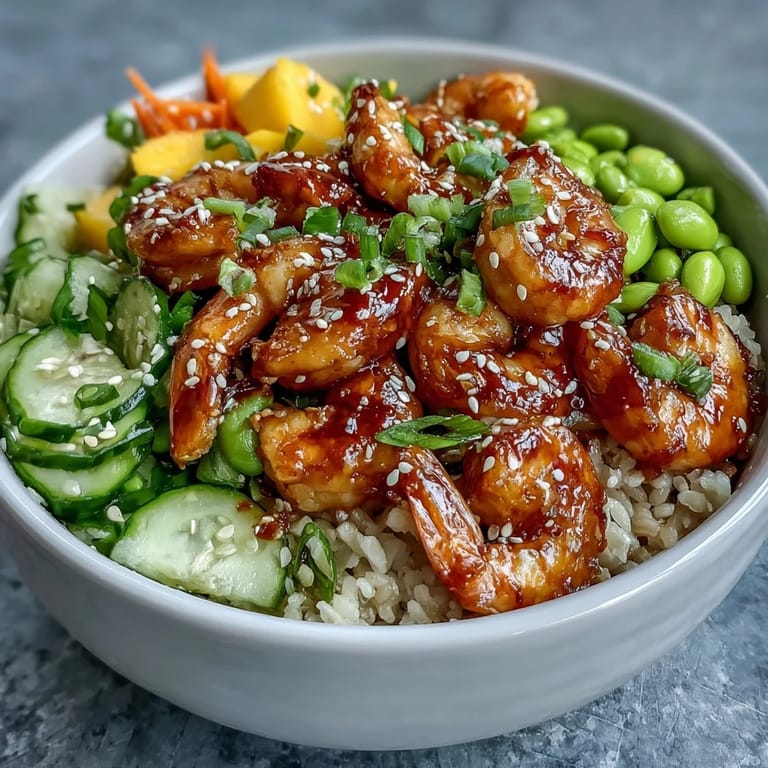
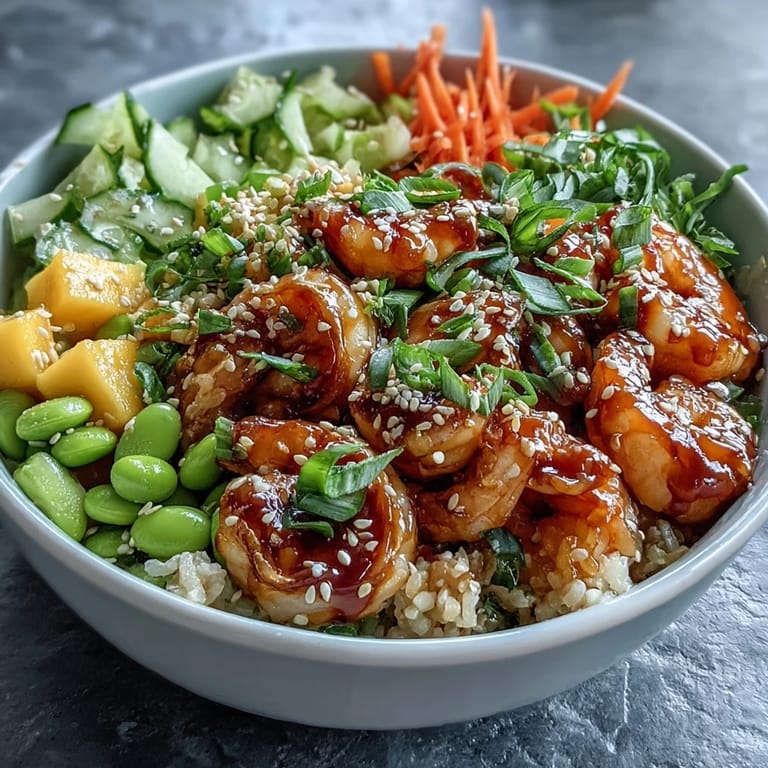
 My friend texted me at noon saying she was starving but wanted something that wouldn't derail her week, and I found myself throwing together this shrimp poke bowl in my tiny kitchen while she sat at the counter telling me about her morning. The whole thing came together faster than I expected, the shrimp hitting that perfect opaque pink in mere minutes, and suddenly we had this gorgeous, colorful bowl that felt more like self-care than a quick lunch. There's something about the contrast of cool mango against warm seasoned shrimp that just clicks, especially when you're craving something light but genuinely satisfying.
I made this for my partner after a long day when neither of us wanted to think too hard about dinner, and he was genuinely impressed by how fresh and bright it tasted. The way the warm shrimp cooled against the chilled rice and vegetables, with that little kick of sriracha cutting through the sweetness—it became our go-to weeknight meal. Now he requests it whenever he wants to feel like we're eating somewhere beachy and intentional, even though we're just at our kitchen table.
Ingredients
- Raw shrimp, peeled and deveined: Look for shrimp that still have a slight curl and smell clean and briny, never fishy—frozen works beautifully and often tastes fresher than what's labeled fresh at the counter.
- Brown rice or cauliflower rice: Brown rice gives you fiber and keeps you fuller longer, but cauliflower rice cuts the calories dramatically if you're leaning that way.
- Ripe mango: The sweet juxtaposition against savory is what makes this bowl sing, so choose a mango that yields slightly to pressure and smells fragrant at the stem.
- Edamame: These little green soybeans are pure protein and add that satisfying bite that keeps you coming back for another spoonful.
- Cucumber and carrot: Thin slicing or julienning isn't just for looks—it creates more surface area for the sauce to cling to and makes every bite texturally interesting.
- Avocado: Add this right before serving or it'll brown and lose that silky quality that makes it special.
- Scallions: The green parts especially add a sharp, oniony freshness that brightens everything else on the plate.
- Low-sodium soy sauce or tamari: Tamari is your friend if gluten bothers you, and low-sodium lets you control the saltiness without becoming parched.
- Rice vinegar: This mild acid balances the richness of sesame oil and avocado without overpowering the delicate shrimp.
- Toasted sesame oil: A little goes a long way—it's nutty and deeply aromatic, so resist the urge to pour.
- Honey or agave: Just a touch rounds out the sauce and tempers the heat from the ginger and sriracha.
- Fresh ginger and garlic: Mincing them fine lets them dissolve into the sauce rather than bite your mouth with aggressive chunks.
- Sesame seeds and cilantro: These are your final flourish, adding visual appeal and that restaurant-quality finish that makes you feel like you've accomplished something.
Tired of Takeout? 🥡
Get 10 meals you can make faster than delivery arrives. Seriously.
One email. No spam. Unsubscribe anytime.
Instructions
- Sear the shrimp until they blush pink:
- Heat your skillet over medium-high heat and give it a light spray of oil—you want the pan hot enough that the shrimp sizzle immediately but not so aggressive that they seize up. Lay them flat and resist the urge to move them around; they'll cook through in about 2 minutes, then flip for another minute or so until they're completely opaque and slightly curled.
- Whisk the sauce into something glossy and balanced:
- Combine soy sauce, rice vinegar, sesame oil, honey, ginger, garlic, and sriracha in a bowl, whisking until the honey dissolves and everything smells intoxicating. Taste it straight from the whisk—you want a harmony of salty, tangy, slightly sweet, and if you're using sriracha, a gentle heat that sneaks up on you.
- Build your bowl like you're creating art:
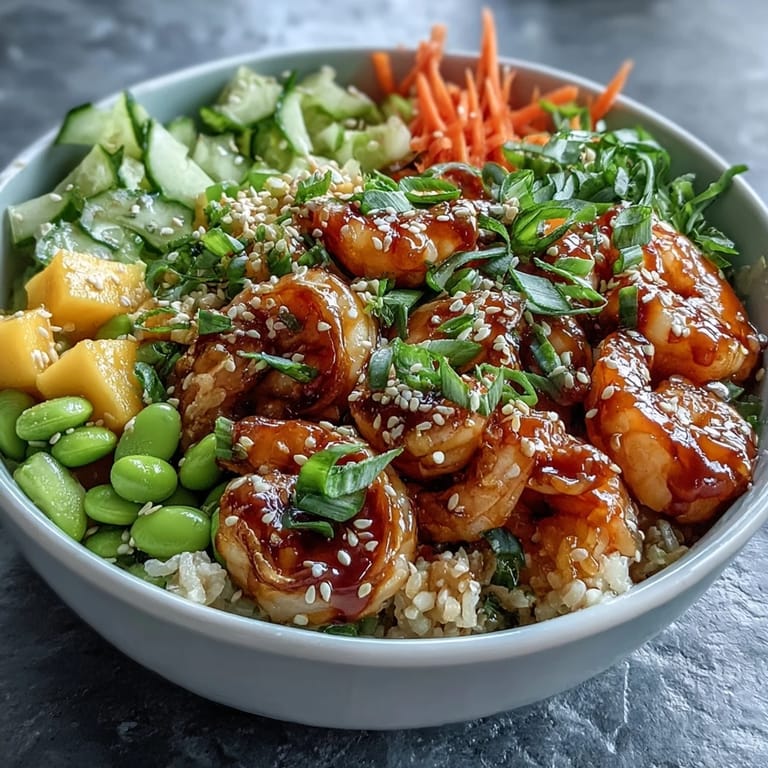
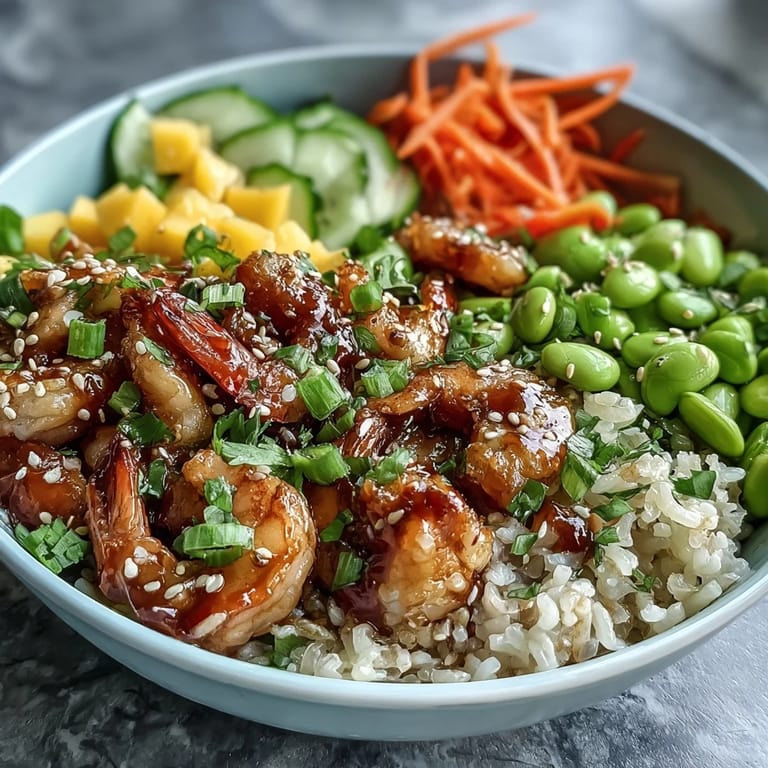
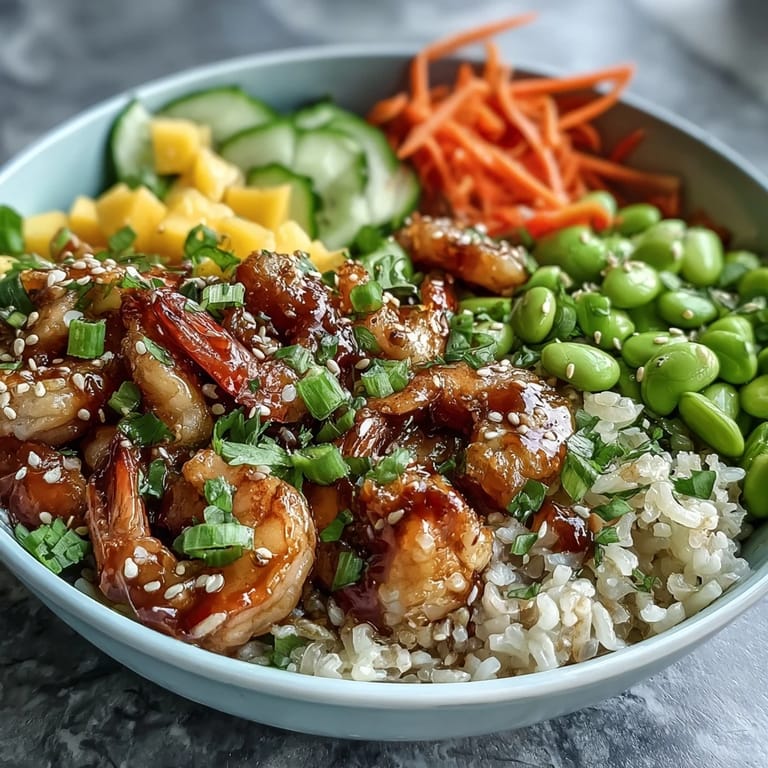
- Divide the rice between two bowls, then arrange the shrimp, mango, edamame, cucumber, carrot, and avocado in sections around the rice rather than piling them all together. This isn't just prettier; it means you get every component in each bite instead of one spoonful being all edamame and the next all mango.
- Drizzle the sauce with intention:
- Pour the sauce evenly across the top, letting it pool slightly in the rice and coat the shrimp, but save a little to swirl through the avocado at the last moment. The sauce should glisten on everything, not puddle at the bottom.
- Finish with scattered brightness:
- Sprinkle the sesame seeds, cilantro if you're using it, and scallions on top, then squeeze lime over the whole thing. That final lime juice wakes up every flavor and prevents the avocado from browning too quickly.
 Save to Pinterest
  Save to Pinterest
 This bowl became my quiet rebellion against the guilt I'd been carrying around food—proof that eating well doesn't require suffering or hours of prep. It's now the meal I make when I want to feel taken care of, when the weather turns warm and I'm craving something that tastes like vacation.
The Beauty of Building Bowls
There's something deeply satisfying about assembling a bowl instead of plating a traditional meal—you're in control of every proportion, every texture, every flavor interaction. The Japanese understood this when they developed poke, and we've carried that wisdom forward into fusion cooking that feels both respectful and exciting. Once you nail this bowl, you'll find yourself riffing on it constantly: swapping mango for pineapple, adding pickled ginger, trying different hot sauces, or throwing in whatever vegetables happen to be beautiful at the market.
Why This Sauce Changes Everything
The sauce is where the magic happens—it's the thread connecting all these distinct ingredients into something that feels intentional and whole. I've learned that good sauces aren't complicated; they're just balanced, which means tasting constantly and trusting your instincts about whether something needs more acid, heat, or richness. This one hits all those notes without overpowering the delicate shrimp, which is the real trick.
Make It Your Own
The skeleton of this bowl is solid, but the soul comes from how you personalize it based on what speaks to you and what you have on hand. I've made it with crispy chickpeas instead of shrimp on days when I wasn't in the mood for seafood, topped it with everything bagel seasoning instead of traditional sesame, and even added crispy shallots for texture once. The point is that poke bowls invite creativity rather than demand strict adherence, so you'll find yourself experimenting naturally.
- Try adding julienned daikon radish or shredded red cabbage for extra crunch and a peppery note that plays beautifully with the mango.
- Substitute the brown rice with mixed greens, quinoa, or even farro if you want to shift the texture and nutritional profile slightly.
- If you have sriracha-hesitant guests, leave it out of the main sauce and offer it on the side so everyone controls their own heat level.
 Save to Pinterest
  Save to Pinterest
 This bowl has become my proof that healthy eating can be vibrant, quick, and genuinely delicious. Come back to it whenever you need a reminder that nourishing yourself doesn't require sacrifice.
Recipe FAQs
- → Can I use frozen shrimp?
Yes, thaw frozen shrimp completely before cooking. Pat them dry with paper towels to remove excess moisture for better searing.
- → Is this bowl gluten-free?
Use tamari instead of soy sauce to make it gluten-free. All other ingredients naturally contain no gluten.
- → How long does this keep in the refrigerator?
Best enjoyed fresh. Store components separately in airtight containers for up to 2 days. Add sauce just before serving.
- → Can I make this spicy?
Increase sriracha in the sauce or add sliced jalapeños as a topping. Adjust heat level to your preference.
- → What other proteins work well?
Try cubed ahi tuna, salmon, or cubed tofu for a vegetarian version. Cook times may vary slightly.
- → Can I prepare the sauce ahead?
Yes, whisk the sauce together and refrigerate for up to 5 days. Bring to room temperature before serving.