 Save to Pinterest
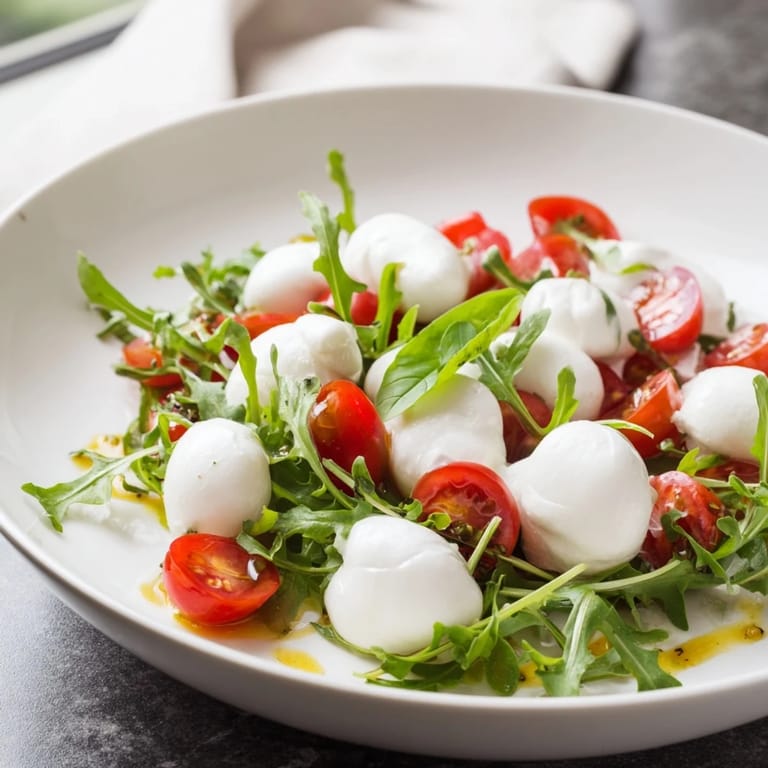
 There's a moment when you're arranging ingredients on a platter and suddenly you see it—not just a salad, but something that looks like it belongs in a gallery. That's what happened the first time I draped mozzarella pearls across fresh tomatoes and greens, and honestly, I couldn't stop staring at it before serving. The simplicity of it felt almost deceptive, like I'd discovered a secret that fancy restaurants don't want you to know. It takes fifteen minutes, costs less than you'd think, and tastes like summer decided to sit down on a plate.
I made this for my sister's garden lunch last June, and watching people's faces light up when they saw it was better than any compliment I've gotten in the kitchen. She mentioned later that it was the kind of dish that made her feel like someone really cared—not because it was complicated, but because it was thoughtfully put together. That's when I realized this salad isn't just about flavor; it's about showing people that you see them.
Ingredients
- Cherry tomatoes: Look for ones that feel heavy and smell sweet at the stem—they'll taste significantly better than mealy ones, and halving them helps release their juices into the salad.
- Baby arugula: The peppery bite cuts through the richness of the mozzarella, but if you find it too sharp, baby spinach is a gentler substitute.
- Fresh basil leaves: Tear them gently by hand rather than cutting them with a knife to avoid bruising the delicate leaves and losing their aroma.
- Mozzarella pearls: Find them in the cheese section, usually packed in brine or whey, and drain them thoroughly before using so they don't make the salad watery.
- Extra virgin olive oil: This is your backbone—use something you actually enjoy tasting, because you'll taste it clearly in every bite.
- Balsamic glaze: The reduced version is thicker and sweeter than regular balsamic vinegar, and it drapes beautifully without pooling.
- Flaky sea salt: It dissolves more slowly than table salt, giving you bursts of flavor rather than an even saltiness.
Tired of Takeout? 🥡
Get 10 meals you can make faster than delivery arrives. Seriously.
One email. No spam. Unsubscribe anytime.
Instructions
- Create your base:
- Spread the baby arugula across a large serving platter, leaving a little breathing room at the edges. The greens should feel loose and airy, not packed tight, so they'll absorb the dressing evenly.
- Layer in brightness:
- Scatter the halved cherry tomatoes over the arugula, then tear the basil leaves and nestle them in between. The tomatoes should peek through the greens in a way that looks natural, not military-precise.
- Add the strand:
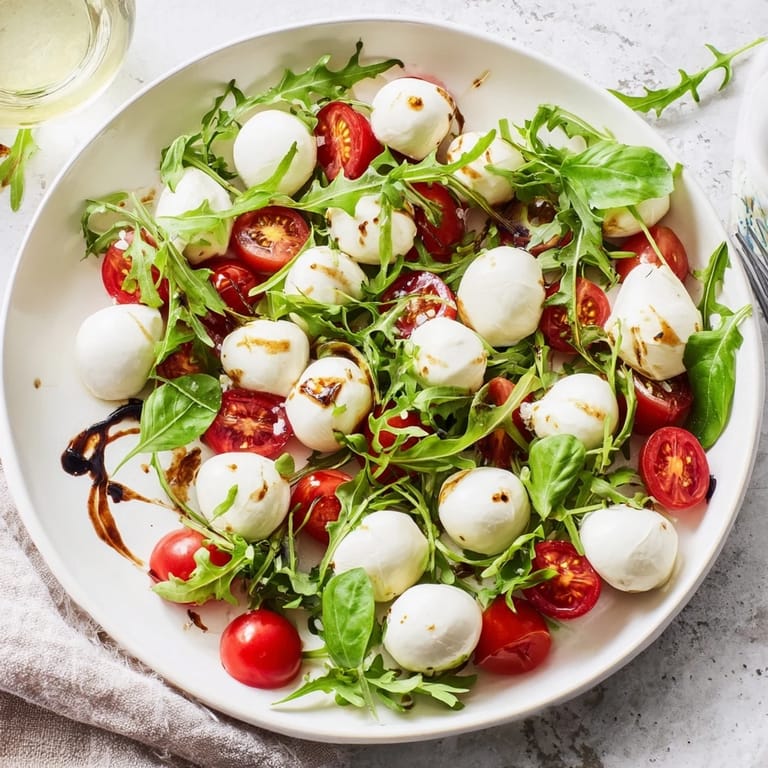
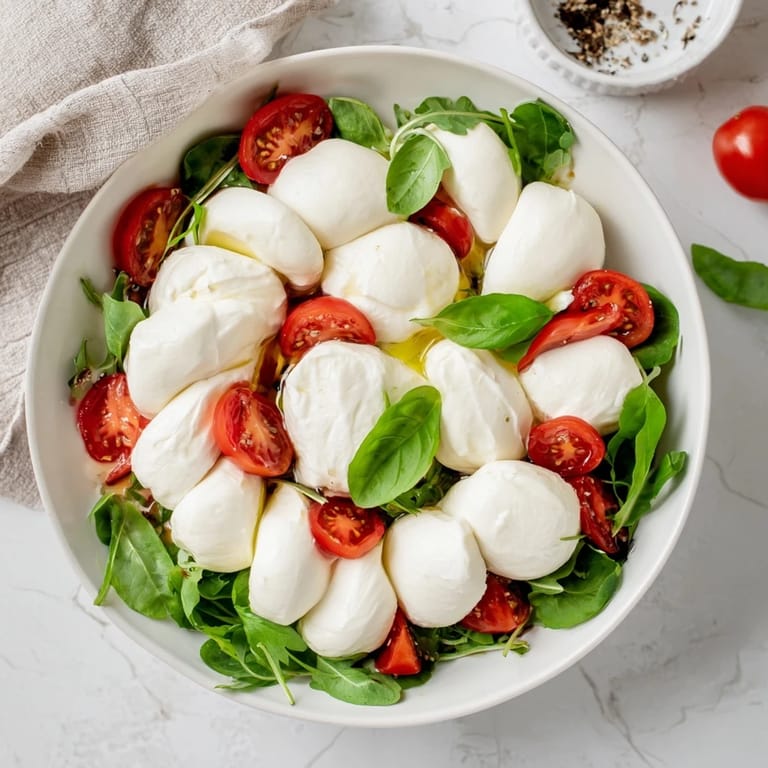
- This is where the magic happens—carefully arrange the mozzarella pearls in a continuous strand or graceful curve across the top, like you're drawing with pearls. They should rest lightly on top of the other ingredients, creating that visual moment that makes people pause before eating.
- Finish with oils:
- Drizzle the olive oil first in a thin, steady stream across the entire salad, then follow with the balsamic glaze in a lighter hand. Too much liquid and you'll end up with a soggy salad; too little and you'll miss the flavor.
- Season to taste:
- Pinch the flaky sea salt between your fingers as you sprinkle it so you can feel how much you're using, then add the pepper. Season just before serving so the salt doesn't start dissolving prematurely.
 Save to Pinterest
 There's something about watching someone enjoy food you've made that costs so little but looks like it cost the earth. A friend once asked me the recipe expecting something complicated, and when I told her the ingredient list, she laughed—then asked me to make it for her birthday dinner. That's when I understood that this salad is less about technique and more about intention.
The Story Behind the Strand
Caprese salads have been around forever, but there's something about the way mozzarella pearls drape that feels newer, more intentional. I discovered them by accident at a farmers market when a vendor suggested them instead of the usual thick slices, and suddenly the whole dish felt different—lighter, more elegant, easier to eat. It made me realize that sometimes the best ideas come from small substitutions rather than reinventing the wheel entirely.
Serving Moments and Pairings
This salad is most stunning served right away while the arugula is crisp and the mozzarella is still perfectly cool. I've learned to arrange it just before guests arrive rather than prepping it ahead, because the presentation is honestly half the experience. Pair it with a chilled Pinot Grigio or sparkling water with lemon if you want to keep things light, or let it sit alongside grilled vegetables and bread for a more substantial meal.
Variations and Personal Touches
The beauty of this salad is how it adapts to what you have on hand or what the season offers. In summer, I add thin slices of ripe peaches or stone fruit that catch the light just like the mozzarella does. In autumn, I'll sometimes sneak in thin slices of avocado or a handful of candied walnuts, which adds an unexpected sweetness that works beautifully against the peppery arugula. The core stays the same—fresh, minimal, arranged with care—but the extras remind me that cooking isn't about rigid rules; it's about responding to what looks good at the market that day.
- Toss in some candied nuts or a scatter of pomegranate seeds when you want a textural surprise.
- Swapping arugula for baby spinach gives you a milder flavor profile that lets the tomato and mozzarella shine more softly.
- A light sprinkle of aged balsamic instead of glaze creates a more delicate finish if you're worried about overpowering the fresh ingredients.
 Save to Pinterest
 This dish taught me that elegance doesn't require hours in the kitchen or a complicated ingredient list. Sometimes the most memorable meals come from caring about how you present what you make, and taking those extra few minutes to make something look beautiful.
Recipe FAQs
- → How should mozzarella pearls be prepared for serving?
Drain the mozzarella pearls well using a small colander before arranging them in a continuous strand or artistic curve over the salad for visual appeal and even distribution.
- → Can I substitute the arugula with another green?
Yes, baby spinach works as a milder alternative without overpowering the other fresh ingredients while maintaining the salad’s delicate balance.
- → What dressing complements this salad best?
A simple drizzle of extra virgin olive oil combined with a light balsamic glaze enhances the natural flavors for a harmonious and elegant taste.
- → Are there any recommended additions to enhance flavor?
Adding sliced ripe peaches or avocado brings a creamy and fruity contrast that pairs well with the mozzarella and fresh herbs.
- → Is this salad suitable for special diets?
Yes, it’s vegetarian and naturally gluten-free, making it suitable for those with dietary restrictions related to gluten or meat consumption.