 Save to Pinterest
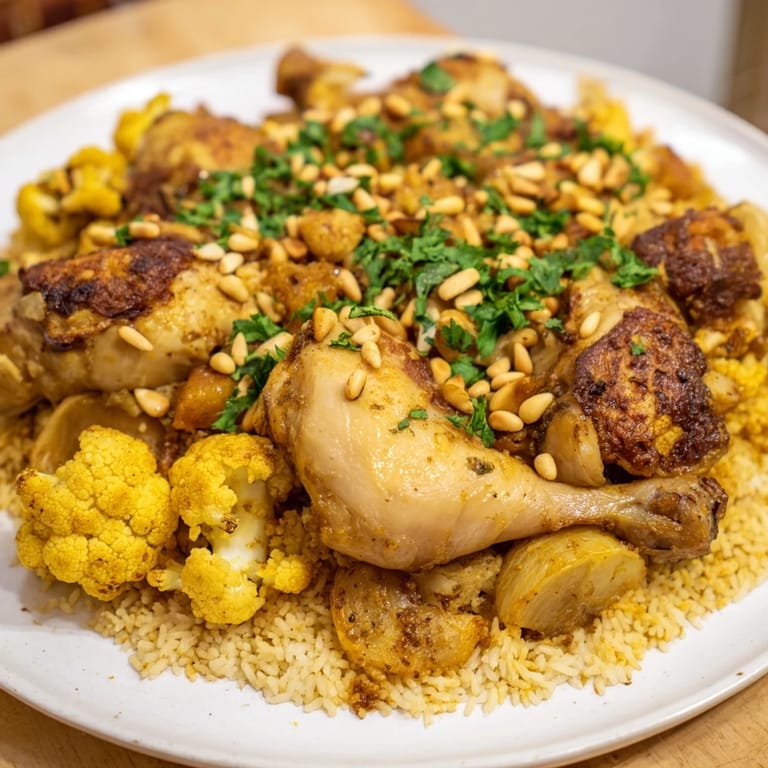
 The first time I really understood maklouba was when my neighbor brought one to our door, still steaming in a clay pot wrapped in newspaper. She set it on the kitchen counter, placed a platter on top with ceremonial care, and in one smooth motion flipped the entire thing upside down. When she lifted the pot away, this golden dome of rice studded with caramelized cauliflower and chicken emerged like edible architecture. I stood there amazed, thinking something so dramatic had to be difficult—it's really not, it just requires patience and trust.
I made this for a dinner party once and miscalculated the broth—added too much, and I was certain it would be a soggy disaster. But something magical happened: the extra moisture helped everything steam together more gently, and the rice came out creamy rather than fluffy, almost risotto-like at the bottom. My guests loved it more than the "perfect" version I'd made before, which taught me that maklouba is forgiving if you're willing to adapt.
Ingredients
- Bone-in chicken pieces (1.2 kg): Use thighs and drumsticks for more flavor and moisture; they hold up better during the long cook than breast meat would.
- Basmati rice (2 cups): The soaking step isn't just tradition—it helps each grain stay separate and prevents the maklouba from turning into mush when you flip it.
- Cauliflower florets: Frying them until deeply golden is essential; pale cauliflower will disappear into the rice and you'll lose that textural contrast.
- Potatoes (2 medium, sliced thin): They become almost creamy inside and golden crispy outside, acting as a protective base layer that keeps the whole dome intact.
- Onion (1 large): Sliced thin and sautéed until translucent carries the spices into the cooking liquid and builds the flavor foundation.
- Spice blend (cumin, coriander, cinnamon, turmeric, allspice, cardamom): This isn't a random mix; these warm spices are what make maklouba unmistakably Palestinian, blooming when you toast them in the oil.
- Chicken stock (5 cups): Homemade is ideal, but good quality store-bought works; the stock carries flavor through every layer.
- Pine nuts or almonds: Toast them just before serving for the best flavor and crunch; stale nuts disappear into the background.
Tired of Takeout? 🥡
Get 10 meals you can make faster than delivery arrives. Seriously.
One email. No spam. Unsubscribe anytime.
Instructions
- Soak and prep the rice:
- Rinse the basmati rice under cold water until the water runs almost clear—this removes excess starch that would make it gluey. Soak it in salted water for 30 minutes, then drain thoroughly.
- Brown the chicken:
- Heat olive oil in your heavy pot over medium-high heat and season the chicken pieces generously with salt and pepper. Listen for that satisfying sizzle as they hit the pan, and brown them on all sides until deep golden (about 6 minutes total). Set them aside on a plate.
- Build the flavor base:
- In the same pot, add your sliced onion and let it soften until it's translucent and just starting to color. Add all the spices and stir constantly for about a minute—you'll smell the aromatics wake up. Return the chicken to the pot, pour in the stock, and let it come to a boil, then reduce to a simmer for 20 minutes. Remove the chicken and reserve the broth with all its spiced goodness.
- Fry the vegetables:
- While the chicken simmers, heat vegetable oil in a deep pan and fry the cauliflower florets and potato slices in batches until they're golden and crispy on the edges. Use a slotted spoon to transfer them to paper towels to drain.
- Layer with intention:
- This is where maklouba gets its personality. In your heavy pot, lay down the fried potato slices as a protective base, then nestle the browned chicken pieces on top, scatter the cauliflower over that, and finally add your drained rice, pressing down gently so everything settles together.
- Steam to perfection:
- Pour the reserved spiced broth over the rice until it just covers everything—about 4 to 5 cups. Place the pot over medium heat and let it bubble gently at the edges, then reduce to low heat, cover tightly, and resist the urge to peek for 35 to 40 minutes. The steam does the work here.
- Rest and ready:
- Turn off the heat and let the maklouba sit undisturbed for 10 to 15 minutes. This resting time lets everything set so it holds its shape when you flip.
- The dramatic flip:
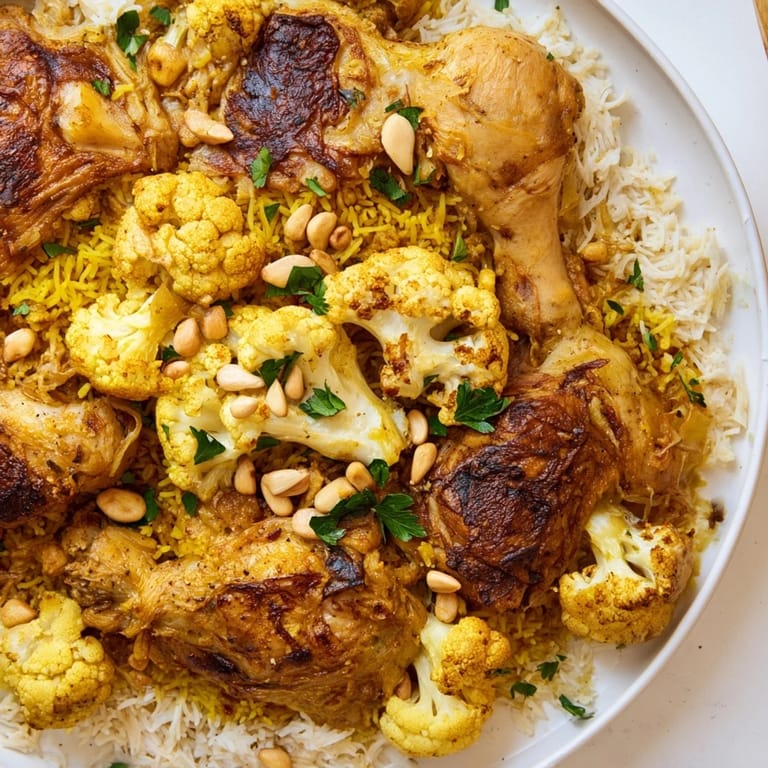
- Place a large serving platter over the pot and, in one confident motion, invert the whole thing. If you hesitate, the dome might crack, so commit fully. Gently lift the pot away and admire your work.
 Save to Pinterest
 There's a particular anxiety that comes right before you flip a maklouba, a split second where you wonder if you've made a terrible mistake. Then that platter hits the pot, you turn it over, lift the pot away, and suddenly there's this perfect golden dome sitting on the platter like you meant to do it all along. It's the kind of moment that makes cooking feel like magic, and it never stops feeling that way.
The Story Behind the Spices
These spices aren't just flavoring; they're a map of Palestinian cooking tradition. Cinnamon and cumin together create warmth without heaviness, while the cardamom adds a subtle floral note that makes people pause mid-bite and wonder what they're tasting. I learned this not from a textbook but from eating maklouba at different family tables, each one slightly different, each one teaching me something about how spices can carry memory and place.
Making It Your Own
While the classic version is perfect as written, maklouba is flexible if you understand its structure. Some cooks add layers of eggplant or carrots, others use lamb instead of chicken, and vegetarian versions work beautifully with just vegetable broth and extra vegetables. The key is keeping the potato layer at the bottom for stability and respecting the layering principle so everything cooks together evenly.
Serving and Storage
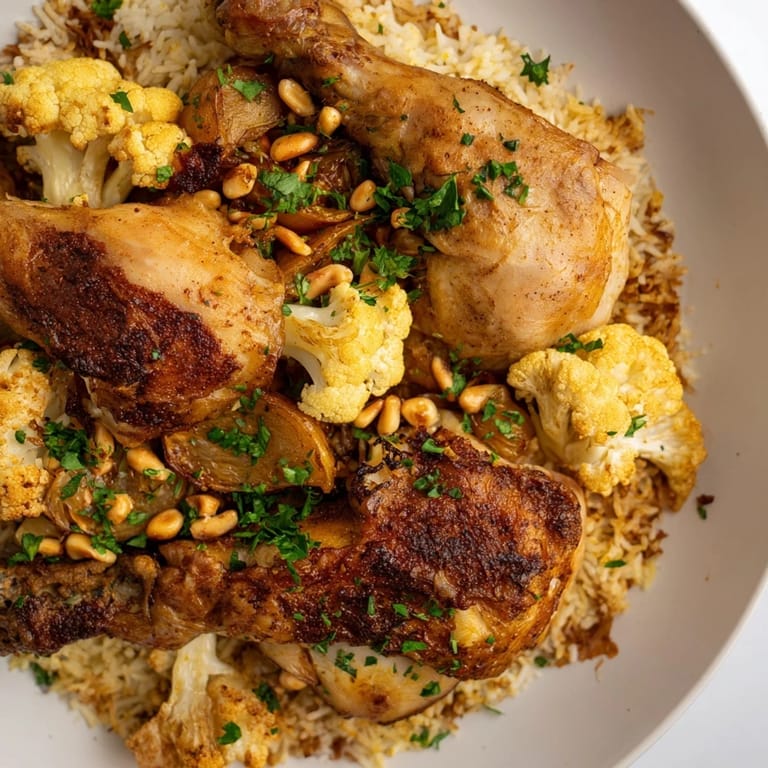
Maklouba is best served hot, right after that dramatic flip, garnished with toasted nuts and fresh parsley for color and brightness. Serve it with plain yogurt or a crisp Arabic salad on the side to cut through the richness. Leftovers can be reheated gently, though the dome texture won't be quite as spectacular the second time.
- Toast your nuts just before serving so they stay crispy and flavorful.
- If you're feeding a crowd, make two smaller makloubas instead of one massive one—they're easier to flip and cook more evenly.
- Plain yogurt is non-negotiable; its tang balances the warming spices perfectly.
 Save to Pinterest
 Maklouba has a way of turning a regular dinner into an occasion, mostly because the flip itself feels like a small ceremony. Once you make it once and see that golden dome emerge intact, you'll want to make it again and again.
Recipe FAQs
- → What spices are used in this Palestinian dish?
Key spices include cumin, coriander, cinnamon, turmeric, allspice, cardamom, and bay leaves, providing a warm and aromatic flavor profile.
- → How is the cauliflower prepared for the dish?
The cauliflower florets are fried until golden brown, adding texture and a rich taste that complements the layers.
- → Can this dish be made vegetarian?
Yes, by omitting the chicken and using vegetable broth, the dish retains its layered and spiced characteristics without meat.
- → What is the purpose of inverting the pot after cooking?
Inverting unmolds the layered ingredients, creating an impressive presentation where rice forms the top layer and vegetables and chicken are displayed beautifully.
- → What sides complement this Middle Eastern layered dish?
Plain yogurt or a crisp Arabic salad provides a refreshing contrast to the rich and spiced layers of the dish.