 Save to Pinterest
 The first time I made tabbouleh, I was standing in a cramped kitchen in Beirut with my friend's mother, who moved through her prep work with the kind of efficiency I'd never seen before. She barely looked at measurements, just grabbed handfuls of parsley and mint like she was gathering flowers, and somehow the proportions were always perfect. When I tried to recreate it back home weeks later, I understood why she'd emphasized one thing over and over: the herbs are the salad, not the side character. That shift in thinking changed everything for me.
I remember bringing a big bowl of this to a summer potluck where everyone else had brought heavy casseroles, and it was gone in minutes while the other dishes sat there looking lonely. One person came back three times, and when I asked why, she said it was the only thing that didn't make her feel sluggish in the heat. That's when I realized tabbouleh isn't just a salad—it's a mood, a season captured in a bowl.
Ingredients
- Fine bulgur wheat: Use fine, not medium or coarse; it hydrates more gently and won't turn mushy, keeping your salad light and separated.
- Flat-leaf parsley: This is the backbone—don't skip it or substitute with curly parsley, which has a more bitter edge and won't give you that fresh, herbal sweetness.
- Fresh mint: A small handful goes a long way; it brightens everything and prevents the salad from tasting one-dimensional.
- Spring onions: The white and light green parts give you a gentle onion flavor without the aggressive bite of regular onions, which would overpower the herbs.
- Tomatoes: Choose ripe, flavorful ones—canned won't have the same brightness, and seeding them keeps the salad from getting watery.
- Cucumber: Dice it small so every bite has a crisp texture, and don't peel it unless the skin is tough.
- Extra-virgin olive oil: This tastes like olives in the best way, and it's essential to the flavor profile—don't reach for regular oil here.
- Lemon juice: Freshly squeezed is non-negotiable; bottled tastes bitter and flat by comparison.
Tired of Takeout? 🥡
Get 10 meals you can make faster than delivery arrives. Seriously.
One email. No spam. Unsubscribe anytime.
Instructions
- Soften the bulgur gently:
- Pour boiling water over the fine bulgur and cover it—the steam will do all the work. After 10 to 15 minutes, it should be tender with a slight chew, not mushy. If water pools at the bottom, drain it through a fine mesh strainer and fluff with a fork so each grain separates.
- Build your herb base:
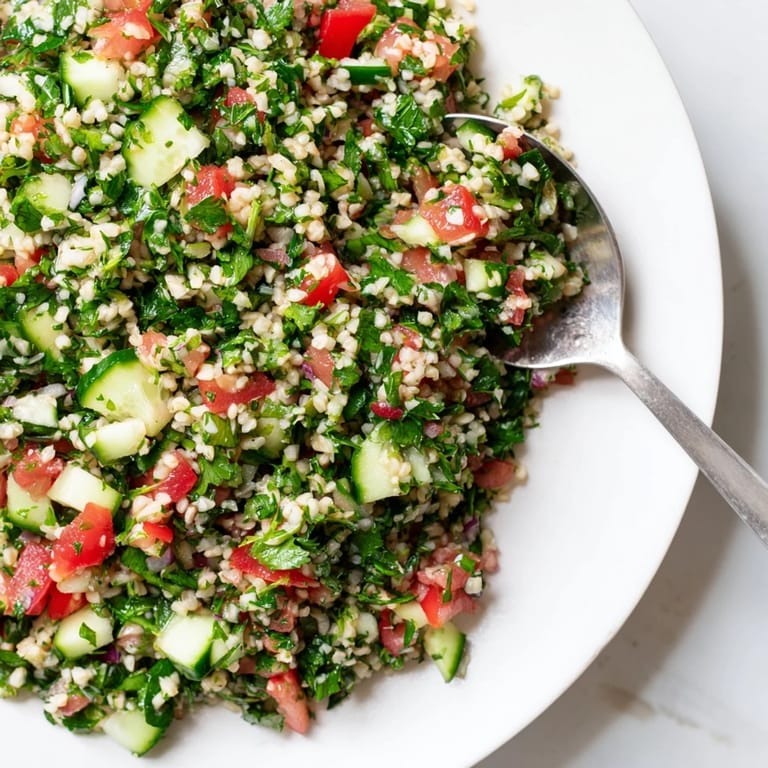
- Chop the parsley and mint by hand rather than using a food processor; you want them in small, distinct pieces, not bruised into a paste. Combine them with the spring onions in your largest bowl—they're the foundation, and everything else builds on them.
- Add the vegetables and bulgur:
- Toss in the diced tomatoes and cucumber, then the cooled bulgur. Be gentle so you don't crush anything, but make sure everything is evenly distributed.
- Dress it moments before eating:
- Whisk the olive oil, lemon juice, salt, and pepper together, then pour it over the salad. Toss gently to coat everything without compressing the greens, and taste immediately so you can adjust the seasoning while everything is still fresh.
 Save to Pinterest
 There was a moment during a family lunch when my mother took a bite and got quiet, really quiet, and then said, "This tastes like that trip." She meant the one where we'd eaten tabbouleh at sunset overlooking the Mediterranean, and somehow I'd managed to bring that memory back to her table. That's when food becomes more than sustenance—it becomes a passport home.
The Herb-to-Grain Ratio That Matters
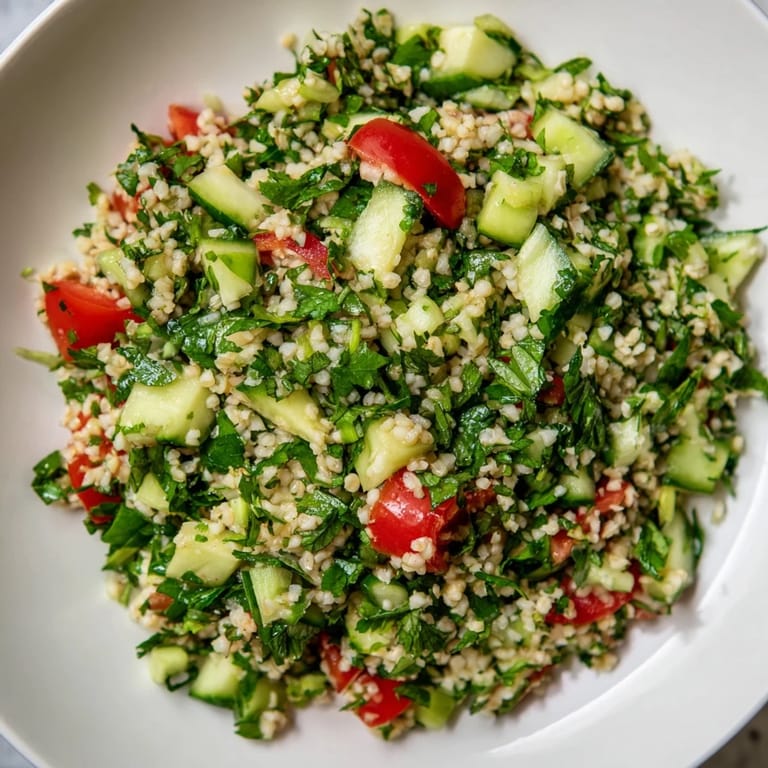
Most tabbouleh recipes you'll find are heavy on the bulgur, but the traditional Lebanese way leans into the herbs so boldly that the grains almost feel like a supporting player. The first time I adjusted my proportions to match this philosophy, I understood why—the salad stopped feeling like "grain with herbs" and became "herbs with a little bulgur for body." If you've never had proper tabbouleh, this might surprise you, but trust it.
Temperature and Timing
I've made this salad both chilled and at room temperature, and both are good, but they taste different. Chilled, it becomes crisp and refreshing, almost like an escape on a hot day. At room temperature, the flavors blend more, and you taste each element more distinctly—the lemon, the olive oil, the mint. I don't recommend making it more than a few hours ahead, though; the longer it sits, the flabbier the vegetables become and the more the flavors start to blur together in a less pleasant way.
Serving and Pairing
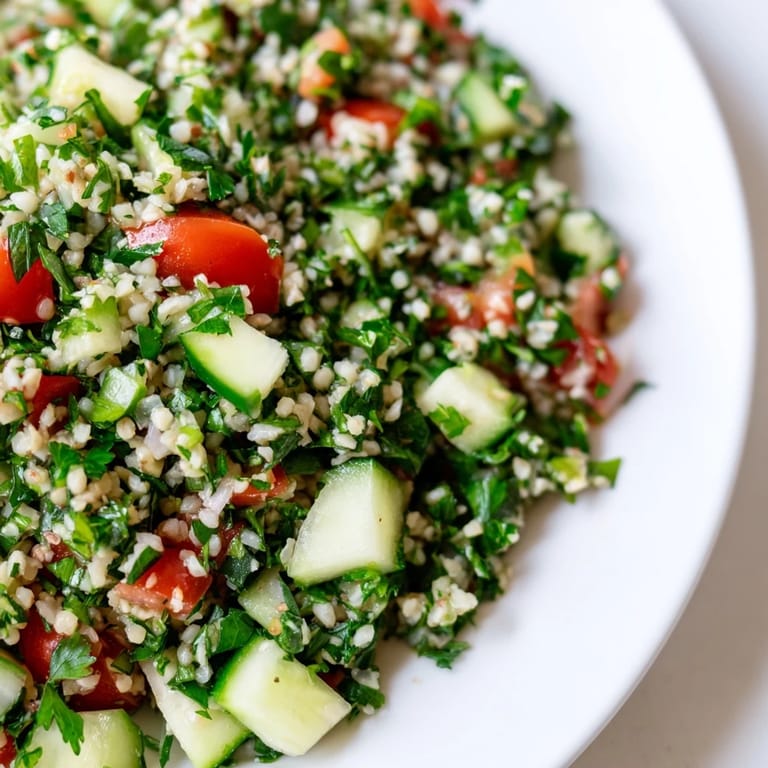
Tabbouleh is a bridge between heavy and light, making it the perfect companion for just about anything you want to cook. It cools down a spicy dish, brightens a rich one, and stands beautifully on its own if that's all you're having.
- Serve it alongside grilled meats, spiced chickpeas, or creamy hummus, where it cuts through richness with its acidity and freshness.
- Make it the star of a mezze platter where it shares space with falafel, labneh, and warm pita.
- On a quiet night, eat it straight from the bowl with nothing else and remember why you don't always need fancy to feel nourished.
 Save to Pinterest
 There's something honest about tabbouleh—no cream to hide behind, no long cooking times to worry about, just vegetables, herbs, and the clarity of good olive oil and lemon. It's the kind of salad that reminds you why simple, when done right, is always enough.
Recipe FAQs
- → What is the best bulgur to use?
Fine bulgur absorbs water quickly and blends well with the fresh herbs, giving a light texture.
- → Can bulgur be substituted for gluten-free diets?
Yes, cooked quinoa is an excellent gluten-free alternative that maintains the salad's texture and flavor.
- → How should the parsley be prepared?
Use flat-leaf parsley and finely chop it to evenly distribute its fresh, herbal flavor throughout the dish.
- → What is the ideal dressing for this dish?
A simple blend of extra-virgin olive oil, freshly squeezed lemon juice, salt, and black pepper enhances freshness and balances flavors.
- → How long can this dish be stored?
It is best enjoyed fresh but can be refrigerated for up to 2 days without losing flavor or texture.