 Save to Pinterest
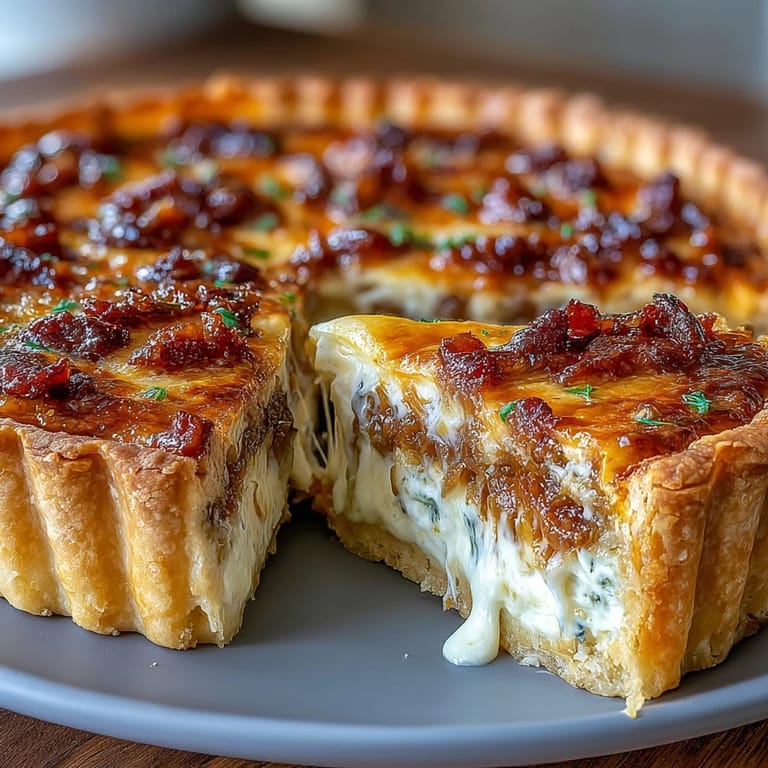
 My neighbor Christine showed up at my door one Saturday morning with a wedge of quiche wrapped in foil, still warm from her oven. The smell hit me first—caramelized onions so sweet they were almost jammy, bacon smoke caught in flaky pastry. She wouldn't stop talking about how she'd finally cracked the patience required to cook those onions low and slow, and watching her face light up as I took that first bite made me determined to master it myself. Now, years later, this is the dish I make when I want to feel like I've actually accomplished something in the kitchen.
I made this for a dinner party last spring when my friend mentioned she was tired of the same salad-and-pasta routine. One guest actually asked for the recipe before dessert was served—that's when I knew this quiche had graduated from something I made to something I was known for making. Watching people slow down and really taste each bite, talking about how the smoky and sweet play against the creamy custard, reminded me why I love cooking for people in the first place.
Ingredients
- 1 sheet (about 250 g) store-bought or homemade shortcrust pastry: Use the store-bought kind without guilt—blind-baking it (which we skip here) saves time, and the quiche filling's moisture keeps it tender anyway.
- 200 g smoked bacon, diced: Smoked bacon matters here because the flavor needs to stand up to those caramelized onions; regular bacon gets a bit lost in the shuffle.
- 3 large yellow onions, thinly sliced: Yellow onions have the right balance of sugar and structure to caramelize properly; red onions turn muddy and sweet onions cook down to almost nothing.
- 2 tbsp unsalted butter: This is your flavor base for those onions, so don't skimp on quality; salted butter throws off the salt balance you've carefully calibrated.
- 1 tbsp olive oil: The oil prevents the butter from burning during that long, slow cook; a little heat distribution trick I learned after my first batch of scorched onions.
- 1 tsp sugar: A tiny nudge to speed up the caramelization process and deepen the flavor; it's not about sweetness but about chemistry.
- 1/2 tsp salt, 1/4 tsp black pepper, 1/4 tsp dried thyme (optional): Season as you cook the onions, not at the end, so the flavor builds gradually and distributes evenly.
- 3 large eggs: Room temperature eggs blend more smoothly into the cream, creating a silkier custard than cold ones straight from the fridge.
- 200 ml heavy cream, 100 ml whole milk: The cream brings richness while the milk keeps it from being heavy; this ratio is where the magic lives.
- 1/4 tsp ground nutmeg: A whisper of nutmeg in quiche custard is a French tradition that somehow makes everything taste more refined without tasting spiced.
- 80 g grated Gruyère or Swiss cheese: Gruyère melts into the custard and adds a subtle nuttiness that cheap cheddar simply cannot deliver; grate it fresh and your quiche tastes noticeably better.
Tired of Takeout? 🥡
Get 10 meals you can make faster than delivery arrives. Seriously.
One email. No spam. Unsubscribe anytime.
Instructions
- Prepare your oven and pastry shell:
- Heat your oven to 180°C (350°F) and line that 23 cm tart pan with your pastry, pricking the base with a fork to let steam escape. Pop it in the fridge while you work on everything else—a cold pastry crust stays crisp instead of turning soggy.
- Render the bacon until it sings:
- In a large skillet over medium heat, cook your diced bacon until the edges are dark and crispy and the kitchen smells like a breakfast dream. Pull it out with a slotted spoon, let it drain on paper towels, and set it aside to cool.
- Build the foundation with butter and oil:
- Leave about 1 tablespoon of bacon fat in the pan, then add your butter and olive oil. The combination prevents sticking and burning—it's a safety net for the onions.
- Let those onions have their moment:
- Toss in your sliced onions with the sugar, salt, and thyme, then cook over medium-low heat, stirring every few minutes, for 25 to 30 minutes. Watch for the color to deepen from pale yellow to golden to a rich mahogany; resist the urge to rush this or turn up the heat. The slower they go, the sweeter and more tender they become.
- Build your custard base:
- While the onions are doing their slow magic, whisk together your eggs, heavy cream, milk, nutmeg, and a pinch of salt and pepper in a bowl. Whisk until it's smooth and pale, about a minute.
- Assemble the layers:
- Once the onions have cooled slightly, scatter them evenly over that chilled pastry base. Sprinkle the crispy bacon pieces across the onions, then top with your grated Gruyère cheese.
- Add the creamy binding:
- Pour your whisked custard mixture slowly over the filling, letting it settle into the crevices. If you pour too fast it can crack the pastry or spill out the sides, so take your time.
- Bake until set and golden:
- Slide the quiche into your preheated oven and bake for 35 to 40 minutes, until the top is lightly golden and the center is just set—it should barely jiggle when you give the pan a gentle shake. Let it cool for 10 minutes in the pan so everything sets up properly.
- Slice and serve:
- Serve warm or at room temperature with a simple green salad and a chilled glass of white wine on the side.
 Save to Pinterest
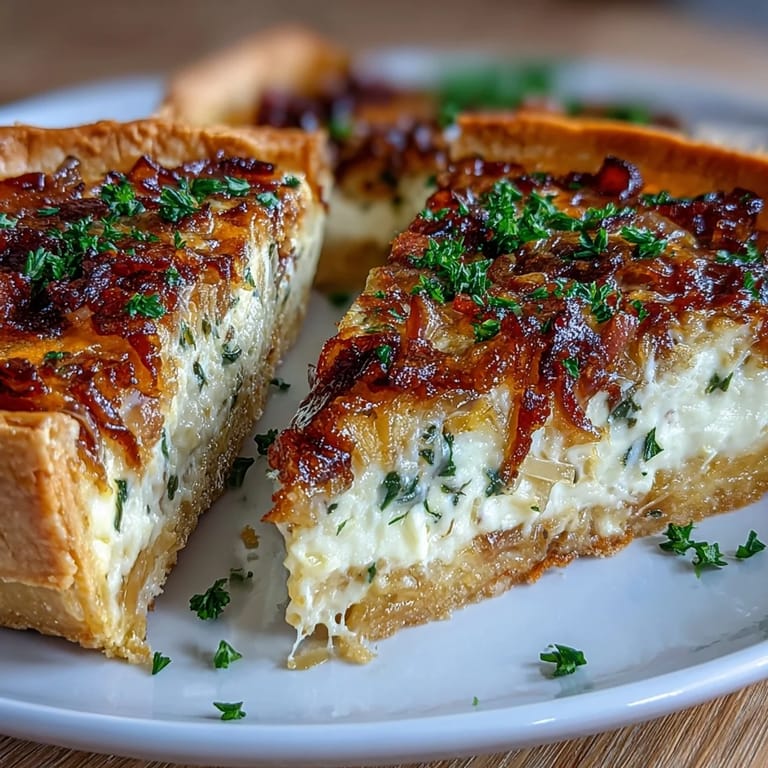
 I brought this quiche to a potluck once and watched my friend Daniel take a second slice while everyone was still on their first. He told me it tasted like something his grandmother used to make in Lyon, and that one comment turned this recipe from something I made into something with history and meaning. Food has a way of connecting us to people we've never met and moments we didn't experience, and this quiche does exactly that.
The Caramelization Secret
The entire soul of this quiche lives in those onions, and understanding caramelization changed how I approach cooking altogether. When you cook onions low and slow with a little fat and sugar, the natural sugars break down and reform into hundreds of new compounds that taste nothing like the original onion—it's not sweetness exactly, but a deep, savory richness that makes people ask what that incredible flavor is. The mistake everyone makes is either turning up the heat to finish faster (which just burns them) or not stirring often enough (which creates hot spots that char). Patience genuinely changes the chemistry here, and you can taste the difference.
Why This Quiche Works for Any Occasion
This isn't a fussy French dish that intimidates; it's actually forgiving and flexible, which is why it became my go-to when people are coming over. You can assemble it the night before, cover it, and bake it the next morning—the flavors actually meld and deepen as it sits. Serve it warm from the oven on a winter evening or pull it straight from the fridge on a summer afternoon and it tastes equally good. The beauty is that it's elegant enough for guests but easy enough that you can throw it together between other tasks.
Variations and Substitutions That Still Shine
Once you understand the formula—caramelized vegetable plus protein plus cheesy custard—you can adapt this quiche in endless directions without losing what makes it special. I've made it with sautéed mushrooms and thyme instead of bacon, and with a mix of Swiss and gruyère when that's what I had in the drawer. The caramelized onion base is flexible enough to support different cheeses, different proteins, even different herbs. The structure stays solid and the result always feels intentional rather than thrown-together.
- Try adding fresh herbs like parsley or chives right before serving for a brightness that cuts through the richness.
- Swap the bacon for prosciutto or sautéed mushrooms if you want to shift the flavor profile without changing the technique.
- Use whatever cheese you love—cheddar, emmental, or even a good gouda will work beautifully in place of gruyère.
 Save to Pinterest
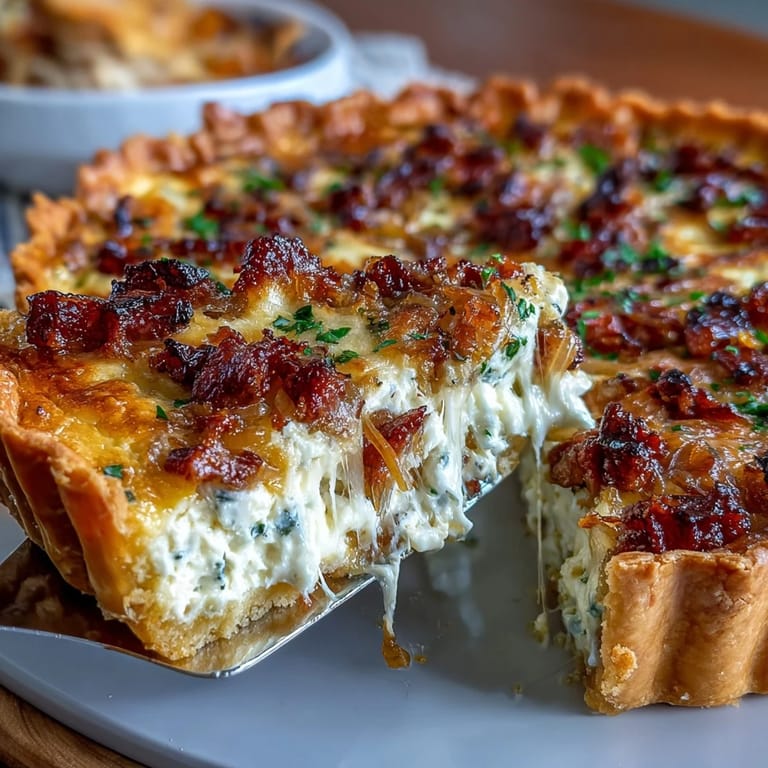
 This quiche has quietly become one of those recipes that reminds me why I love cooking: something simple, made with intention and a little patience, becomes something that people remember and ask for again. Make it once and you'll understand why.
Recipe FAQs
- → How do I caramelize onions properly?
Cook thinly sliced onions slowly over low to medium heat with butter and oil, stirring occasionally until they turn deep golden and sweetly fragrant, which can take 25–30 minutes.
- → Can I use store-bought pastry for this tart?
Yes, store-bought shortcrust pastry works well and saves time. Just roll it out and prepare as directed before adding the filling.
- → What cheese complements the flavors best?
Gruyère or Swiss cheese adds a nutty, creamy richness that balances savory bacon and sweet onions, but Emmental or cheddar are good substitutes.
- → How do I prevent the crust from getting soggy?
Chilling the pastry after lining the tart pan and before adding the filling helps maintain a crisp base. Also, pricking the base with a fork lets steam escape during baking.
- → Can this tart be served at room temperature?
Yes, the tart holds its flavors well both warm and at room temperature, making it versatile for various occasions.